The Room Where Women’s Health Gets Built: Inside Springboard's 2026 Women's Health Accelerator Demo Day
July 8, 2026

Jennifer Johnston was putting on her soccer jersey before a game when she lost sensation to the entire left side of her body. Four days later, she was diagnosed with multiple sclerosis. A family physician, Johnston determined that her long-term use of hormonal contraception may have been a contributing factor.
She knew the research on the side effects of hormonal contraception: elevated risks for stroke, autoimmune disease, depression and cardiovascular complications. But when she looked at the alternatives – IUDs that cause heavier periods, condoms with a failure rate too high to trust, and irreversible surgery – she reached a conclusion she couldn’t set aside.
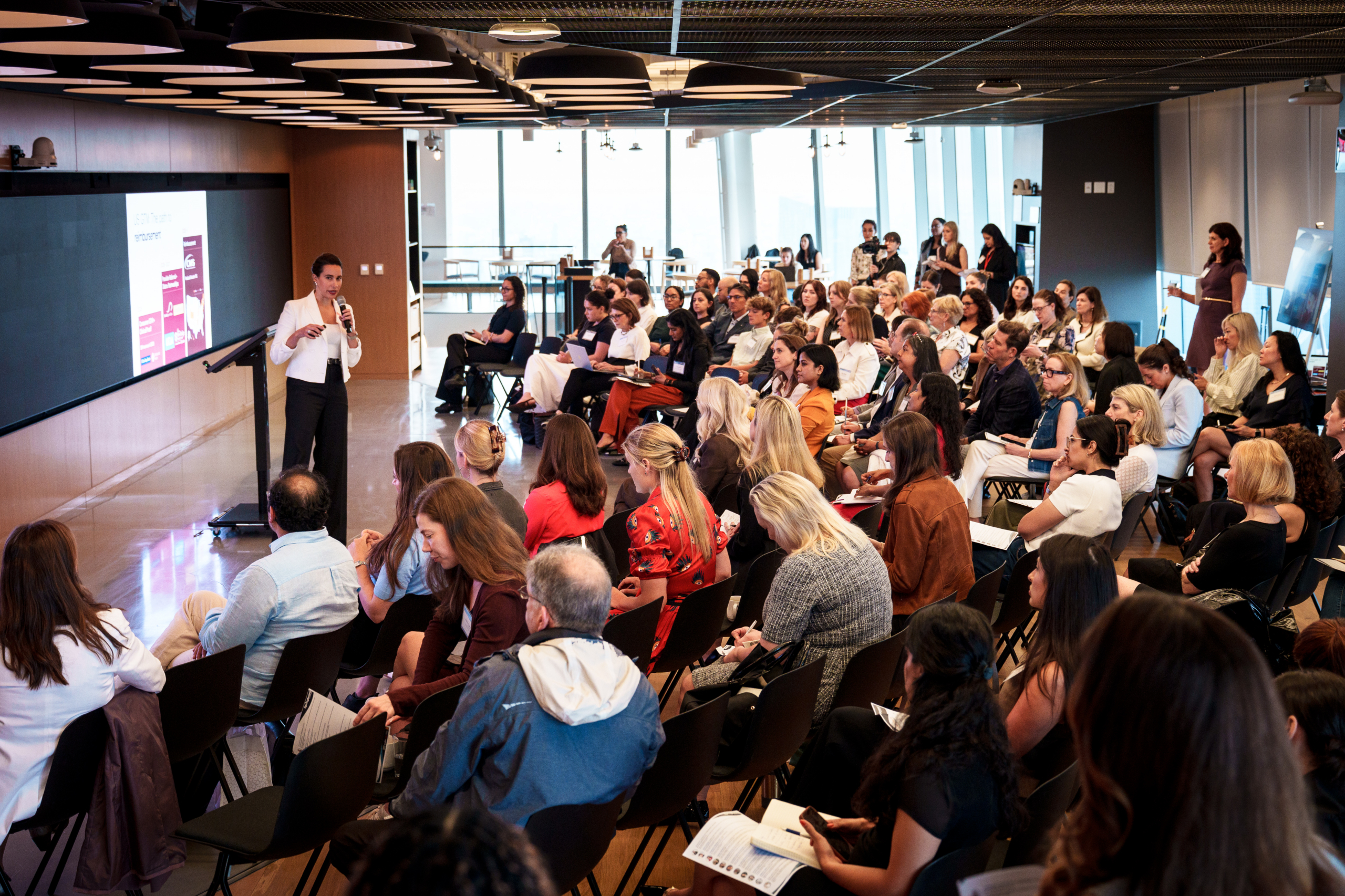
“There’s actually nothing on the market today that I want my own daughters to rely on,” she told a room full of investors, advisors, clinicians, and corporate partners at Accenture offices in New York City as part of Springboard’s 2026 Women’s Health Accelerator Demo Day.
So Johnston founded Elle, MD and developed The Better Ring, a non-hormonal vaginal ring that’s inserted and removed as easily as a tampon, once a month.
Just weeks prior to Demo Day, philanthropist Melinda French Gates sent shockwaves through the women’s health world with news of a $215M commitment in new women’s health funding explicitly calling it “a signal.”
But Springboard has been sounding that signal long before then.
Since 2000, Springboard has supported more than 950 women-led companies across health, technology and life sciences. Companies that have generated $77 billion in market value, produced 240+ exits, 28 IPOs and 10 unicorns.
Women’s health has always been part of the work, but our focus on it sharpened deliberately around 2014 when women’s health founders began appearing in meaningful numbers in Springboard’s general healthcare and technology accelerators.
They were building solutions to problems they’d experienced themselves, observed in clinical practice, or witnessed in their communities. They were also navigating a system that often struggled to see the market value of what they were building. At the same time, industry data confirmed the same truth: conditions affecting millions of women were under-researched; diagnoses were delayed by years; and entire categories of care lack the innovation investment they needed to thrive.
Fast forward to 2020 when Springboard launched the Women’s Health Innovation Coalition, bringing together entrepreneurs, advocates, clinicians, investors and executives around some of the most pressing challenges in women’s health – from IVF access to perinatal mood disorders to sexual health and longevity.
In 2023, those roundtables turned into advocacy events held across the country. And in 2024, Springboard’s first dedicated Women’s Health Accelerator launched, alongside the first State of Women’s Health report, co-published with Accenture, which drew on hundreds of interviews with patients, founders, investors, researchers, and policymakers across the US, UK, and Canada. A second report followed in May 2025, focused on autoimmune and cardiovascular diseases. Both were covered by Forbes and presented from Capitol Hill to HLTH, one of the world’s largest healthcare conferences.
This past June Springboard celebrated its third annual Women’s Health Accelerator Demo Day. More than 65 companies have benefited from Springboard’s dedication to women’s health. And the 2026 cohort is the newest chapter in that number.
“It is my deeply held belief that the world needs women leading,” Springboard CEO Umbreen Bhatti said at the onset of this year’s Demo Day. “And the world needs the things that women make and the things that women make need to reach the masses who need it.
“For 26 years, Springboard has been helping these kinds of companies succeed, helping founders build the solutions to our most important challenges, scale their companies, transform entire industries, and change lives.”
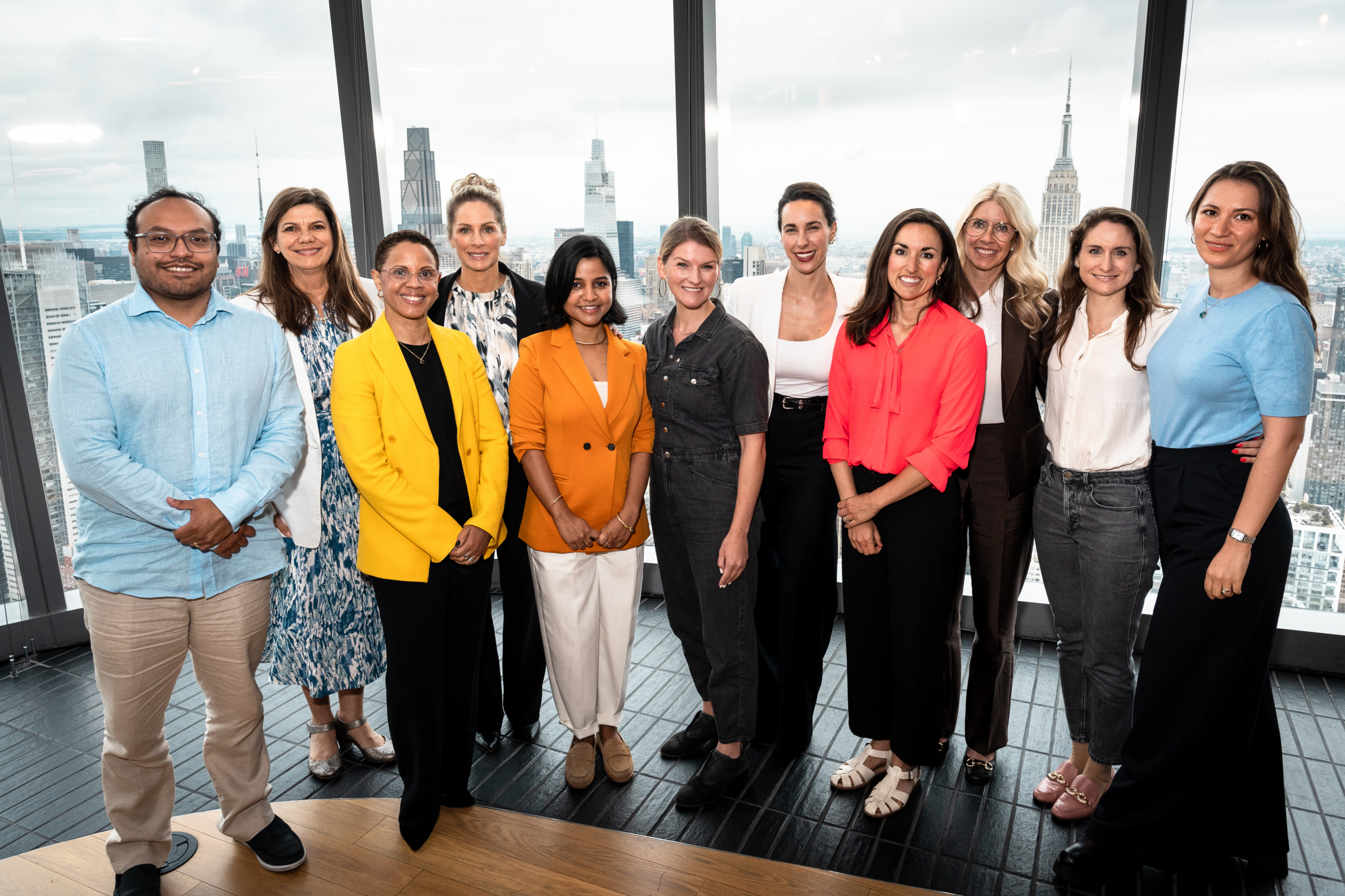
The 11 founders who pitched at Demo Day span the full arc of women’s health. But what unites them is simpler: they each identified a gap in the healthcare system that had been accepted as permanent, and they decided to close it.
Erick Garcia-Cordero, co-founder and CTO of Rea Diagnostics, opened by saying his “niece had died just before she was born.” Premature birth is the leading cause of death in children worldwide; 75% of those deaths are preventable with inexpensive treatments. Rea’s at-home vaginal swab test for preterm birth risk is the first of its kind – eliminating the need for a cervical exam in a clinical setting. It’s been validated in over 300 pregnant women in Switzerland and is now entering clinical trial phase.
Piyali Chakraborty, founder of Ashmi Health, opened by describing the week her baby spent in the NICU and the pervasive thought that she had done something wrong. She built Ashmi so no mother has to carry that feeling alone. The platform brings remote monitoring, real-time nutritional guidance, and community health worker support to high-risk pregnancies in rural, underserved communities – designed specifically for low-literacy populations with limited internet access. A nine-month pilot in Alabama showed 90% patient engagement, 65% improvement in postpartum physical condition, and 80% of participants achieving stabilized blood glucose levels. Ashmi is now expanding into Arkansas, West Virginia, and Massachusetts.
Lara Smith, founder of LUSOMÉ, described the nights her sister, a breast cancer survivor, couldn’t sleep because treatment had pushed her into early medical menopause. “It’s criminal,” she told the room. LUSOMÉ’s clinically validated smart textile cooling sheets went through an 18-month clinical trial with Harvard Medical School’s Sleep Sciences Division. The result: 26 minutes more sleep per night for hot sleepers, with a third of participants experiencing night sweats eliminated entirely. To date, LUSOMÉ has served 20,000 customers, earned Oprah’s Sleep Award, and is currently in a test pilot with Mattress Firm.
The rest of the cohort brought equal rigor to the stage:
Béa Fertility (Tess Cosad) is serving the 8.3 million women caught between struggling to conceive and IVF — building a clinician-designed, FDA Class II–cleared at-home intracellular insemination device with a 39% efficacy rate in infertile patient populations, and a net promoter score of 90. The average NPS for a fertility clinic is negative 21.
Matricis.AI (Raphaelle Taub) is building the first AI diagnostics platform for endometriosis – a condition affecting 200 million people with an average nine-year diagnosis delay, and for which no FDA-approved AI diagnostic exists anywhere in gynecology. To train their model, they built the world’s largest annotated endometriosis MRI dataset: 4,000 hours of expert radiologist time and 20 times the size of any previously existing dataset.
Freyya (Gabriele Niederauer) is solving the data gap at the heart of pelvic floor physical therapy — a wearable biofeedback device, roughly the size of a tampon, that measures intra-abdominal pressure and pelvic floor forces during real-world activity. Physical therapists have never had this data. CMS recently activated remote therapy monitoring billing, making the business model viable for the first time.
My Village Innovations (Annie Munoz) is replacing a medical instrument that hasn’t changed in 180 years. The Rosa Speculum is soft, single-use, self-placeable, and offers 360-degree retraction — eliminating the sidewall collapse that causes pain, missed diagnoses, and the 30 million women who skip or delay their pelvic exam every year. Munoz demonstrated the device live on stage. The audience laughed, applauded, and immediately understood what 70% better visibility actually looks like in practice.
80 Beats Medical (Laura Jassoy) turns blood pressure data into 13 digital biomarkers for cardiovascular risk — with a specific focus on preeclampsia detection in pregnancy, where 50% of cases are currently caught too late. The company received FDA 510(k) clearance for its hardware device during the program and has a data partnership with King’s College London covering 20,000 pregnancies.
Sena Therapeutics (Elizabeth Garner) is developing the first therapeutic designed specifically for PCOS, which was recently renamed PMOS (polyendocrine metabolic ovarian syndrome), a condition affecting 1 in 8 women of reproductive age, for which no FDA-approved targeted therapy exists. Up to 70% of people with PMOS go undiagnosed. Sena is following the GLP-1 development playbook: peptide first, small molecule to follow.
Kapha Bio (Lindsay Wray) is bringing mucin molecules to market for the first time to address dysbiosis — the microbial imbalance underlying gum disease, bacterial vaginosis, irritable bowel disease, and more. Mucin is the first line of defense against microbial attack. Kapha Bio’s technology, developed at Tufts University and now patent-protected, rebuilds it. Two multi-billion dollar industry partners already have the product in hand.

At Springboard, each cohort company receives a personalized advisory team matched to their specific needs and built for their specific stage for about three months. This year’s Women Health Council comprised 58 members, including many returnees.
Springboard prides itself on delivering an experience built around what each founder needs right now – and founders agree. Last year’s cohort unanimously said the program was effective in expanding their network, and that their advisors were valuable in helping move their companies forward.
Those numbers reflect something that the 2025 Demo Day made concrete. Mitchella Gilbert, founder of Oya Femtech Apparel, arrived at last year’s event with an advisory team that included a pelvic health clinician, a regulatory consultant, a marketing strategist, a federal markets expert, and an alumna CEO who had built a competing product in her category. Her lead advisor was Jillian Levovitz, who would go on to chair the 2026 Women’s Health program. At Demo Day, Gilbert was introduced to an interested investor through the Springboard network. That conversation continued well past the event.
Gilbert’s story is one of many. In 2025, half of the cohort received funding or follow-up investor and partner conversations directly from Demo Day: one company received investment from its lead advisor; another from a fellow cohort member; a third from a Demo Day attendee; a fourth signed multiple investment agreements with people they met at the showcase. A fifth entered retail distribution discussions with CVS and Target.
As Springboard Chief of Staff Kiki Federico told the 2026 room before the pitches began: “Springboard’s special sauce has always been the power of the room. The relationships that form when the right people are in the same space, paying attention to the same founders. That’s you, right now.”

The 2026 cohort joins more than 65 Springboard women’s health alumni, including EverlyWell’s Julia Cheek, Navigate Maternity’s Ariana McGee, Bone Health Technologies’ Laura Yecies, and AOA Dx’s Oriana Papin-Zoghbi, whose landmark Follow the Exits report documented $100 billion in women’s health exits over 25 years, nearly half of which occurred in just the last five years.
Springboard’s next accelerator, which focuses on longevity, is currently accepting applications. By 2050, more than 2.1 billion people will be over the age of 60. That represents a $4.5 trillion global market and a generation looking for better ways to age.
The Women’s Health Accelerator returns for its fourth cohort in 2027.
If you’re building in women’s health and want to know what it looks like to have the right people in your corner, applications for the 2027 Women’s Health Accelerator will open later this year. Join our mailing list to learn more.
If you’re an investor, clinician, or executive who wants to support founders as a council member, reach out to our Programs team at [email protected].
If you believe this work matters, Springboard is a 501(c)(3). Every dollar donated supports the infrastructure that puts women-led companies in front of the people who can accelerate their success. Donate here.