
Close-up portrait of a senior woman and a young female nurse hugging and sharing smiles on the couch. The young healthcare worker provides comfort, support, and companionship for the senior woman at home

It Was Never Just About Living Longer: Meet The Companies Behind Springboard's Inaugural Longevity Accelerator

Aging well is about much more than simply adding years to our lives. It is about being able to stay healthy and engaged; recover when something goes wrong; remain connected to the people and communities around us; access the care and support we need; and continue making meaningful choices about how we live as we age.

Those challenges are often deeply personal. Caregivers, older adults, and families experience the gaps in our systems every day — in the doctor’s office, at home, in the workplace, in managing finances, and in making decisions about care and the future. That lived experience can also be a powerful source of innovation.

“Springboard has always believed in the power of women-led companies, and longevity is an area where that perspective is especially important,” says Umbreen Bhatti, CEO of Springboard Enterprises. “Women often encounter these challenges from multiple angles — as patients, caregivers, family decision-makers, and professionals — which can give them, as founders, a deeper understanding of where systems fall short and what people actually need as they age.”

That belief was foundational to the Longevity Accelerator we announced this spring, and we’re deeply grateful to Accenture, KKR, Eli Lilly, and the Amplify Her Foundation for helping to bring this program to life.

We also knew that if the goal was to improve how people experience aging, the program could not be narrowly defined. Health is a critical part of longevity, but so are connection, caregiving, independence, financial security, and the ability to plan for and navigate important decisions before they become crises.

That broader view shaped the cohort we selected.

Guiding the program at a strategic level is Springboard’s Longevity Steering Committee — senior operators and investors across pharma, venture, healthcare operations, and company-building who help shape the accelerator’s direction and connect it to the broader longevity ecosystem. Their market perspective and pattern recognition keep the program grounded in backing the companies that matter most.

Supporting these founders day-to-day is Springboard’s Longevity Council — a curated group of industry and functional experts who work directly with each company throughout the program, offering the kind of hands-on guidance that comes from having navigated these exact challenges before. Council members are matched to founders based on need, ensuring the advice is specific rather than generic.

This year’s companies are behind the parent who’s finally getting stronger after a fall, walking again without a caregiver hovering nearby. The adult child who can see, for the first time, that Dad skipped his afternoon pills — before it becomes a hospital visit. The 78-year-old who hasn’t left her house in weeks, and finally has someone to talk to again. The family sitting down, before a crisis, to finally write down what Mom would actually want. The companies look very different from one another, but together they reflect the many factors that help people have more control over how they live as they age.

“When you look at this cohort as a whole, you begin to see what longevity really requires,” said Jillian Levovitz, Managing Director of Springboard’s Longevity program. “It is not one product, one service, or even one industry. It is having the right care when you need it, being able to recover and remain independent, staying connected to other people, supporting the people who care for us, and having the tools to make thoughtful decisions about our finances, our families, and our futures. These founders are approaching those challenges from very different directions, but they share a common goal: helping people age with health, independence, security, and dignity.”

Meet the 2026 Longevity Accelerator Cohort

  • Angie Kramer, Founder & CEO, Hello Pearl App: A coordination platform that puts the older adult at the center of their own private “Circle” of family, friends, and trusted providers — for daily life and social connection, not just care logistics.
  • Kira Burns, Co-founder & CEO, Gravitrex: Patented, power-free body-weight support technology that makes intensive walking rehabilitation more accessible and consistent for older adults recovering from stroke or injury.
  • Mito Yamada, COO, One Tallawah: A bioresponsive wearable that combines light, heat, magnetic pulse, and cold therapy with real-time biometric sensing, adapting each session to the individual rather than delivering a fixed dose.
  • Karen Crow, CEO, NeuroGeneces: An at-home EEG assessment that measures brain age and cognitive change years before a formal diagnosis would typically catch it.
  • Avanlee Christine, CEO, Avanlee Care: A platform helping Medicare Advantage plans see and support the family caregivers quietly managing medications, appointments, and preventive care behind the scenes.
  • Yifat Anzelevich, CEO, Clique: AI-matched peer communities and video gatherings that treat loneliness in older adults as a solvable, measurable problem.
  • Catherine Song, PhD, CEO, Soundable Health: Acoustic AI that turns everyday bathroom sounds into urinary health biomarkers, giving both individuals and clinicians a signal they can act on.
  • Dr. Laura Shoots, MD, Founder & CEO, Take Care: A guided planning platform that helps people document their care wishes and legal preferences — and share them with family and advisors — before a crisis forces the conversation.
  • Sarah Dillingham, CEO & Co-Founder, Grace & Able: Patented, FDA-registered joint wearables designed as apparel rather than medical devices, making everyday arthritis and joint support something people actually keep using.
  • Tian Lan, Founder & CEO, Care Mojo: An AI wearable and in-home sensor system that helps families and home care providers monitor safety and routines for older adults aging with dementia — without a camera in the home.

Joining the cohort this year as an observer is Ashley Blackington, CEO of Dovetail, a clinical AI platform that turns real-time family caregiver observations into structured clinical data for healthcare providers.

Over the next five months, this cohort will work through a program built with that same intentionality: a dedicated 1:1 advisory team for each company, and a sharp focus on the one or two milestones that will actually move each company forward.

By 2050, more than 2.1 billion people will be over the age of 60 – the largest demographic shift in modern history. These are ten companies betting they can get us ready.

Want to meet this cohort in person? Several founders will be at HLTH USA this fall. Join us there and use code H26PAR_SPRING250 for $250 off registration.


A group of business leaders taking a picture

The Room Where Women’s Health Gets Built: Inside Springboard's 2026 Women's Health Accelerator Demo Day

Jennifer Johnston was putting on her soccer jersey before a game when she lost sensation to the entire left side of her body. Four days later, she was diagnosed with multiple sclerosis. A family physician, Johnston determined that her long-term use of hormonal contraception may have been a contributing factor.

She knew the research on the side effects of hormonal contraception: elevated risks for stroke, autoimmune disease, depression and cardiovascular complications. But when she looked at the alternatives – IUDs that cause heavier periods, condoms with a failure rate too high to trust, and irreversible surgery – she reached a conclusion she couldn’t set aside.

Jennifer Johnston presents The Better Ring at the 2026 Women’s Health Accelerator Demo Day in New York City. Photo credit: Luke Hezekiah Walter

“There’s actually nothing on the market today that I want my own daughters to rely on,” she told a room full of investors, advisors, clinicians, and corporate partners at Accenture offices in New York City as part of Springboard’s 2026 Women’s Health Accelerator Demo Day.

So Johnston founded Elle, MD and developed The Better Ring, a non-hormonal vaginal ring that’s inserted and removed as easily as a tampon, once a month.

Just weeks prior to Demo Day, philanthropist Melinda French Gates sent shockwaves through the women’s health world with news of a $215M commitment in new women’s health funding explicitly calling it “a signal.”

But Springboard has been sounding that signal long before then.

The History Behind the Headlines

Since 2000, Springboard has supported more than 950 women-led companies across health, technology and life sciences. Companies that have generated $77 billion in market value, produced 240+ exits, 28 IPOs and 10 unicorns.

Women’s health has always been part of the work, but our focus on it sharpened deliberately around 2014 when women’s health founders began appearing in meaningful numbers in Springboard’s general healthcare and technology accelerators.

They were building solutions to problems they’d experienced themselves, observed in clinical practice, or witnessed in their communities. They were also navigating a system that often struggled to see the market value of what they were building. At the same time, industry data confirmed the same truth: conditions affecting millions of women were under-researched; diagnoses were delayed by years; and entire categories of care lack the innovation investment they needed to thrive.

Fast forward to 2020 when Springboard launched the Women’s Health Innovation Coalition, bringing together entrepreneurs, advocates, clinicians, investors and executives around some of the most pressing challenges in women’s health – from IVF access to perinatal mood disorders to sexual health and longevity. 

In 2023, those roundtables turned into advocacy events held across the country. And in 2024, Springboard’s first dedicated Women’s Health Accelerator launched, alongside the first State of Women’s Health report, co-published with Accenture, which drew on hundreds of interviews with patients, founders, investors, researchers, and policymakers across the US, UK, and Canada. A second report followed in May 2025, focused on autoimmune and cardiovascular diseases. Both were covered by Forbes and presented from Capitol Hill to HLTH, one of the world’s largest healthcare conferences.

This past June Springboard celebrated its third annual Women’s Health Accelerator Demo Day. More than 65 companies have benefited from Springboard’s dedication to women’s health. And the 2026 cohort is the newest chapter in that number.

“It is my deeply held belief that the world needs women leading,” Springboard CEO Umbreen Bhatti said at the onset of this year’s Demo Day. “And the world needs the things that women make and the things that women make need to reach the masses who need it.

“For 26 years, Springboard has been helping these kinds of companies succeed, helping founders build the solutions to our most important challenges, scale their companies, transform entire industries, and change lives.”

A group of business leaders taking a picture
The 11 members of Springboard’s 2026 Women’s Health Accelerator. Photo credit: Luke Hezekiah Walter

Eleven Companies. One Urgent Problem.

The 11 founders who pitched at Demo Day span the full arc of women’s health. But what unites them is simpler: they each identified a gap in the healthcare system that had been accepted as permanent, and they decided to close it.

Erick Garcia-Cordero, co-founder and CTO of Rea Diagnostics, opened by saying his “niece had died just before she was born.” Premature birth is the leading cause of death in children worldwide; 75% of those deaths are preventable with inexpensive treatments. Rea’s at-home vaginal swab test for preterm birth risk is the first of its kind – eliminating the need for a cervical exam in a clinical setting. It’s been validated in over 300 pregnant women in Switzerland and is now entering clinical trial phase.

Piyali Chakraborty, founder of Ashmi Health, opened by describing the week her baby spent in the NICU and the pervasive thought that she had done something wrong. She built Ashmi so no mother has to carry that feeling alone. The platform brings remote monitoring, real-time nutritional guidance, and community health worker support to high-risk pregnancies in rural, underserved communities – designed specifically for low-literacy populations with limited internet access. A nine-month pilot in Alabama showed 90% patient engagement, 65% improvement in postpartum physical condition, and 80% of participants achieving stabilized blood glucose levels. Ashmi is now expanding into Arkansas, West Virginia, and Massachusetts.

Lara Smith, founder of LUSOMÉ, described the nights her sister, a breast cancer survivor, couldn’t sleep because treatment had pushed her into early medical menopause. “It’s criminal,” she told the room. LUSOMÉ’s clinically validated smart textile cooling sheets went through an 18-month clinical trial with Harvard Medical School’s Sleep Sciences Division. The result: 26 minutes more sleep per night for hot sleepers, with a third of participants experiencing night sweats eliminated entirely. To date, LUSOMÉ has served 20,000 customers, earned Oprah’s Sleep Award, and is currently in a test pilot with Mattress Firm.

The rest of the cohort brought equal rigor to the stage:

Béa Fertility (Tess Cosad) is serving the 8.3 million women caught between struggling to conceive and IVF — building a clinician-designed, FDA Class II–cleared at-home intracellular insemination device with a 39% efficacy rate in infertile patient populations, and a net promoter score of 90. The average NPS for a fertility clinic is negative 21.

Matricis.AI (Raphaelle Taub) is building the first AI diagnostics platform for endometriosis – a condition affecting 200 million people with an average nine-year diagnosis delay, and for which no FDA-approved AI diagnostic exists anywhere in gynecology. To train their model, they built the world’s largest annotated endometriosis MRI dataset: 4,000 hours of expert radiologist time and 20 times the size of any previously existing dataset.

Freyya (Gabriele Niederauer) is solving the data gap at the heart of pelvic floor physical therapy — a wearable biofeedback device, roughly the size of a tampon, that measures intra-abdominal pressure and pelvic floor forces during real-world activity. Physical therapists have never had this data. CMS recently activated remote therapy monitoring billing, making the business model viable for the first time.

My Village Innovations (Annie Munoz) is replacing a medical instrument that hasn’t changed in 180 years. The Rosa Speculum is soft, single-use, self-placeable, and offers 360-degree retraction — eliminating the sidewall collapse that causes pain, missed diagnoses, and the 30 million women who skip or delay their pelvic exam every year. Munoz demonstrated the device live on stage. The audience laughed, applauded, and immediately understood what 70% better visibility actually looks like in practice.

80 Beats Medical (Laura Jassoy) turns blood pressure data into 13 digital biomarkers for cardiovascular risk — with a specific focus on preeclampsia detection in pregnancy, where 50% of cases are currently caught too late. The company received FDA 510(k) clearance for its hardware device during the program and has a data partnership with King’s College London covering 20,000 pregnancies.

Sena Therapeutics (Elizabeth Garner) is developing the first therapeutic designed specifically for PCOS, which was recently renamed PMOS (polyendocrine metabolic ovarian syndrome), a condition affecting 1 in 8 women of reproductive age, for which no FDA-approved targeted therapy exists. Up to 70% of people with PMOS go undiagnosed. Sena is following the GLP-1 development playbook: peptide first, small molecule to follow.

Kapha Bio (Lindsay Wray) is bringing mucin molecules to market for the first time to address dysbiosis — the microbial imbalance underlying gum disease, bacterial vaginosis, irritable bowel disease, and more. Mucin is the first line of defense against microbial attack. Kapha Bio’s technology, developed at Tufts University and now patent-protected, rebuilds it. Two multi-billion dollar industry partners already have the product in hand.

(Left to right) Cohort members Beth Garner, Jennifer Johnston and Laura Jossey share a laugh after their presentations. Photo credit: Luke Hezekiah Walter

The Room Where It Happens

At Springboard, each cohort company receives a personalized advisory team matched to their specific needs and built for their specific stage for about three months. This year’s Women Health Council comprised 58 members, including many returnees.  

Springboard prides itself on delivering an experience built around what each founder needs right now – and founders agree. Last year’s cohort unanimously said the program was effective in expanding their network, and that their advisors were valuable in helping move their companies forward.

Those numbers reflect something that the 2025 Demo Day made concrete. Mitchella Gilbert, founder of Oya Femtech Apparel, arrived at last year’s event with an advisory team that included a pelvic health clinician, a regulatory consultant, a marketing strategist, a federal markets expert, and an alumna CEO who had built a competing product in her category. Her lead advisor was Jillian Levovitz, who would go on to chair the 2026 Women’s Health program. At Demo Day, Gilbert was introduced to an interested investor through the Springboard network. That conversation continued well past the event.

Gilbert’s story is one of many. In 2025, half of the cohort received funding or follow-up investor and partner conversations directly from Demo Day: one company received investment from its lead advisor; another from a fellow cohort member; a third from a Demo Day attendee; a fourth signed multiple investment agreements with people they met at the showcase. A fifth entered retail distribution discussions with CVS and Target.

As Springboard Chief of Staff Kiki Federico told the 2026 room before the pitches began: “Springboard’s special sauce has always been the power of the room. The relationships that form when the right people are in the same space, paying attention to the same founders. That’s you, right now.”

Attendees network following the Demo Day presentations. Photo credit: Luke Hezekiah Walter

What Comes Next

The 2026 cohort joins more than 65 Springboard women’s health alumni, including EverlyWell’s Julia Cheek, Navigate Maternity’s Ariana McGee, Bone Health Technologies’ Laura Yecies, and AOA Dx’s Oriana Papin-Zoghbi, whose landmark Follow the Exits report documented $100 billion in women’s health exits over 25 years, nearly half of which occurred in just the last five years.

Springboard’s next accelerator, which focuses on longevity, is currently accepting applications. By 2050, more than 2.1 billion people will be over the age of 60. That represents a $4.5 trillion global market and a generation looking for better ways to age.

The Women’s Health Accelerator returns for its fourth cohort in 2027.

How to Get Involved

If you’re building in women’s health and want to know what it looks like to have the right people in your corner, applications for the 2027 Women’s Health Accelerator will open later this year. Join our mailing list to learn more.

If you’re an investor, clinician, or executive who wants to support founders as a council member, reach out to our Programs team at [email protected].

If you believe this work matters, Springboard is a 501(c)(3). Every dollar donated supports the infrastructure that puts women-led companies in front of the people who can accelerate their success. Donate here.

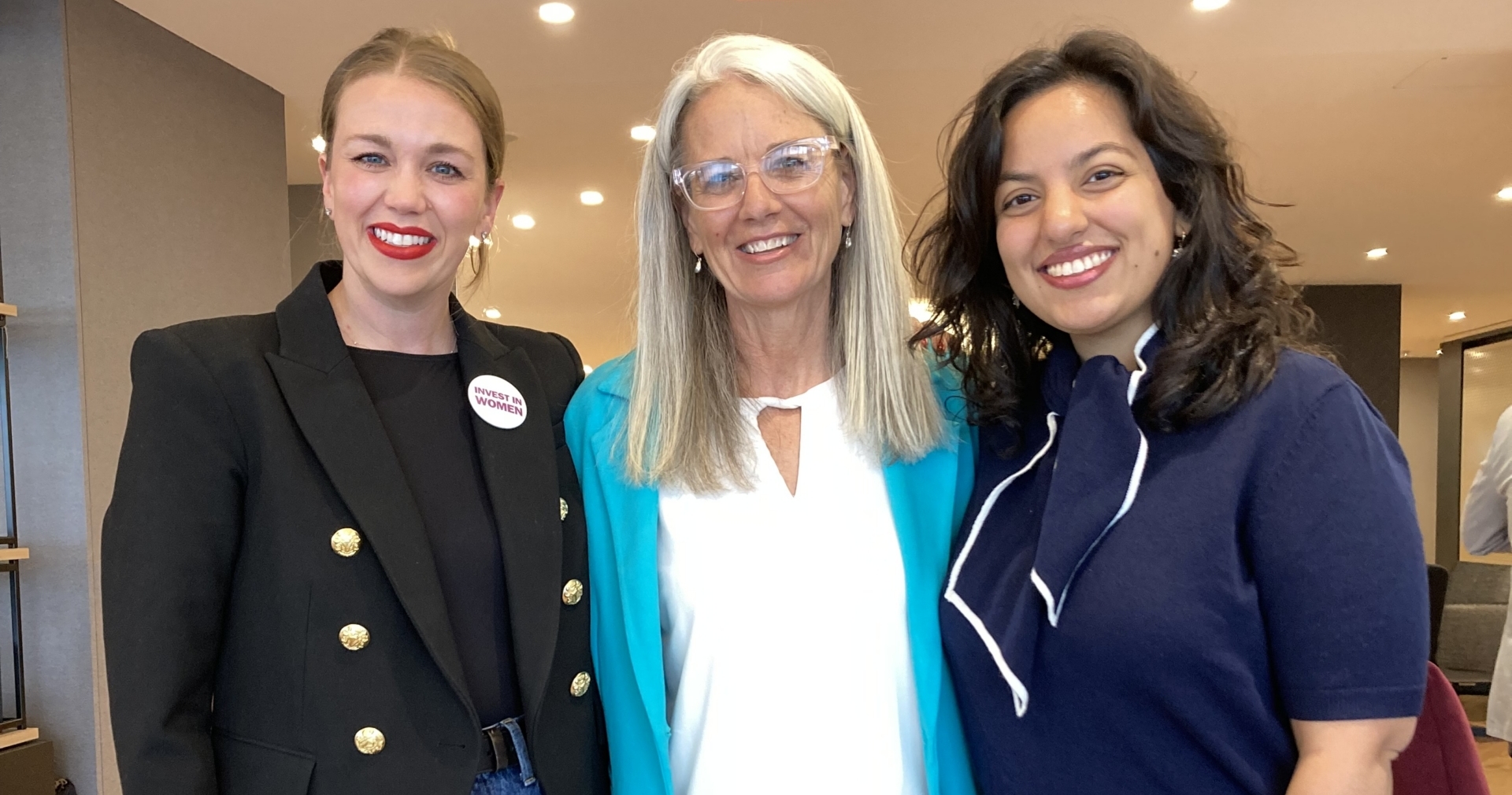
Picture of three women smiling

They Came to Pitch. The Community Came to Help: An Inside Look at Springboard’s Dolphin Tank®

Seven years ago, Shirali Nigam walked into a Springboard Enterprises event as a senior at George Washington University with no idea of what to expect. She’d applied to the GWomen x Springboard program on a whim and left with a cohort and community that supported her long after graduation.

Last month, Nigam walked back into a Springboard event – this time as a founder at the organization’s Dolphin Tank® in D.C., an event designed to meet women-led companies exactly where they are and move them meaningfully further, faster, by tapping the expertise and connections right in their community.

“It really did feel like a full-circle moment. When I was first introduced to Springboard seven years ago, I was pitching an idea – pre-product, pre-customers, pre-everything. This time, we pitched an existing company with real traction, an urgent market need, and a clear vision for where we are headed,” says Nigam, who founded Circuit Breaker Labs, billed as “crash-test dummies for conversational A.I.,” with her brother, Arul. “That said, the mentorship was the same. Seven years ago the feedback helped me think through how to start. This time, it helped us think through how to accelerate.”

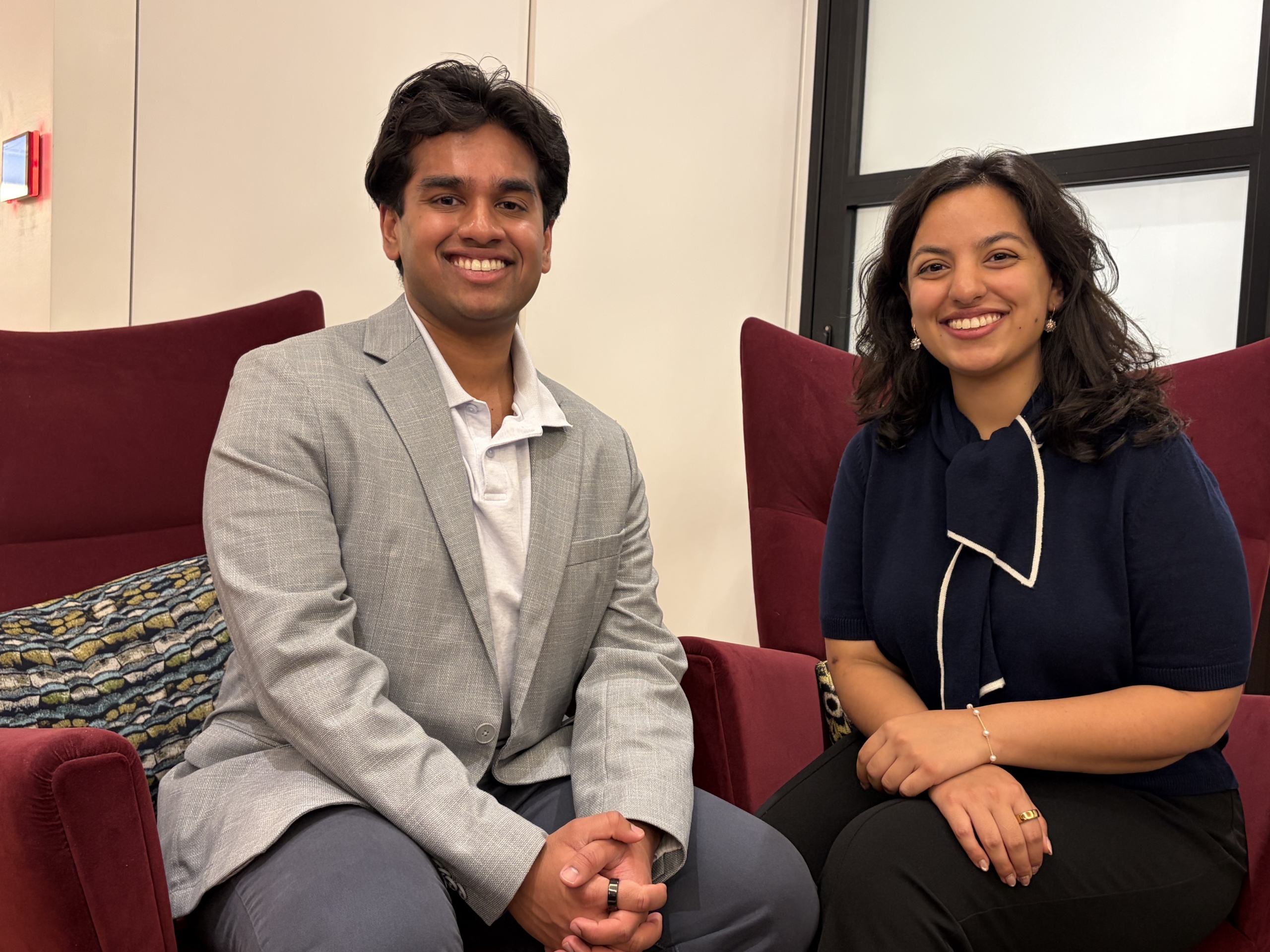
Picture of a brother and sister sitting next to each other
Siblings Arul and Shirali Nigam are co-founders of Circuit Breaker Labs.

The siblings were joined by two other companies building healthcare solutions for the people the system has historically overlooked and underserved: Amy Stratbucker, founder and CEO of BridgeSpace, an emotional AI infrastructure helping neurodivergent children build real-world communication confidence through safe, guided practice, and Gwendolyn Rahn, co-founder and CEO of Sweetling Health, an SMS-based postpartum monitoring platform that helps health systems reduce complications and readmissions in the weeks after a mother leaves the hospital.

Dolphin Tank® isn’t a traditional pitch competition. There are no winners, no elimination rounds, and, perhaps most noticeably, no sharks. Each founder gets three minutes to present their company and then the room opens up. Investors, operators, and advisors in the audience offer connections, strategies, and candid feedback in real time. 

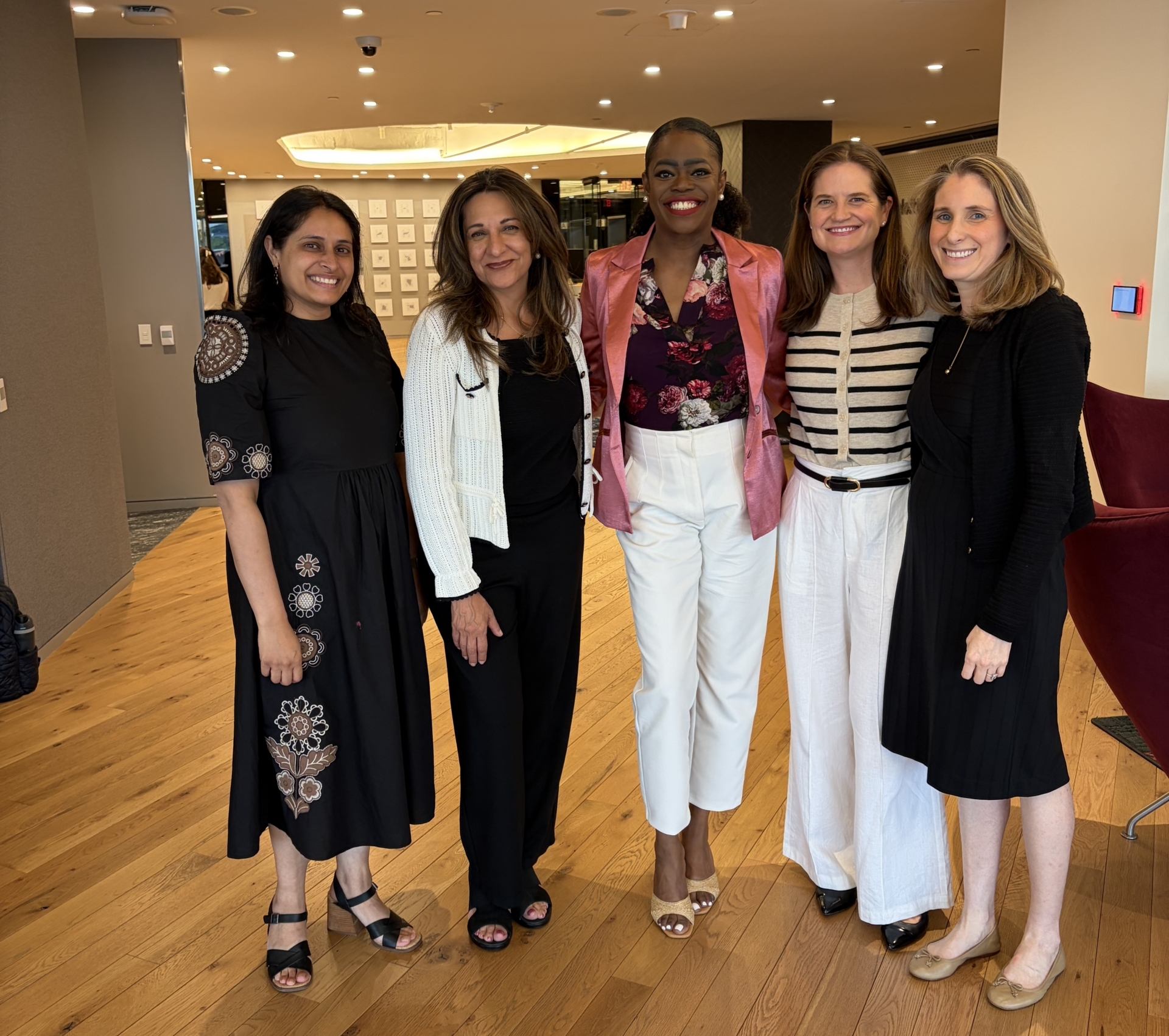
Picture of a group of women smiling
From left to right: Springboard Enterprises CEO Umbreen Bhatti; Elizabeth McCluskey, MBA, Senior Advisor (Ctr) ARPA-H pediatrician, and angel investor; Springboard National Trust Member Nneka Ukpai; Elizabeth McCluskey, Managing Director, TruStage Ventures; and Jillian Levovitz, Chair and Executive in Residence of Springboard’s Women’s Health Accelerator.

“We live in a world where people feel like they have to climb over each other to get ahead,” says Brielle Sneed, Senior Manager, Ecosystem at Springboard. “Dolphin Tank is quite literally the opposite of that.”

Tally Wolff, Senior Startup Ecosystem Manager at Arlington Economic Development, one of the event’s sponsors, agrees.

“One of Arlington Economic Development’s key roles in the startup ecosystem is serving as a front door, helping founders navigate the right resources, partners, and connections at the right time,” she explains. “That’s why we continue to support Dolphin Tank: it brings together an incredible community who can respond in real time to the needs founders share, creating a collaborative, supportive environment that helps female founders with practical guidance and meaningful connections.”

Panelists included Sumedha Mongia, MD, MBA, Senior Advisor (Ctr) ARPA-H pediatrician, and angel investor; Elizabeth McCluskey, Managing Director, TruStage Ventures; and Jillian Levovitz, Chair and Executive in Residence of Springboard’s Women’s Health Accelerator. The event was moderated by Springboard National Trust member Nneka Ukpai.

“I don’t see it as charity; I see it as a competitive edge,” says Elizabeth McCluskey on investing in women-led companies.

“I explicitly seek out women-led companies because the data on outcomes is compelling and the opportunity is consistently underpriced,” explains McCluskey. “Women founders receive a fraction of venture capital relative to their male counterparts, which means there’s a persistent market inefficiency that patient, values-aligned investors can take advantage of. But beyond the returns case, I’ve found that women founders often bring a level of resourcefulness, emotional intelligence, and mission clarity that makes them exceptional operators – especially in the early stages when resilience matters most. I don’t see it as charity; I see it as a competitive edge.”

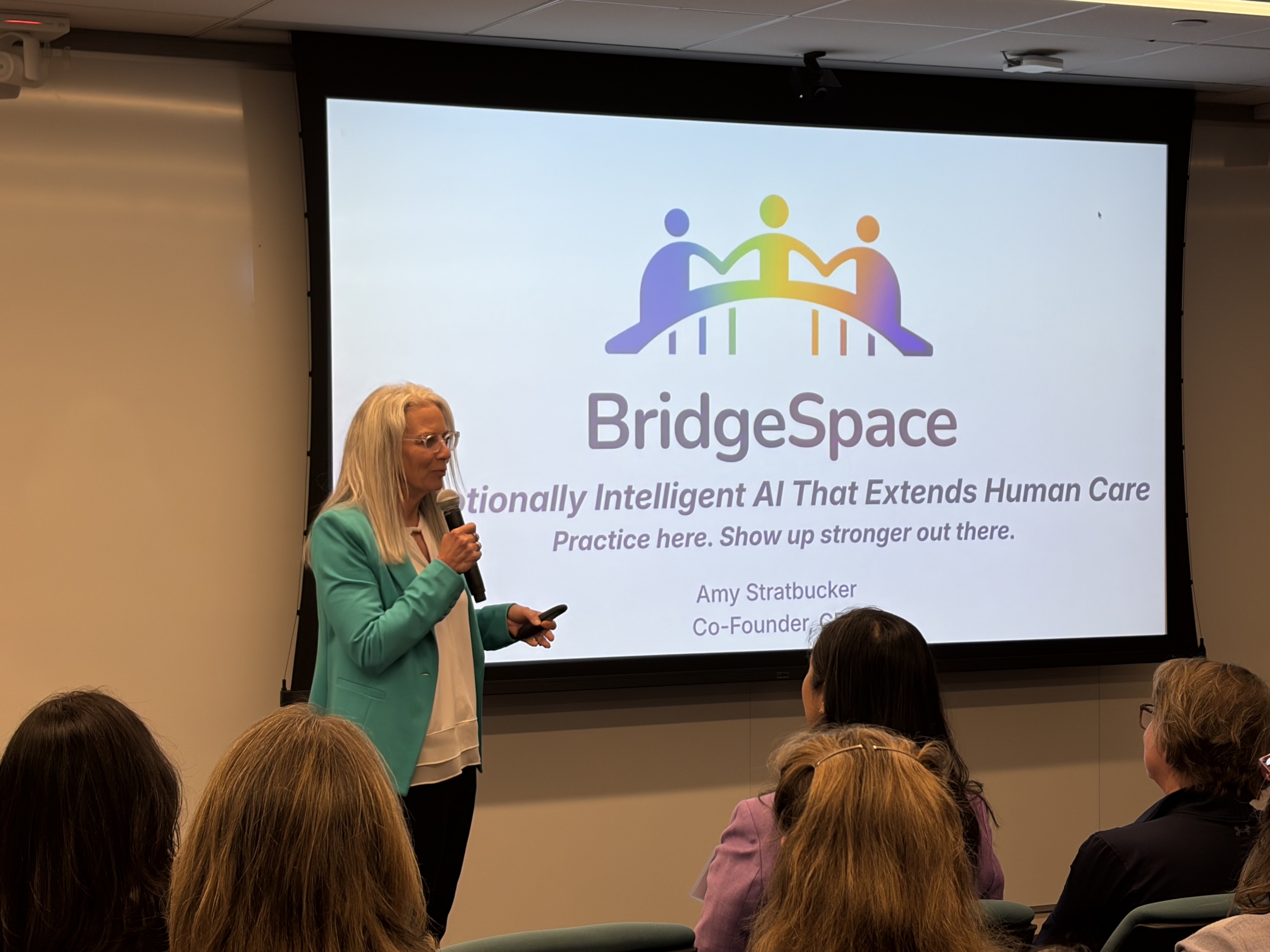
A woman presents in front of a projector
Amy Stratbucker, founder and CEO of BridgeSpace, presents at Springboard’s DC Dolphin Tank®.

In a packed room that included entrepreneurs, investors, and industry experts, attendees stayed long after the presentations were over to offer their advice, support and introductions to the founders.

“It was so meaningful to be surrounded again by builders working on urgent, high-impact problems,” says Nigam. “I really enjoyed meeting investors and connectors who were so generous with their experiences, networks, and advice. People were so genuinely excited to help us think through the next stage of the company. We left with several folks we are hopeful to build alongside.”

Benefits of the event continued beyond the initial gathering. After Dolphin Tank®, Rahn joined the Springboard team and members of the latest Women’s Health Accelerator at their Demo Day in New York City, where she also had the opportunity to participate in an insider conversation at Google about the state of healthcare ventures and the current market landscape.

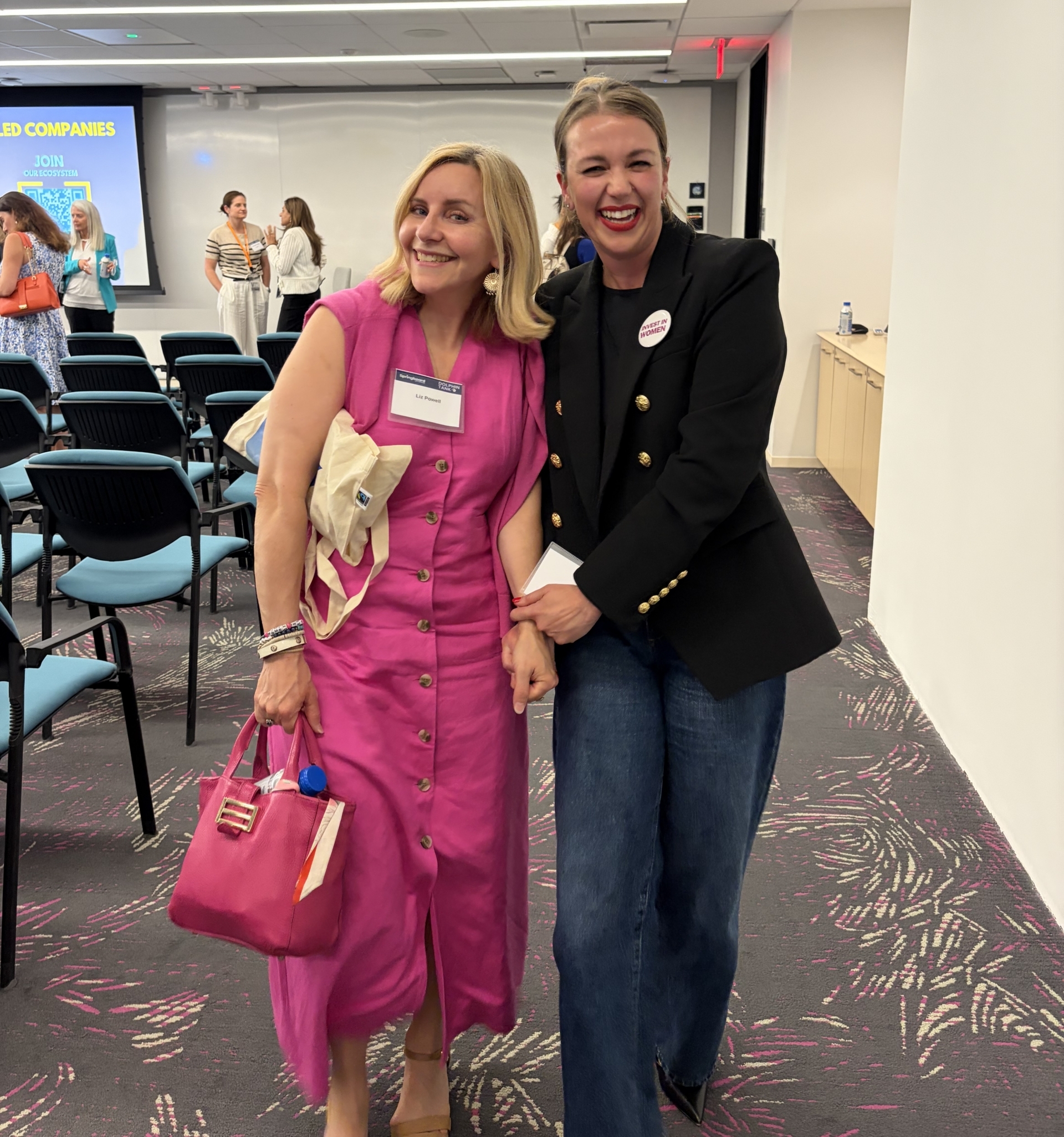
Two women smiling at the camera
Liz Powell (left), founder of G2G Consulting & Women’s Health Advocates, and Gwendolyn Rahn, co-founder and CEO of Sweetling Health, share a laugh after presentations.

“For more than 25 years, Springboard has helped launch some of the most consequential women-led companies in the world,” says Rahn. “To present in a room of investors, operators, and advisors who show up to lift founders up rather than pick them apart is a real privilege.”

As for Nigam, she’s optimistic that future founders will feel compelled to join Springboard’s ecosystem.

“I hope they feel inspired to try and build something of their own,” she says. “Being a founder is really hard, especially when you don’t know many people like you who are founders as well. So for me getting to be in a room with so many inspiring female founders made me feel like, oh, this is possible.”

If you’d like to learn more about our Dolphin Tank® founders, email [email protected]. If you’re interested in attending, pitching or sponsoring a future Dolphin Tank, please email [email protected]. 

Springboard is a 501(c)(3) nonprofit organization. Every dollar donated supports the infrastructure that puts women-led companies in front of the people who can accelerate their success. Donate here.

Picture of a Black woman sitting on a green bench by a pond

Meet Brielle Sneed: Concierge, Connector, and Community-Builder

Brielle Sneed has never met a stranger. She’s the kind of person who makes you feel like the most interesting person in the room, asks the follow-up question you wanted to be asked, and leaves you wondering why you hadn’t connected sooner. And if you’re reading this, she’s already dying to meet you.

Last month, Brielle joined Springboard to tend to our community – to strengthen and grow it. As Senior Manager, Ecosystem, Brielle serves as the first point of contact for founders, alumnae, investors, advisors, and everyone else looking to give or get connections, support, and more from the Springboard community. 

In other words, if you’ve been wanting to get involved – or re-engaged – with Springboard, Brielle’s the person to reach out to.

Read on to learn more about what brought Brielle to Springboard, what she’s excited to build here, and how to get in touch.

Tell us about your journey to Springboard.

I went to school for Radio/TV. The dream was to become the next DC correspondent, or to write a film. When neither of those felt like quite the right first step out of school, I started exploring whatever I could find adjacent to television and advertising. I ended up working at the very front edge of an industry that was brand new at the time: ad tech.

That set the pattern for everything that came after. I went from ad tech to a corporate role at Comcast, to a brief stint in early childhood education, to events, to nonprofit youth leadership, then to higher ed. In every one of those roles, I walked in green. I was a fish out of water – new to the work, new to the people we served, new to the industry. And in every one of them, I succeeded because of people who became my fierce advocates. People like Jenna Gaudio, who gave me my first shot in ad tech and many others, women and men, at every stop along the way.

I am who I am because of the people who mentored me, supported me, and advocated for me whether I was in the room or not. Not everyone gets that. I did, and I don’t take it lightly.

My most recent role was at The Wharton School at the University of Pennsylvania, where I worked on the alumni relations team. There, I saw, up close, what happens when a community of people commits to each other’s success over decades. Students and alumni opening doors for each other, showing up for each other, staying connected long after the formal part is over.

That’s what I want to bring to Springboard.

Because women run this world. And the women I’ve worked with – and the women who have made me – also need community. They need people in their corner. People who will speak to their character, their skill, their expertise, their ability to lead. People who will advocate for them inside the room, and outside of it. People who open doors that, on their own, would have been impossible to open.

That’s what Springboard is. That’s what we do for the women-led companies we accelerate – for the founders, and for the senior leaders building alongside them. Bringing that emphasis on community to this team is exactly what I’m here to do – and making it a vibrant, dynamic, responsive space really excites me.

So, what does a Senior Manager, Ecosystem actually do?

To put it simply, I’m a concierge, connector, and a community builder.

The concierge part: I’m the first point of contact when someone new shows up at Springboard. My goal is to know our community deeply – alumnae, investors, our Councils, advisors, and industry experts, corporate partners, everyone – so that when someone needs support from this network, I can help them find it as easily as possible. 

The connector part is the follow-through. I want this to be a community people keep coming back to – and keep pouring into. The worst version of this role would be one where I’m not in regular conversation with our community. So: please talk to me.

The community builder part is the systems work. I’m a big nerd about a process, a tool, and a system. I love a good workflow because I love to help people.

Springboard is growing fast, and an important part of my job is helping to build the infrastructure that lets our small team work at that scale. It’s not the headline part of the role, but it’s how everything else gets to happen. It’s also how I help us close feedback loops – taking what founders and alumnae actually experience and turning it into improvements we can make.

Who do you most want to hear from, and how should they get in touch?

Honestly, everyone. But a few specifics are:

  • Founders who are thinking about applying to participate in one of our programs – an accelerator or a Dolphin Tank®. With our Programs team, I can help you figure out whether it’s the right fit, or the right timing.
  • Alumnae looking to re-engage with Springboard, share what you’re building, or tell us what we should be doing differently.
  • Investors and industry experts who want to help the most exciting women-led companies in the world succeed. Here too, with our Programs team, we can explore what the best way to do that is – whether that’s as an advisor, a Dolphin Tank® panelist, a sponsor, or some other way.
  • Anyone with a Springboard story. Tell me what I don’t know! I’m actively building the feedback loops to surface stories of impact and of opportunity, and to turn them into something useful.

I’m always up for a call or Zoom. You can schedule that here, or feel free to email me at [email protected]. 

I’ll also be in DC and New York City this month, at:

What else should the Springboard community know about you?

A fun fact: my dog is named Azula, after the character from Avatar: The Last Airbender. It might sound random, but it’s actually deliberate.

Azula is what most people would call the rough one. Maybe even the villain. And she’s one of the few female characters from that era who got a really dynamic, well-rounded build. People with flaws. Most women characters back then were written as just “the perfect woman.”

I think about that often in this work. The founders and senior leaders we support aren’t supposed to be perfect. They’re supposed to be full, complicated, real people building real things. That’s the version of leadership I want Springboard to keep making space for.

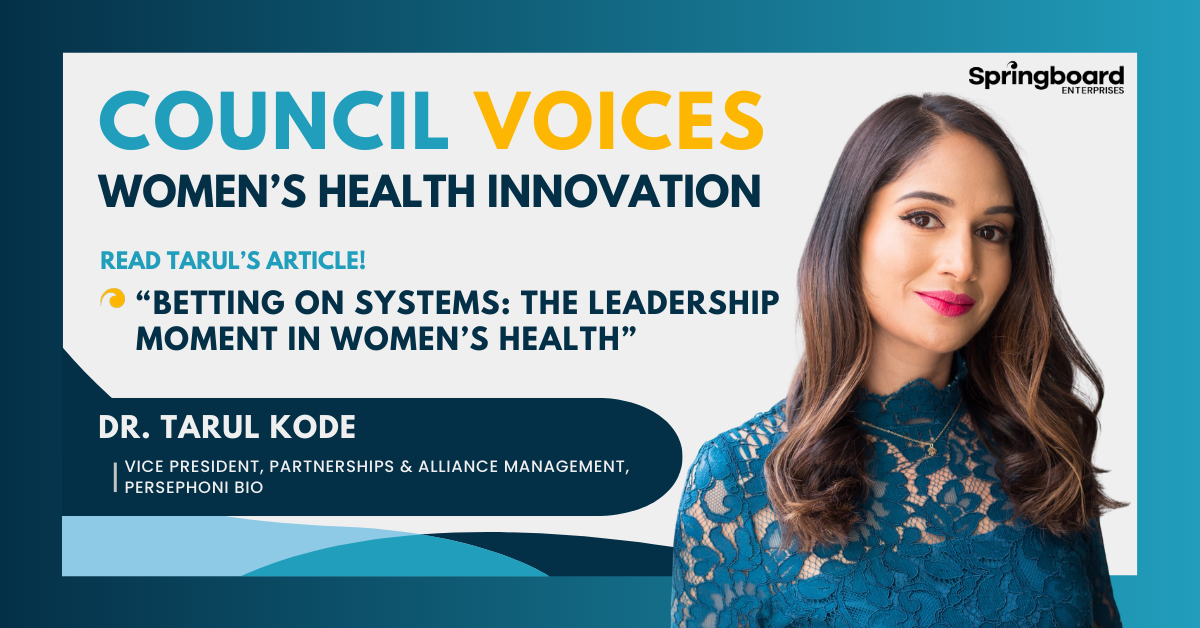
Dr. Tarul Kode: Betting On Systems: The Leadership Moment In Women's Health

Dr. Tarul Kode

Betting On Systems: The Leadership Moment In Women’s Health

Recently, I wrote about betting on myself. It was a reflection on leaving a long career in managed care to step into healthcare venture and company building. I chose alignment over comfort. Conviction over predictability. That decision reshaped my path.

Today, I am thinking about a different kind of bet. On systems.

As a member of the 2026 Women’s Health Council at Springboard Enterprises, I have the privilege of advising and learning from founders and investors who are reshaping the future of healthcare. Springboard has played a catalytic role in expanding access to capital and elevating women innovators across the ecosystem.

The visibility we are seeing in women’s health today matters. But visibility is not infrastructure.

Reflecting on JPM 2026, one of the most consequential conversations centered on a data-driven reframing of women’s health as an investment category. In Follow the Exits: Why Women’s Health is a Smart Bet in Healthcare, Anna Jeter and Emma Giancarlo of AOA Dx analyzed 276 women’s health exits over a 25-year period. Their findings are unequivocal.

More than $100 billion in realized exit value has been generated in women’s health since 2000.

Of the 159 transactions with disclosed values, $91.5 billion occurred between 2000 and 2024.

Nearly half of all exits happened in the past five years.

Twenty-three companies surpassed $1 billion in exit value.

Diagnostics delivered median exits exceeding broader healthcare benchmarks by more than 2×, with capital efficiency ratios above 12×.

Strategic acquirers drove 91 percent of transactions.

This is not a nascent category. It is a scaled, durable market that has been historically misclassified and under-measured. That distinction matters. When performance is mismeasured, capital follows flawed assumptions.

The Gap Isn’t Returns. It’s Infrastructure.

Across my career, I have worked at the intersection of clinical care, venture capital, strategic partnerships, and philanthropy. I have seen innovation succeed and stall for reasons that have little to do with science and everything to do with capital design, governance discipline, and ecosystem coordination.

The women’s health capital gap is often framed as a question of opportunity. The evidence suggests it is a question of architecture.

If more than $100 billion in exit value has already been realized, the issue is not whether women’s health generates returns. It is whether our capital frameworks are calibrated to recognize its full scope.

Historically, women’s health was narrowly defined as reproductive care. Yet only a small percentage of women’s disease burden is exclusive to female biology. The vast majority arises from conditions that affect women disproportionately or differently, including oncology, cardiometabolic disease, autoimmune disorders, neurodegeneration, and chronic conditions

When those exits were categorized under broader healthcare verticals, the performance of women’s health as a cohesive investment segment was obscured.

Infrastructure requires us to widen the lens. Women’s health is not a thematic investment lane. It is a primary determinant of economic productivity, multigenerational stability, and population health.

Capital Allocation Is a Leadership Decision

Capital allocation is not neutral. It signals what we value. It shapes which companies scale. It determines which innovations survive long enough to mature.

The Follow the Exits data demonstrate that women’s health companies have not only exited at scale, but done so efficiently.

Yet prevention, early detection, menopause, neurodegeneration, and cardiometabolic health in women remain undercapitalized relative to disease burden.

That mismatch is not about viability. It is about conviction. Curiosity enters markets when headlines shift. Conviction builds systems that endure beyond cycles.

The capital gap in women’s health is not about returns. It is about resolve.

Reclaiming Agency Through Investment

For me, betting on systems became deeply personal during a period of profound transition. After my divorce, I made a conscious decision to reclaim my agency — not only professionally, but financially. Around the same time, my daughter was healing from a pancreatic tumor. That experience reshaped my understanding of what innovation truly means for families navigating uncertainty.

I chose to become an investor not simply to participate, but to help shape the system itself. I became one of the earliest investors in Persephoni Bio, and ultimately a builder within it — a woman-led biotech venture studio redrawing the map for how oncology, rare disease, and immunology companies are built and scaled to reach patients with greater rigor and speed.

I did not invest because it was easy. I invested because it aligned with my values.

We are living through a period that feels heavy across healthcare and society. Trust in institutions is fragile. Patients are navigating increasing complexity. Scientific advancement is accelerating, yet translation remains uneven.

In that environment, governance is not bureaucracy. It is protection. Regulatory fluency is not friction. It is strategy. Philanthropic alignment is not ancillary. It is upstream risk mitigation.

As a mother of two teenagers,  I think often about the systems they will inherit. The healthcare infrastructure we design today will shape the care they receive decades from now.

That perspective changes how I evaluate opportunity. It changes what I am willing to bet on.

From Momentum to Infrastructure

The data confirm what many of us working in this field have long believed: women’s health is not emerging. It is evolving. Nearly half of all exits have occurred in the past five years. Billion-dollar transactions are no longer anomalies. Strategic acquirers are repeat buyers.

Momentum is real. The leadership question now is whether we translate that momentum into infrastructure. Betting on systems in women’s health means: 

  • Deploying capital with conviction, not opportunism.
  • Integrating regulatory and clinical expertise early.
  • Designing diagnostics and therapeutics with sex-specific data from the start.
  • Bridging venture and philanthropy so prevention and early detection do not stall.
  • Building cross-sector partnerships so innovation is not siloed.

Springboard has demonstrated what ecosystem building looks like when leaders are supported early and surrounded by community and access. That work is foundational.

Now we have an opportunity to deepen it.

To align capital allocation with disease burden. To correct legacy misclassification that obscured value. To treat women’s health as infrastructure, not adjacency.

Betting on disruption can feel bold. Betting on systems is quieter. But systems are what endure.

In women’s health, endurance will determine whether this moment becomes a legacy — or another missed inflection point.

About Dr. Tarul Kode

Tarul Kode, PharmD is Vice President of Partnerships & Alliance Management at Persephoni Bio, where she shapes how biotech and philanthropy work together to deliver enduring impact for patients and communities. Persephoni is a hybrid venture studio and private equity platform advancing breakthrough therapies across oncology, immunology, and rare disease. In her role, Tarul leads Persephoni’s highest-priority strategic partnerships across industry, academia, philanthropy, and the broader innovation ecosystem, working to build durable, values-aligned collaborations and long-term value creation. She also plays a leadership role in Persephoni’s philanthropic and public-benefit efforts, focused on advancing early biomedical research, prevention, and early detection.

A healthcare and life sciences executive, board member, advisor, and angel investor, Tarul brings more than two decades of experience across clinical care, venture partnerships, investing, and advising healthcare organizations and startups. Her work centers on supporting purpose-driven leaders and building ecosystems where innovation, accountability, and real-world impact reinforce one another.

Tarul also serves on boards or advises several mission-aligned organizations, including Executive Women in Bio, Women Leaders of the World / How Women Lead, CSweetener by HLTH Foundation, and Springboard Enterprises. She was named one of the 2025 BLOC100 Most Impactful Women of Color and Allies in biopharma, healthcare, and life sciences. She holds a Doctorate in Pharmacy (cum laude), completed Harvard Medical School’s Executive Global Health Care Leaders Program (Cohort 1), and is an alumna of VC University through Berkeley Law, NVCA, and Venture Forward.

Based in the greater Seattle area, Tarul is also a mother of two teenagers, grounding her leadership in service, accountability, and responsibility to the next generation.
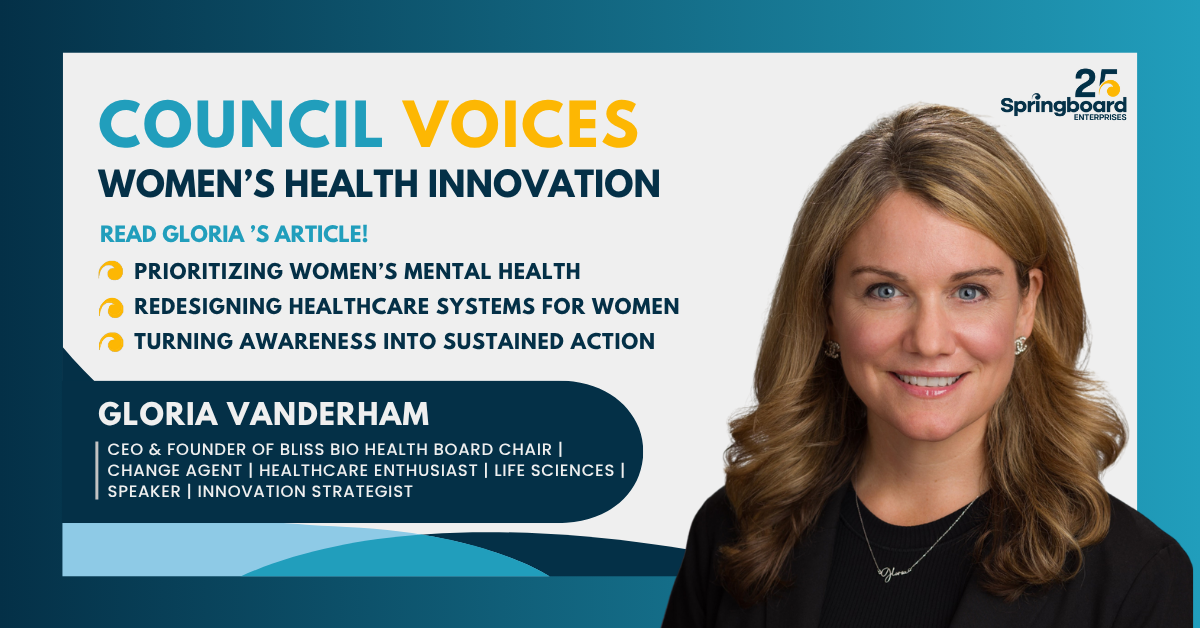
Dr. Faith Adole: From the Frontlines to the Future: Why Health Tech and Innovation Need Clinician Leadership

Dr. Faith Adole

From the Frontlines to the Future: Why Health Tech and Innovation Need Clinician Leadership 

By Dr. Faith Adole, DNP, MBA, MSN, FNP-C, Founder & CEO, U-VOL Foundation

Health tech is booming. From AI-powered diagnostics to wearable monitors and digital therapeutics, innovation is redefining how we deliver and experience care. Yet too often, the people closest to patients—the clinicians, and especially nurses—are absent from the rooms where these ideas are imagined, designed, and deployed. 

As a nurse practitioner and founder of a global health nonprofit, I’ve worked at both the frontlines of care and the strategy tables of health systems and startups. Across these spaces, I’ve seen a persistent disconnect between technology creators and those delivering care in hospitals, clinics, and underserved communities. The result? Solutions that look promising on paper but falter in practice—because the voices of those with lived clinical experience were never part of the equation. 

What We Lose Without Frontline Leadership 

When clinicians—particularly nurses—are excluded from innovation, we lose far more than representation. We lose relevance, trust, and impact. 
I’ve seen maternal health technologies introduced in rural settings without accounting for infrastructure gaps or cultural barriers that nurses could have flagged instantly. I’ve also seen digital engagement tools launched without understanding how providers actually communicate with patients day to day. These aren’t minor oversights—they are lost opportunities to create meaningful, lasting change. 

Strategy without delivery insight is like a map without a compass. Frontline leaders bring that compass—the contextual, relational, and systems-based knowledge needed to turn good ideas into sustainable solutions. 

Nurses as Innovators, Not Just Implementers 

Nurses are natural innovators. We adapt in real time, manage complexity, coordinate care, educate, advocate, and problem-solve every day. Yet too often, we’re treated as implementers of someone else’s vision rather than leaders and co-creators in innovation.
The truth is, nurses are not only skilled clinicians—we are systems thinkers, human-centered designers, and builders of trust. We understand how people move through care systems because we walk beside them. We understand the barriers patients face because we help them navigate them. 

When nurses are invited into the innovation process early—not as token testers but as strategic partners—we design smarter, scale faster, and solve deeper. 

Case Studies from the Field: Innovation Powered by Clinician Insight 

The following examples highlight the transformative potential of frontline-led innovation: 

  • U-VOL Foundation’s Hybrid Training Model through the ValueHer Initiative (Nigeria & Ghana) 

Our maternal health training model blends virtual education with in-person upskilling. Led by nurses and midwives, we collaborate with local health leaders to strengthen essential frontline skills in: 

  • Emergency obstetric care 
  • Maternal and newborn resuscitation 
  • Respectful maternity care 
  • Point-of-care ultrasound (POCUS) 
  • Use of essential medications and midwife kits 
  • We also strengthen referral networks, linking traditional birth attendants and midwives with skilled providers to manage high-risk cases safely. 

Designed by clinicians for clinicians, the ValueHer Initiative uses a 

multidisciplinary approach to significantly boost provider confidence and capabilities in maternal health care. 

  • CHAMP (Rwanda) 

The Community Health and Medication Program empowers community health workers with tablets to track chronic disease patients in remote areas. By embedding nurse insights into both design and training, CHAMP improved medication adherence and care continuity. 

  • Project ECHO with Midwives (Global) 

The “hub and spoke” telementoring model has reshaped professional learning across borders. In countries like Nigeria and India, nurses and midwives now lead ECHO hubs, mentor peers, and close maternal health gaps through collaborative, technology-enabled learning. 

  • NurseHack4Health (United States) 

This hackathon showcases the untapped innovation power of nurses. Successful

prototypes addressing nurse well-being, care coordination, and patient engagement emerged directly from frontline challenges reframed as digital solutions. 

Each initiative underscores a key truth: when frontline voices lead, innovation becomes more relevant, equitable, scalable, and impactful. 

A Call to Action: Let Nurses Lead 

To create health tech that delivers true outcomes, we must move beyond consulting nurses—we must empower them as co-leaders. 

  1. Include nurses on innovation boards and strategy teams. Ensure nurse representation in hospitals, startups, accelerators, and funding bodies where strategic decisions are made. 
  2. Fund nurse-led innovation. Create pathways for nurses to access grants, seed funding, and incubation support for their ideas. 
  3. Create fellowships from practice to innovation. Develop programs that help clinicians engage with health tech, entrepreneurship, and systems thinking. 
  4. Amplify nurse-driven success stories. Celebrate what’s working. Use storytelling and media platforms to highlight nurse innovators worldwide. 
  5. Mentor the next generation. Build mentorship networks that unite clinical expertise with innovation readiness among early-career nurses. 

We cannot reimagine healthcare without the people who sustain it. The future of health tech must be built through cross-sector and cross-role collaboration anchored in lived experience. Nurses have always been innovators—whether or not they’ve been called that. It’s time the world recognizes nurses not just as caregivers, but as essential leaders shaping tomorrow’s systems.

About Dr. Faith Adole:

Dr. Faith Adole is a distinguished healthcare executive, global health advocate, and clinician with nearly two decades of combined clinical and leadership experience. As a board-certified Nurse Practitioner, she has dedicated her career to delivering compassionate, high-quality care while driving systemic change through healthcare leadership and program development. As the founder and CEO of U-VOL Foundation, Dr. Adole has spent the last decade championing health equity and transforming underserved communities. Under her visionary leadership, U-VOL has implemented impactful initiatives addressing clean water access, maternal health, and health education across six countries, directly improving the lives of thousands. Dr. Adole holds a Doctorate in Nursing Practice in Executive Leadership and an MBA from Johns Hopkins University, seamlessly blending clinical expertise with strategic acumen. Her talent for fostering strategic partnerships has mobilized funding and resources, enabling sustainable, community-driven health programs. Her innovative work in global health has earned her numerous accolades, including the National Diaspora Merit Award for Volunteerism & Healthcare, the Humanitarian of Africa- African Heart Award, and the Global Leadership & Philanthropy- Face of a Humanitarian Award among many others recognizing her leadership, humanitarian efforts, and commitment to health equity. Beyond founding U-VOL Foundation, Dr. Adole has held senior leadership roles and provided expert consulting services, consistently driving organizational success and the implementation of transformative health initiatives. Her strategic insights have empowered teams and shaped programs that create lasting impact. A thought leader and advocate, Dr. Adole frequently speaks on global health, maternal health, and workforce empowerment, inspiring others to advance health equity. She is a proud advocate for representation in healthcare leadership, championing diversity and amplifying underrepresented voices to drive meaningful change. Dr. Adole’s unwavering commitment to compassionate care and sustainable solutions continues to leave an indelible mark on vulnerable populations worldwide.

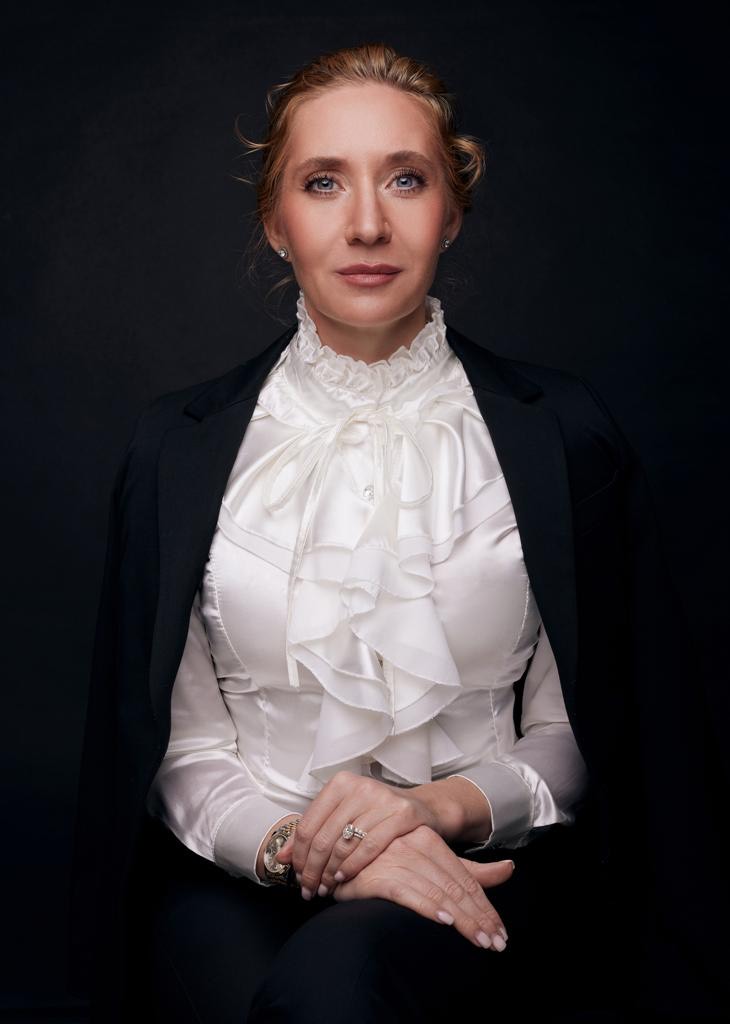
Alexandra Hirzel: MedTech Investor Perspectives: The Tracks We’re Laying for 2025 and Beyond  

Alexandra Hirzel

MedTech Investor Perspectives: The Tracks We’re Laying for 2025 and Beyond  

Picture two trains, both bound for the future of healthcare. 

One’s in the United States — a high-speed bullet train powered by deep private capital  and an appetite for risk. The other’s in Europe — an elegantly engineered express,  running on a blend of venture capital and public funding, methodical in its progress and  meticulous about the track it’s on. 

Both are heading toward innovation. But the ride, the rules, and the risks are worlds  apart. 

1. The US vs. Europe Playbook: How the Money Moves  

In the US, speed wins. If you’ve got traction, a credible path to revenue, and a bold  enough vision, there’s capital ready to back you — often in big, late-stage rounds. It’s  the land of the $100M growth raise, the rapid scale, the “let’s get to IPO before the  window closes again.” 

Europe? Think different. The EU just dropped €403 million into medical device  innovation — public money designed to unlock another €826 million in private  investment. Here, you don’t get the cheque for trying. You get it for proving. Clear your  regulatory hurdles, validate your outcomes, and then the capital starts flowing. 

For founders, the question is simple: do you want to be funded to run the race, or  funded once you’ve crossed the qualifying line? 

2. FemTech: The Promise, the Bias, the Opportunity  

If you want to see the funding gap in living color, look at FemTech. 

The market’s barreling toward $75 billion globally. Europe’s early-stage FemTech  funding tripled since last year. North America still holds the crown with 65% of global  capital. 

And yet… add a female founder to the team and the average raise drops by 23% —  even in a sector literally designed to improve women’s health. Fertility and pregnancy  dominate funding; menopause barely gets a seat at the table.

In Europe, FemTech is often valued through public health impact. In the US, it’s all  about market size and exit velocity. Both see opportunity. Neither has solved the bias. 

Here’s the founder takeaway: if you’re building in FemTech, your pitch can’t just be for  women. It has to be for the system — cost savings, scalability, and adoption baked in. 

3. Digital Therapeutics: Regulation as the Green Light  

If FemTech is where you spot bias, Digital Therapeutics (DTx) is where you spot the  investor’s biggest tell: regulatory clarity. 

In the US, the FDA’s SaMD framework is a decent map — but not a full GPS. Only 2%  of products publish cybersecurity summaries, and enterprise buyers are wary. 

In Europe, the MDR sets a tough but trusted standard. And Germany’s DiGA program?  That’s the holy grail. Get your DTx approved, get it prescribed, get it reimbursed —  without spending two years selling into health systems. Investors know that’s a  shortcut to adoption, and they price it in. 

4. Investor Signals You Can’t Ignore  

Across both continents, smart money is looking for: 

  •  Clinical validation before scaling spend. 

  •  Clear reimbursement or payer adoption pathways. 

  •  Founders who know the regulatory chessboard. 

  •  AI, FemTech, and DTx plays that prove clinical and commercial value. 

The 2025 capital market isn’t forgiving. It’s selective. And it’s leaning hard toward  “ready-to-scale” over “great idea in development.” 

5. The Real Message Behind “Make Health Tech Great Again”  

This isn’t about wearables. Or AI buzzwords. Or app libraries. 

It’s about who designs the next layer of healthcare infrastructure. 

Right now, in the US, that design is being outsourced to a loose network of private  players, tied together by a voluntary pledge. No legal guardrails. Massive public visibility. 

If it works, it’s a leap forward. If it fails, we’re looking at more fragmentation, more  privacy breaches, more digital health inequality.

Europe, meanwhile, is watching. But no EU country has rolled out a nationwide  framework to match the US’s scale or speed. Switzerland, France, Germany — they’ve  piloted, but they haven’t committed. And here’s the risk: if Europe doesn’t act, it won’t  just import the platforms. It will import the ethics, governance, and power structures  that come with them. 

6. The Founder’s Lens on 2025 and Beyond  

For founders, the question isn’t “Is the market there?” 

The market is huge. The unmet needs are clear. The investor appetite is real. 

The question is: 

  •  Which track are you building for — the US’s high-speed risk capital, or  Europe’s regulation-first, milestone-backed funding? 

  •  Can you speak the investor language in both? 

  •  And in the bigger picture — are you just building a product, or are you  shaping the very rails that future healthcare will run on? 

Because the tracks we lay in 2025 will decide who owns healthcare’s infrastructure in 2030. 

Final Word:  

At The Scale Foundry, we tell our founders: Fundraising isn’t about convincing  someone to believe in your vision. It’s about proving you’ve already built the future —  and all they have to do is buy a ticket.

About Alexandra Hirzel:

Alexandra Hirzel is an exited serial entrepreneur, MedTech investor, and founder of The Scale Foundry, an advisory firm that helps deep tech and digital health startups scale smarter, faster, and with investor-ready precision. With more than 15 years leading AI, MedTech, and digital innovation across the US, Europe, and the Middle East, she sits on global boards, advises founders from seed to scale, and speaks at leading forums including the UN AI for Good Summit. Alexandra is known for cutting through the hype to deliver strategies that win funding, navigate regulation, and turn ambitious ideas into market-shaping companies.

https://www.thescalefoundry.com

https://www.linkedin.com/in/alexandra-hirzel-35134145

https://www.linkedin.com/company/the-scale-foundry

Ikram Guerd: Beyond the Breakthrough: How Branding, Trust, and Community Drive Growth in Women’s Health

Ikram Guerd

Beyond the Breakthrough: How Branding, Trust, and Community Drive Growth in Women’s Health

In the fast-growing women’s health and FemTech space, innovation alone isn’t enough. 

If we want to change care, we have to change the conversation.

Whether you’re launching a groundbreaking medical device, a digital platform, or a new service, building brands, trust, visibility, and community are not extras.

They are your growth engine.

The traction comes from how we talked about it, who we talked to, why we’re doing this in the first place, and how much they believe it.

👉 It’s about making people care.

👉 It’s about building trust, awareness, and belonging.

👉 It’s about showing not just the “what,” but the “why.”

Let’s break it down with real-world examples of who’s doing it right, and walk through actionable strategies you could use.

Branding That Builds Emotional Resonance

Branding is more than a logo. Strong branding goes beyond logos; it speaks to identity, safety, and values. It’s your credibility at first glance. 

In a category still battling stigma and misinformation, consistent brand storytelling can cut through skepticism and connect with your audience emotionally.

It’s important to mention that, in women’s health, trust isn’t a nice-to-have. It’s the only way in. 

Branding helps you create an emotional connection that builds trust in intimate health topics.

  • Aspivix leads the gynecological care with its brand promise: “Modernize gynecology with gentle in mind.” Using this example of Aspivix where I lead the marketing efforts, we’re not just launching a new revolutionary device for gynecological procedures, we’re rewriting the experience of gynecological care. From its logo combining a heart and the Yoni, to product design and pitch decks, the brand speaks to empathy and innovation with its solution Carevix®, a suction-based alternative to the painful cervical tenaculum (a 135-year-old instrument used to extract bullets), dedicated to IUD placements and other procedures in gynecology. The story behind the tenaculum is powerful and speaks volumes. The branding makes the device part of a more compassionate, patient-centered conversation, as recommended by ACOG. Personally, during every presentation and discussion, every day, I’m proud to have women sharing their personal IUD or gynecological experience with me, confirming the importance of our mission and the trust we’ve built. 
  • Tia Health built its brand around “Care for women. Care for life.” making health the foundation and not the focus to empower women to live fully their lives. With a whole picture of a woman’s health approach, their goal is to become the new standard of care for women with a team of experts working with each woman. The brand is warm and bold, with a patterning system that symbolizes how everything is connected in our “whole person” approach to healthcare, earthy tones inspired by nature to help patients feel warm, cozy, and at ease in their clinics that feel warmer and more welcoming than any regular clinic. In addition, a strong social media presence allows women to voice their experiences at tia Health, creating an engaged community and a sense of trust.
  • Re-Spin: A menopause care platform that combines expert advice with supportive branding designed to normalize and empower women through change. With actress Halle Berry’s authentic leadership and personal lived experience, now the new face of menopause, she rebranded menopause, asking the question “What if menopause just needs a rebrand?“ connecting with women navigating their journey and changing the narrative, showing women active 50yo+ full of life. It earns trust by combining real community stories, expert coaching, and user-centric design and by giving women more power to “Menopause your way”.
  • Rosy Wellness uses warm, approachable, modern branding and a fun experience to help women increase their sex drive and feel seen and cared for. Rosy was created by Dr. Lyndsey Harper, MD, who brings credibility and ease to start a conversation. Connecting women with sexual health experts for more specific and personalized recommendations adds another layer of trust and community.

Let me add two statistics here (Edelman Trust Barometer, 2024):

  • Brands that evoke trust see up to 3x higher customer loyalty and purchase intent.
  • 84% of people say they need to trust a brand before they’ll buy from it.

My suggestion: Define your brand’s why with an emotional connection and reflect it consistently, from website copy to packaging, to how your team talks about your mission.

Marketing That Educates and Empowers, Beyond Just Selling

Today’s consumers, whether clinicians or patients, want more than products; they need to understand the “why now” and “why you.” 

Know your audience deeply and create educational, stigma-breaking content using patient stories for the emotional connection and trust to use in platforms where your audience already is.

  • Daye launched campaigns de-stigmatizing menstrual care, tying their brand to advocacy and awareness.
  • Midi Health: Personalized menopause care with content-led marketing focusing on empowerment and science.
  • Aspivix develops clinician-led and patient-experience content that explains why tenaculums are painful and how Carevix® can change the narrative around IUD adoption.
  • Teal Health: Offers accessible cervical cancer detection through digital education and at-home testing kits using marketing that informs and empowers early detection.
  • Luwi: An innovative, finer liner alternative to the condom for contraception and STI protection, designed with a fresh, playful brand voice that educates and empowers users to rethink sexual wellness safely and comfortably.

Let me add one statistic here. Community-driven brands see a 2.5x increase in customer retention (Harvard Business Review, 2023).

My suggestion: Build campaigns that teach, and you can start with a 3-part series: “The Problem,” “The Innovation,” and “What It Means for You.”

Community That Fuels Loyalty

In FemTech, people want to belong to the mission, not just buy a product.

  • Maven Clinic built a $1.7B platform by creating care networks(fertility, postpartum, menopause…) anchored in real support.
  • Kindbody didn’t just open clinics. They built a brand community both online and off.
  • Progyny: Fertility benefits provider that leverages community-driven insights and employer partnerships to scale.

My suggestion: Launch a peer community for either patients or providers. Offer toolkits, training, or just a space to share and support. Let them grow the story with you.

Thought Leadership That Builds Credibility

A crucial step to be taken seriously in healthcare, you need to show evidence and leadership.

Evidence that your innovation works, that is improving outcomes (a financial impact, care impact for patients).

  • HerMD publishes data on patient outcomes and access with a focus on menopause.
  • Aspivix partners with clinics and hospitals on clinical and real-world use cases with 1,300+ patients worldwide who benefited from the experience Carevix. Data were published in the internal journal Contraception and presented at conferences like ACOG.
  • Progyny publishes studies on cost-effectiveness and patient success, establishing authority in fertility benefits.
  • Clue generates trust through science-backed content personalized to each user’s stage of life.

My suggestion: Partner with early-adopters providers to generate data and publish one article, white paper, or thought leadership piece per semester, ideally co-authored with experts or patients.

Partnerships That Scale Impact

Scaling in FemTech isn’t just about capital, it’s about who you know and who believes in your mission.

Strategic networking within the women’s health ecosystem, among founders, clinicians, advocates, and investors, can help create the momentum.

  • Maven partners with Fortune 500 employers to offer its care model as a benefit.
  • Maven and Oura partner to integrate wearable health into virtual care.
  • Kindbody partners with payers early to streamline fertility care access.
  • Aspivix partners with Bayer Healthcare in specific regions to push for co-promotion and/or distribution.

My suggestion: Identify 3 mission-aligned partners(hospitals, start-up, nonprofits, or corporate benefit plans…) and design a simple pilot or collab offer.

Build a Movement, Not Just a Business

The best FemTech companies aren’t just launching tools. 

They’re shifting how women experience healthcare.  They redefine care. 

They’re not selling, they’re solving. They educate, activate, and inspire.

If you’re building in FemTech, your brand is your promise, your story is your bridge, and your network is your amplifier. Start with empathy, build trust, and let your community carry your mission forward.

Ikram Guerd

Chief Marketing Officer – General Manager Aspivix US

About Ikram Guerd:

Ikram Guerd is a recognized leader in MedTech and FemTech, bringing more than two decades of experience driving growth, innovation, and market adoption for healthcare solutions across the U.S. and Europe.

As General Manager and Chief Marketing Officer of Aspivix Corporation, she leads the U.S. expansion and champions Carevix — a breakthrough, patient-centered device designed to make IUD insertion gentle and virtually painless. Her work bridges technology, medical practice, and patient advocacy to modernize gynecological care.

Ikram is also the founder of The FemHealth Marketer, an upcoming platform dedicated to helping women’s health companies amplify their impact through effective marketing, and co-founder of the SoCal Women’s Health Collective, which unites Southern California’s diverse women’s health ecosystem to accelerate collaboration and innovation.

Passionate about empowering women through improved healthcare experiences, she partners with clinicians, industry leaders, and patients to ensure solutions are effective, accessible, and respectful. Her expertise spans strategic planning, scientific marketing, and go-to-market execution, with a track record of building high-performing teams and fostering a culture of innovation.

Beyond her executive roles, Ikram is a committed advocate for women’s empowerment. She mentors emerging leaders and has served on the Board of Inspiring Girls USA, working to break gender stereotypes and inspire the next generation of changemakers.

Deanna Angello: Commercializing Innovation in Healthcare: Why “Think Commercial” Needs to Start on Day 1

Deanna Angello, MBA

Commercializing Innovation in Healthcare: Why “Think Commercial” Needs to Start on Day 1

When my father was diagnosed with a rare neurodegenerative disease known as frontotemporal dementia (FTD), I knew that breakthrough therapies can still leave patients stranded if access hurdles aren’t solved. I have seen it happen in my biopharma career more than once. Those experiences — and two decades of bringing pipeline assets to market at Pfizer, Genentech/Roche, Kite/Gilead, and Johnson & Johnson— taught me a simple lesson: scientific ingenuity is only half the job. Unless a biotech starts designing for customers, competitors, payers, regulators, and patients early, even an FDA approval can end in commercial disappointment. If you truly understand commercialization, you know that it is so much more than just “sales and marketing”.

⏰The Cost of Waiting

Drug launches are brutally unforgiving. Research has shown that roughly two-thirds of launches miss their first-year revenue targets. For first-time launchers the odds are worse: only 28 % beat analyst forecasts compared with nearly half for seasoned companies. Those misses are not the result of mediocre science; they’re usually the price of postponing commercial thinking until Phase III.

Consider Biogen’s Alzheimer’s drug Aduhelm – a space I know well. The antibody won accelerated approval in 2021, yet CMS confined coverage to clinical-trial settings because the evidence package failed to convince payers. The label sat on a shelf while the company re-ran studies to answer questions that could have been anticipated years earlier.

Or look at Bluebird bio’s $2.8 million gene therapy Zynteglo. A curative promise could not overcome sticker shock and fragmented reimbursement systems; three years later the company was forced into a take-private deal amid a cash crunch. The science worked. The go-to-market model did not.

❓Begin with the End Customers in Mind

There is no longer one decision maker in healthcare. There are several, as well as enablers and influencers on whether or not a patient will ultimately get a drug. This has evolved tremendously since I started in the industry 25 years ago when you had one customer, one value prop and one. Times have changed. “Customer” in healthcare is plural:

StakeholderCore QuestionEvidence They Need
RegulatorsIs it safe & effective?Robust clinical data, validated endpoints
Payers / HTA bodiesIs it worth paying for?Comparative effectiveness, real-world outcomes, budget-impact models
PhysiciansWill it change practice?Head-to-head data, guidelines alignment, logistics support
Patients & CaregiversCan I access it easily?Affordability programs, clear benefit–risk, clinic locator tools
InvestorsWill it generate durable returns?Cohesive narrative linking science, market, and access strategy

Mapping these questions in Phase I forces development teams to pick endpoints that resonate beyond the FDA and to build HEOR and real-world-evidence plans early. Done well, the dataset that earns approval is the same dataset that unlocks coverage, guideline inclusion, and physician confidence.

🏅Competitive Intelligence Is a Development Activity

In crowded indications more than 60 % of launches fall short of expectations.  Yet competitive assessments often live in slide decks reviewed once a year. High-performing biotechs treat competitive intelligence as a real-time feed that shapes trial design, manufacturing choices, and even indication sequencing.

Questions to ask before the first patient is dosed:

  1. What claims will rivals make by the time we launch?
  2. Where can we differentiate (dosing, delivery setting, biomarker-based selection)?
  3. Which access hurdles did predecessors face and how did they solve or fail at them?

By answering these early, dose selection and endpoint hierarchy become strategic weapons, not scientific afterthoughts.

 📊Design for Data the Ecosystem Needs

Every metric you choose — from primary endpoint to PRO (patient-reported outcomes) — is a future line in a payer dossier or KOL slide. Three practical rules:

  • Triangulate endpoints. Combine a gold-standard clinical measure with a payer-credible surrogate and a patient-relevant PRO.
  • Capture total cost of care early. Retrospective chart reviews while the pivotal trial runs can feed the budget-impact model payers demand at launch.
  • Plan for real-world evidence (registries, pragmatic trials) by Phase II. Products that can update labels post-approval with real-world durability or sub-population data defend premium pricing longer.

Failure here, as Aduhelm shows, can delay uptake by years. 

🚂Build the Cross-Functional Engine Ahead of the Curve

Capitalize years Before FIH • Hire or contract a seasoned commercial strategist once you have credible pre-clinical data. The incremental salary is trivial compared with the burn rate of a failed launch. 

Phase I • Formalize Target Product Profile v1.0 with input from market access, medical affairs, and analytics. 

Phase II • Stand up customer-insights capability: iterative advisory boards, digital ethnography, claims-data mining. Use findings to lock the pivotal protocol and the value story. 

Phase III & CMC • Add pricing & contracting, distribution ops, and patient-services leads so they can influence supply-chain design and hub architecture. 

12–18 Months Pre-PDUFA • Execute unbranded disease education, field-medical deployment, and payer pre-positioning so launch day is a step-function, not a crawl.

Analysis of first-time launchers found that the most successful companies raised 2–3× more capital earlier to fund precisely these capabilities.

📚Practical Playbook for Founders & Boards

  1. Hard-wire commercial KPIs into development OKRs. If an endpoint is not persuasive to payers, ask why it is on the protocol.
  2. Make voice-of-customer a repeating sprint. Quarterly KOL pulse checks and patient panels surface pivot points while there is still time to act.
  3. Scenario-plan access hurdles. Model price-volume trade-offs at multiple WACs. Stress-test with real P&T committee veterans, not just health economists.
  4. Invest in evidence-generating partnerships. Health systems and digital-health platforms can feed adherence and outcomes data that differentiate you from “me too” entrants.
  5. Tell an integrated story. Investors fund science that creates value; value is unlocked only when patients receive the therapy. Good commercial hygiene de-risks their capital and lowers your cost of it. As The Wall Street Journal recently noted, market volatility now pushes venture funds and pharma BD teams to probe commercialization plans before they invest.

🏆Conclusion: Science and Strategy Save Lives

Healthcare innovation fails whenever brilliant science meets an unprepared market. By embedding commercial perspective from the first experiment, biotech founders honor the ultimate stakeholder…… the patient waiting at the end of the value chain.

My father didn’t get that chance; his disease progressed faster than the system could. Let’s ensure the next generation of therapies clear not only the regulatory bar but the real-world barriers that determine whether hope turns into health.

Begin with the End Customers in Mind

“Customer” in healthcare is plural:

StakeholderCore QuestionEvidence They Need
RegulatorsIs it safe & effective?Robust clinical data, validated endpoints
Payers / HTA bodiesIs it worth paying for?Comparative effectiveness, real-world outcomes, budget-impact models
PhysiciansWill it change practice?Head-to-head data, guidelines alignment, logistics support
Patients & CaregiversCan I access it easily?Affordability programs, clear benefit–risk, clinic locator tools
InvestorsWill it generate durable returns?Cohesive narrative linking science, market, and access strategy

About Deanna Angello:

Deanna Angello is a multidimensional biotech C-suite and board strategist who fuses Fortune-50 rigor with startup velocity to turn uncharted challenges into enterprise growth. Over 25 years at Pfizer, Genentech/Roche, Kite/Gilead, Johnson & Johnson, and most recently as Chief Commercial Officer at Cognito Therapeutics, she has tackled first-of-their-kind market, policy, and launch challenges, orchestrated growth for seven blockbuster franchises that exceed $7B in annual revenue, neutralized a $10B competitive threat, and held P&L responsibility up to $3B while directing capital allocation, pipeline prioritization, go/no-go calls, and critical launches.

As a Venture Partner at LongeVC, former Executive-in-Residence at Springboard Enterprises, startup board member, and mentor to 50+ founders who have raised $20M+, she channels a global network of investors, payers, regulators, and KOLs to accelerate access, reimbursement, and capital formation; she also invests through Portfolia’s Active Aging & Longevity Fund and advises accelerators including Springboard Enterprises, IGNITE, Creative Destruction Lab, and Innosphere Ventures. Therapeutically, her footprint spans Alzheimer’s, neurodegeneration, oncology, cell therapy, metabolic disease, women’s health, and health tech, with signature influence on several blockbusters: Lyrica®, Lipitor®, Aricept®, Herceptin®, Rituxan®, Yescarta®, Erleada®, and Carvykti®. Renowned for thriving in ambiguity and solving first-of-their-kind problems, Deanna unites R&D, investors, and payers and strategic operators around a common North Star—delivering transformative growth while advancing science that changes lives.

Katherine Chan: Market Access: The Bridge Between Innovation and Impact

Katherine Chan

Market Access: The Bridge Between Innovation and Impact

Imagine hearing about a promising new therapy that dramatically improves outcomes for patients with a rare condition. The clinical results were impressive, the regulatory approval process was smooth, and early feedback from providers was enthusiastic. Yet within months of launch, adoption stalled. Patients couldn’t access the drug because they struggled with their insurance, and providers weren’t able to find locations for their patients to have the drug infused. The product itself wasn’t the problem, it was the lack of a well-planned and executed market access strategy.

Innovation is only the beginning. A breakthrough therapy or device can transform care, but only if patients and providers can access it. Too often, companies focus only on regulatory approval, overlooking the commercial strategies that turn a great idea into a viable treatment option.

Market access isn’t a box to check; it’s the framework that ensures your innovation can succeed in the real world. It requires early, coordinated planning across multiple fronts: building a strong payer value story, mapping the patient journey, aligning stakeholder economics, and ensuring the right teams are ready to deliver. If you’re in the early phases of product development, now is the time to start laying the groundwork in these areas.

Start with Payers in Mind

No launch can succeed without someone willing to pay for the product, and for most therapies, that means insurers. A payer value story does more than summarize clinical results; it demonstrates why your product is worth covering. The companies that do this well don’t wait until regulatory approval to start building the narrative. They think about payer priorities from the moment a clinical development plan is sketched out.

In the early stages, companies can gather payer insights to shape their trial designs. Knowing which outcomes and data points matter most to insurers can save significant time and resources later. For example, quality-of-life improvements and reductions in overall healthcare costs often weigh heavily in coverage decisions. Observational studies, cost-effectiveness data, and benchmarking against similar therapies can strengthen your case. A clear payer story ensures you are not scrambling post-approval to prove value or negotiate favorable formulary placement. Instead, you’re walking into those conversations with the data that matters most already in hand.

Understand and Design for the Patient Journey

Healthcare is inherently complex, and a new therapy often introduces additional steps; specialized testing, prior authorizations, or unfamiliar logistics. Without careful planning, these friction points can lead to delays or, worse, patients abandoning treatment altogether. Mapping the patient journey early can help avoid these pitfalls and increase patient starts and adherence.

This work involves following the patient experience from diagnosis to prescription to ongoing therapy and identifying where barriers might arise. A patient may face confusion during the authorization process or struggle to afford the therapy, even with insurance coverage. Others may lack clear guidance on where to access the product or how to manage side effects. By engaging patients, caregivers, and advocacy groups early, companies can uncover these challenges and design support programs that address them head-on. Financial assistance, patient education, and proactive outreach are often the difference between a patient filling their first prescription and staying on therapy long enough to see meaningful results.

When companies invest time in understanding the patient journey and all of the stakeholders involved from the outset, they can create systems that make therapy easier to access, easier to follow, and ultimately more effective. 

Align Economics Across Stakeholders

Healthcare decisions are driven by economics as much as by science. Providers are under constant pressure to balance time, cost, and care. A new therapy, no matter how effective, will struggle to gain traction if it creates extra work or cost without adequate reimbursement.

This is why companies must pay attention to economic alignment. Early on, it’s critical to understand how your product fits into existing reimbursement structures or whether new codes or payment models may need to be developed. Providers and advanced practitioners often ask a simple question before adopting new treatments: “Does it make sense for my time, my team, and my resources?” If the answer isn’t clear, adoption will lag.

The companies that succeed approach this with foresight. They work to reduce administrative burdens by offering provider support services, simplifying access pathways, or creating educational tools that save time. They analyze the broader healthcare ecosystem, pharmacists, distributors, care teams, to ensure that each stakeholder sees value in their role supporting the therapy. When incentives are aligned, behavior follows. Without this alignment, even the most innovative therapy can stall.

Turn Strategy into Action

The best strategy will remain theoretical unless you have the right people to execute it. Field teams, market access specialists, sales representatives, patient navigators are often the difference between a product that launches and a product that thrives. These teams act as educators, advocates, and troubleshooters. They ensure providers understand how to access the therapy, guide patients through complex reimbursement processes, and serve as the human connection that builds trust.

In the early phases of planning, companies should think carefully about who they will need in the field and what expertise those people must have. It’s not enough to simply hire a sales team; they need to be equipped with a deep understanding of the patient journey, payer expectations, and provider challenges. 

When field teams are well designed and aligned with the company’s strategy, they bring the payer story and patient support plans to life. They bridge the gap between high-level planning and everyday realities, making your strategy tangible and actionable.

The Takeaway: Plan Early, Execute Thoughtfully

Market access is not a last-minute task to address after regulatory milestones are achieved. It is the foundation of a successful launch and should be treated as a core discipline from the beginning. Companies that succeed build payer insights into their clinical programs, design patient support initiatives well before approval, and think critically about economic alignment across every stakeholder.

The most important question isn’t just “What does our product do?” but “How do we ensure it works for patients, providers, and payers?” Answering that question early sets the stage for adoption, trust, and long-term impact. With the right planning and execution, innovation doesn’t just stay in the lab, it finds its way into the lives of the people who need it most.

About Katherine Chan | Co-Founder & Partner at SageTree Collective

Katherine is a strategic healthcare executive with a strong record of driving growth, innovation, and transformation across biopharma, medical devices, and digital health. She brings deep cross-functional leadership experience and excels at aligning clinical, commercial, and operational strategies to deliver business impact and improved patient outcomes.

She has held senior leadership roles at global companies including Genentech, Medtronic, and Varian Medical, where she led commercialization of both medical and pharmacy benefit drugs, launched first-in-class digital health technologies, and managed multi-billion-dollar product portfolios. Katherine has built and led high-performing field teams across the U.S., driven complex payer and provider negotiations, and developed strategies that expanded health system access and advanced health equity.

As co-founder of SageTree Collective, a women-owned healthcare consultancy, Katherine partners with clients to unlock market access and support improved patient care. She is especially skilled at guiding organizations through commercial, operational, and cultural transformations, bringing a systems-level perspective to innovation in healthcare delivery.

Katherine holds an MBA from the Carlson School of Management and a B.S. in Materials Science and Engineering from the University of Minnesota. She has co-authored peer-reviewed publications on access and population health and is passionate about advancing more equitable and sustainable models of care.

Marion Ulmann: Healthcare in Her Hands: The Rise of At-Home Diagnostic Solutions Empowering Women

Marion Ulmann

Healthcare in Her Hands: The Rise of At-Home Diagnostic Solutions Empowering Women

“Your body is always talking to you. Listen to it. Trust it” said Serena Williams while sharing her horrific postpartum experience. Despite her symptoms being dismissed initially by medical staff, she insisted on further evaluation demanding a CT scan that revealed life-threatening blood clots in her lungs.

Serena’s story has become a symbol of healthcare empowerment. Women need to be heard, and they need to trust their bodies and judgments. 

That feeling is now leading a wave of innovation: at-home diagnostic tests that help women monitor their health and take charge of their health and wellbeing on their own terms. 

Why At-Home Diagnostics Matter

During her life, women go through symptoms without any clear answers: irregular periods, pain, fatigue, first early signs of perimenopause, or trouble getting pregnant. 

Getting answers to these symptoms can mean waiting weeks for an appointment, repeating symptoms that can be dismissed, and then waiting again for test results.

At-home kits transform that experience. Whether it is an ovulation test, a hormone panel, a menopause test or a screen for STIs, these tools offer a faster way to understand what is going on. 

Why Now?

A few things are driving the development in at-home testing:

  • Shift in healthcare: with an overwhelmed healthcare system during the pandemic, it has appeared necessary to have new tools for patients to manage their health at home. Most of us have taken a COVID-19 test at home and understood the results without medical guidance. So why not apply that model to other areas of care?
  • Self-advocacy: After years of feeling unheard, more women are speaking up and taking charge of their health journeys. Women want to manage and understand their health, and they want a system that listens to them.  
  • Better technology: Tests have come a long way.  They are easier to use, more reliable, and easy to understand. 

What Women Are Saying

More women are bringing home-test results into doctor’s offices, pushing for quicker action or second opinions. 

Many say it has helped them feel heard or gave them the courage to just talk to their healthcare provider. 

After launching our at-home menopause test, I have heard dozens of stories from women sharing a similar frustration: persistent symptoms like fatigue and irregular cycles, sleepless nights, but nothing severe enough to prompt in-depth medical review.

Now with their at-home tests, they can go with their doctors with more confidence. Share their first results and discuss treatment. 

What Comes Next: Access as Advocacy

At-home diagnostics are more than just a health trend, they are a step toward giving women tools to advocate for themselves and giving women a voice. 

The real change isn’t just about technology, it is about trust. Trusting women to know their bodies, ask questions, and lead the way in their care.

About Marion Ulmann:

Marion is a visionary pharmaceutical leader with over 15 years of experience in driving  market expansion and operational excellence. Her career trajectory showcases a  remarkable blend of legal expertise, political acumen, and pharmaceutical industry  leadership.  

As the founder of Linepharma and a key executive at Nordic Pharma, Marion has consistently  demonstrated her ability to navigate complex global markets, particularly in women’s health.  

Her strategic initiatives have resulted in successful product launches across Europe,  Australia, Canada, Latin America, and Africa, generating substantial revenue growth and  improving access to critical healthcare solutions.  

A true global leader, Marion has expertly managed cross-functional teams across diverse  geographies, including the US, Canada, Japan, and Europe.  

Her expertise in maternal health, family planning, and reproductive health systems has been  instrumental in developing and implementing innovative strategies for market penetration  and expansion.  

In 2023, Marion launched 49Care, further demonstrating her commitment to delivering high quality healthcare products to women in Canada and reinforcing her dedication to  innovation and growth in the pharmaceutical sector. She also serves on the boards of  Options for Sexual Health and Women on Web.  

Marion’s achievements have been widely recognized: she was named one of Canada’s Top  25 Women of Influence in 2025 and honored as Life Sciences Executive of the Year by the  Canadian Healthcare Industry Awards. 

Destinee Berman: Why Educational Content Is the Growth Lever Women’s Health Brands Can’t Afford to Ignore

Destinee Berman

Why Educational Content Is the Growth Lever Women’s Health Brands Can’t Afford to Ignore

Women’s health is gaining momentum, but the path to scale remains complex.


In 2024, startups in this space raised $2.6B in venture funding—a 55% jump from the year before. That growth outpaced healthcare overall, signaling that investors, founders, and consumers are ready to prioritize long-overlooked areas of care.

Yet even with a strong product and clear mission, many brands struggle to gain traction. Customer acquisition is expensive and testing-heavy. Ads are often restricted. Messaging gets lost in a crowded market. And investors are asking for proof of traction earlier than ever.

The brands that break through don’t rely on louder campaigns or faster pivots. They win by building trust—and sustaining it.

That’s where nurture content comes in.


What Is Nurture Content?

Nurture content is more than education. It’s the connective tissue between brand discovery and product adoption.

It blends formats—email, blog, product explainers, video, testimonials—and is delivered through thoughtful sequencing. The goal: help consumers feel informed, seen, and supported at every stage of the journey.

It’s not just about what your product does. It’s about why it matters—and how it fits into her life right now.


Nurture Content Builds the Trust That Conversion Depends On

In women’s health, purchase decisions aren’t casual. When a woman is considering a product, she’s not asking, “Does this look interesting?” She’s asking:

  • What will this actually do to my body?
  • How is it different from what I’ve tried?
  • Can I trust this brand to be safe and honest?

Health products impact how we feel, function, and care for others. That raises the stakes—and the perceived risk.

That’s why nurture content is so powerful. It answers the hard questions clearly, builds trust over time, and shortens the path to purchase. Most consumers need 15+ brand touchpoints to buy. In women’s health, it often takes more.

Brands that prioritize nurturing relationships—before the hard sell—are the ones that scale.


It Bridges the Gap Between Awareness and Action

Most brands focus heavily on reach. But reach without relevance doesn’t drive sustainable growth.

Nurture content fills that gap. It transforms awareness into understanding, and interest into intention. It meets people where they are, helps them make sense of what they’re experiencing, and gives them language for challenges they haven’t been able to name.

We’ve seen brands that lead with nurture content consistently achieve:

  • Lower CAC
  • Higher LTV
  • More mission-aligned, engaged communities

Not because they chase trends—but because they speak with purpose.


When Paid Media Falls Short, Nurture Content Holds the Line

Paid acquisition in women’s health is unpredictable. Ads are frequently flagged in sensitive categories like fertility, hormones, and sexual wellness—even when compliant.

Ads may spark short-term interest, but they rarely carry the full burden of trust-building. That’s why brands need a nurture engine: content that works across owned, earned, and organic channels to support growth, even when paid media hits limitations.

For investors, it also signals maturity: a thoughtful, scalable approach that understands the full customer experience—from life transition to product usage.

That kind of depth turns brands into category leaders.


What Nurture Content Looks Like in Practice

To work, nurture content must meet women in the moments that matter. Whether she’s navigating symptoms, entering a new life stage, or comparing options, here’s how effective brands show up:

1. Reframe the problem—not just the product.
Start with the “why.” Why does this issue matter? What’s her lived experience? Use blogs, landing pages, and social to give her context—not just features.

2. Treat email like a journey—not only a sales tool.
Build sequences that educate, empathize, and guide. Unpack symptoms, show real-world use cases, and offer outcomes over time. A 70/30 nurture-to-promo ratio is a strong place to start.

3. Use varied formats to meet different learning styles.
Some people read. Others watch or listen. Use carousels, video, and storytelling to meet people where they are and create more moments of connection.

4. Let your nurture strategy inform your ads—not the other way around.
When your paid media reflects the clarity and values of your nurture content, performance improves—and trust compounds.


Final Takeaway: Nurture to Scale

In women’s health, decisions are layered and deeply personal. A conversion doesn’t happen because of one headline or ad. It happens through a relationship.

That’s what nurture content builds.

It turns your brand into a trusted guide. Your product into a real solution. And your customer into an advocate.

If traction is the ask, a strategic nurture system is one of the clearest—and most overlooked—paths to get there.

About Destinee Berman:

Destinee Berman is a growth strategist and founder of Future Digital, a performance marketing agency specializing in women’s health and wellness. She helps brands scale through paid media and retention strategies rooted in trust, education, and lived experience. With a background in both enterprise tech and consumer startups, Destinee brings a unique lens to marketing that reflects the identity shifts women navigate—from hormonal health to motherhood and beyond.

Candace Nagaraja and Alessandra Henderson: (Peri)Menopocalypse Now: Why the Women's Health Market Is Waking Up to a Long-Neglected Opportunity

By Candace Nagaraja, Featuring Alessandra Henderson, Co-founder and former CEO of Elektra Health

Introduction

Menopause has long been underrepresented in healthcare discussions. However, recent cultural shifts and emerging research have brought it to the forefront. Understanding the multifaceted needs of women during this transition is crucial for healthcare providers and innovators.

Menopause Enters the Zeitgeist: Why Now?

Each day, approximately 6,000 women in the United States reach menopause, defined as one year without a menstrual period. This transition typically occurs between the ages of 45 and 55, with the average age being 51. Despite its prevalence, menopause has often been stigmatized or overlooked in medical training and public discourse.

Clinically, menopause is associated with various symptoms, including hot flashes, night sweats, mood changes, and increased risks for osteoporosis and cardiovascular disease. Economically, the annual direct costs of managing menopausal symptoms in the U.S. are estimated at $3 billion.

“…We are in the absolute perfect moment for perimenopause and menopause to take center stage… culturally, we’re talking about it. We see celebrities, politicians, public speakers who are speaking up and out… women are speaking up about taboo topics all across society…”

  • Alessandra Henderson, Co-founder and former CEO of Elektra Health

As millennials begin to enter perimenopause, they are bringing new visibility and destigmatization to care provision, in a similar way to how they brought transparency to menstrual care throughout the twenty-tens, for example with Thinx fruit-focused advertisements.

Meeting Women Where They Are

Despite increased awareness, access to quality menopause care remains limited. Less than 20% of OB/GYNs receive menopause-specific training, and fewer than 5% of eligible women are currently using hormone therapy. A study published in JAMA found that 84% of women report experiencing menopause-related symptoms that impact their quality of life, yet more than half delay seeking care due to stigma or lack of provider awareness.

Appealing to this audience requires more than convenience. These women are typically in a high-intensity life stage, balancing work, caregiving, and personal health. The best-performing platforms prioritize flexible access (telehealth appointments, asynchronous check-ins), reliable information (provider-backed content), and validation through peer experiences. When done right, care becomes not only accessible but affirming.

“…Women in menopause are savvy, tech-savvy consumers who are leveraging telemedicine to access care that is convenient and meets them where they are. They are tracking more metrics, speaking to their providers more, and actively seeking validation online… Reddit, for example, to validate some of their health decisions…”

  • Alessandra Henderson, Co-founder and former CEO of Elektra Health

Who’s Getting It Right?

Direct-to-consumer (DTC) platforms have emerged to fill the care gap. According to Rock Health, over 60% of women aged 45–60 report being willing to try a digital health platform for menopause if it offers clinical credibility and convenience. Companies such as Alloy, Evernow, and Elektra offer a range of services—from prescription-based hormone therapy to educational content and virtual consultations. 

These models reduce friction and stigma, but vary in depth and personalization. Elektra Health provides comprehensive telemedicine services with a focus on personalized care. Alloy and Evernow offer digital pharmacy models, emphasizing convenience and accessibility.

Overall, these platforms prioritize clinical credibility, transparency, and community engagement, setting a new standard for menopause care, although demand is still set to outpace supply of these care platforms. 

“…The market is so big… we have barely scratched the surface of women who are looking for either trusted care providers or convenient access to hormone therapy…”

  • Alessandra Henderson, Co-founder and former CEO of Elektra Health

The Power of Brand—and Branding Differentiation

For the menopause consumer, brand trust is essential. Unlike younger audiences who may be drawn to novelty or design, women in midlife may be more highly attuned to credibility. Surveys consistently show that midlife women rank ‘clinically vetted’ and ‘peer recommended’ as their top decision drivers when evaluating healthcare options.

“…Women are savvy and sophisticated consumers. We know when a product is built on snake oil… So, the more that you can build out a clinical advisory board or even have your providers communicating, the better…”

  • Alessandra Henderson, Co-founder and former CEO of Elektra Health

A strong menopause brand communicates clinical legitimacy, respect for lived experience, and a tone that is informed, empowering, and straightforward and messages with an empathetic, informed, and actionable tone. Platforms that rely on vague language or lack visible medical oversight are unlikely to earn long-term loyalty. Women are increasingly seeking out platforms where science, empathy, and clear communication converge.

Why Women Need Their Own Platforms & Products

Menopause care differs significantly from men’s health—not only in clinical needs but in how patients seek information and make decisions. Based on international studies, women often pursue a more iterative care journey, seeking insights from providers and peer validation through personal networks and online forums.

Historical misunderstandings, such as those stemming from the 2002 Women’s Health Initiative (WHI) study, have resulted in decades of confusion and hesitation around hormone therapy. Even today, only a small fraction of eligible women use hormone therapy. Specialized platforms are essential for providing accurate, evidence-based information and personalized care experiences.

There is a huge untapped market opportunity for companies who expand their products and services to build for the menopause market. Innovative companies across the healthcare spectrum (medical device, pharma, consumer health, and digital health) looking for a white space opportunity to grow their top line revenue and market share have already begun considering the menopause market – across women’s health clinical areas such as cardiovascular, MSK, mental health, autoimmune and beyond.

Menopause Meets Longevity: The Next Phase of Innovation

Menopause is increasingly viewed through the lens of long-term health and wellness. While acute symptoms may drive initial engagement, long-term outcomes—such as cognitive performance, bone strength, and cardiovascular protection—are becoming central to how women evaluate treatment options.

“…We’re seeing more diagnostics, hormone level tracking, and biological aging assessments to personalize long-term health planning. GLP-1s are also a big topic… not just for weight gain, but also cognitive function – women are thinking about heart health, bone health, and especially brain health…”

  • Alessandra Henderson, Co-founder and former CEO of Elektra Health

This mindset shift has led to greater interest and research in longevity-focused therapies. GLP-1 receptor agonists, such as semaglutide (Ozempic, Wegovy), initially approved for type 2 diabetes and weight management, are now being evaluated for efficacy in a concomitant lens with HRT, specifically for post-menopausal populations. Additionally, GLP-1’s are under study for broader benefits, including the mitigation of systemic inflammation and potential protection against cognitive decline. Key (peri)menopause platforms are starting to adopt offerings at this intersection of longevity and hormonal health: Noom and Alloy both offer GLP1’s and HRT for the (peri)menopausal demographic, and Weight Watchers recently announced plans to launch a menopause program that includes HRT.

Women are also adopting strength training and physical therapy to maintain joint and muscle health, as well as exploring nutritional supplements and cognitive health protocols to preserve brain function. Advanced diagnostics, such as hormone level tracking and biological aging assessments, are being utilized to personalize health planning. In a recent survey by AARP, over 40% of women aged 50–65 expressed interest in preventive aging diagnostics if offered in a trusted clinical setting.

These interventions reflect a proactive, preventive approach where menopause care is seen not as a phase to manage, but as a foundation for aging well.

“…There’s a mental and emotional shift at 50… menopause motivations become about how to live well for a long time, how do you make sure your body is in it for the long haul…”

  • Alessandra Henderson, Co-founder and former CEO of Elektra Health

Conclusion

The menopause market is undergoing a significant transformation. By combining scientific rigor, empathetic storytelling, and strategic distribution, innovators can meet the needs of a complex and underserved population. For stakeholders in digital health, consumer products, and clinical services, the opportunity to make a meaningful impact is substantial—provided they approach it with insight, sensitivity, and a commitment to women’s health.

About Candace: Candace Nagaraja is a leading expert and strategic innovator in women’s health. She serves as a Managing Director / Partner & leader of women’s health at LEK Consulting, advising clients across medical devices, diagnostics, provider services, and consumer health. Her career includes over a decade of experience in commercialization strategy, with a focus on driving impactful innovation in women’s health. Candace is passionate about advancing women’s health globally, acting as a mentor at Femtech Labs and as a member of the Springboard Women’s Health Council. She holds both an A.B. in Economics and an MBA from the University of Chicago and the Booth School of Business.

About Alessandra: Alessandra Henderson is an entrepreneur, thought leader and investor on a mission to transform healthcare & women’s health. Alessandra is Co-founder & former CEO of Elektra Health, a virtual care platform closing the menopause care gap via evidence-based telemedicine, education and community. Under her tenure as Elektra CEO, Alessandra raised $7M+ from leading investors including University of Pittsburgh Medical Center (UPMC), Flare Partners and Seven Seven Six, built a membership of thousands across 50 states, and led Elektra’s go-to-market strategy, including launching the first commercial menopause-payer partnership in the US with Mass General Brigham Health Plan. Prior to Elektra Health, Alessandra spent 10+ years building early-stage consumer businesses as a leader on the founding teams at Artsy, the MIT NYC Startup Studio, and Human Ventures. She holds a B.A. from Vanderbilt University and an MBA from MIT Sloan, and her work has been covered by The NY Times, Fast Company, Bloomberg, Techcrunch, Fortune, Forbes, and more. Alessandra currently advises and consults with high growth digital health companies in pursuit of improving outcomes & building a new standard of care.

Source Table:

Blog Line Reference – Source Description – Link


Each day, approximately 6,000 women in the United States reach menopause. – Society for Women’s Health Research – https://swhr.org/health_focus_area/menopause/

The average age being 51. – World Population Review – https://worldpopulationreview.com/country-rankings/age-of-menopause-by-country

Annual direct costs of managing menopausal symptoms in the U.S. are estimated at $3 billion. – Society for Women’s Health Research – https://swhr.org/wp-content/uploads/2024/03/swhr_factsheet_menopause_rev_0222-1.pdf

Women are the primary healthcare decision-makers in their families… – U.S. Department of Labor – https://www.dol.gov/sites/dolgov/files/ebsa/about-ebsa/our-activities/resource-center/fact-sheets/women-health-care-jobs-fact-sheet.pdf

Only a small fraction of eligible women use hormone therapy. – Medscape – https://www.medscape.com/viewarticle/hormone-therapy-menopause-remains-historic-lows-despite-2024a1000gtw

GLP-1 receptor agonists are now being evaluated for broader benefits. – Alzheimer’s Drug Discovery Foundation – https://www.alzdiscovery.org/uploads/cognitive_vitality_media/GLP-1-Receptor-Agonists-Cognitive-Vitality-For-Researchers.pdf

Women are adopting strength training and physical therapy… – Office on Women’s Health – https://www.womenshealth.gov/topics/menopause

Advanced diagnostics are being utilized to personalize health planning. – National Institutes of Health – https://www.nhlbi.nih.gov/news/2024/thirty-years-later-womens-health-initiative-provides-researchers-key-messages

Menopause care is seen not as a phase to manage… – Vox – https://www.vox.com/life/410612/menopause-women-aging-rapamycin-ovaries-estrogen-health

Innovators can meet the needs of a complex and underserved population – Society for Women’s Health Research – https://swhr.org/wp-content/uploads/2024/03/swhr_factsheet_menopause_rev_0222-1.pdf

Over 60% of women willing to try digital menopause platforms. – Rock Health – https://rockhealth.com/reports/digital-health-consumer-adoption-report-2022/

84% of women report symptoms affecting quality of life. – JAMA Network – https://jamanetwork.com/journals/jama/fullarticle/2806750

Women value ‘clinically vetted’ and ‘peer recommended’ care. – Journal of Consumer Research – https://academic.oup.com/jcr/article/47/5/663/5866588

40% of women interested in longevity diagnostics. – AARP – https://www.aarp.org/research/topics/health/info-2023/womens-health-midlife-aging.html

Reddit, for example, to validate some of their health decisions – Weber & Shandwick – https://webershandwick.com/womens-health

Study of GLP-1 and HRT effect on postmenopausal women – Menopause Journal – https://journals.lww.com/menopausejournal/fulltext/2024/04000/weight_loss_response_to_semaglutide_in.4.aspx

Weight Watchers is adding a menopause program – Reuters – https://www.reuters.com/business/healthcare-pharmaceuticals/weightwatchers-names-new-medical-chief-plans-offer-menopause-therapy-support-2025-07-08/

Thinx advertisements – Fast Company – https://www.fastcompany.com/90412779/thinx-menstruation-ad-campaign-imagines-men-getting-periods?utm_source=chatgpt.com

Springboard Enterprises Appoints Umbreen Bhatti as Chief Executive Officer

Washington, D.C. June 16, 2025:  Springboard Enterprises, the world-leading accelerator in advancing women-led innovation, has appointed Umbreen Bhatti as the new Chief Executive Officer. Bhatti succeeds Julie Silverstein, who has served as interim CEO since 2024 and will continue to support the organization during the transition.

With a career spanning leadership development, social impact strategy, storytelling, and advocacy, Bhatti brings deep experience and a bold and forward-looking perspective to Springboard. Most recently, she served as the Constance Hess Williams ’66 Director of the Athena Center for Leadership at Barnard College, where she reimagined and relaunched the center as a vibrant hub for aspiring, emerging, and experienced changemakers building the world we all deserve. 

“Umbreen brings the kind of leadership and perspective that will guide Springboard through its next decade of growth.. Her cross-sector experience and thoughtful approach to developing teams, programs and philanthropic support make her a strong fit for Springboard,” said Kay Koplovitz, Co-founder and Chairman of Springboard Enterprises.

Koplovitz added, “I’d also like to thank Julie for her steady leadership over the past year and her dedication to ensuring a smooth transition.

Before joining Barnard, Bhatti led the innovation lab at KQED, the Bay Area’s NPR and PBS affiliate, where she spearheaded new approaches to public media, and remains active in the journalism space, serving on the boards of several media organizations. Earlier in her career, she practiced law. 

“I’ve spent my career working with builders – exactly the kinds of people who make up Springboard’s extraordinary community. I’m honored to join an organization that believes in the transformative power of women founders and is committed to expanding the support, visibility, and capital they deserve. Springboard has been ahead of the curve for decades, and I’m excited to build on that legacy and take it even further.”
– Umbreen Bhatti, CEO, Springboard Enterprises

Springboard Enterprises has supported the growth of over 930 women-led companies, including 10 unicorns, with a collective market impact of more than $76 billion. Alumnae have gone on to launch 28 IPOs, 238 M&A transactions, and leadership roles across the most competitive sectors in healthcare and technology.

With Bhatti at the helm, Springboard will continue to advance its mission to champion women-led innovation through its highly regarded accelerator programs, strategic partnerships, and growing global network of advisors and investors.

“Leading Springboard during this pivotal chapter has been a privilege,” said Julie Silverstein, interim CEO. “Umbreen’s leadership style is deeply human, mission-driven, and future-facing. She’s exactly the right person to guide Springboard into its next phase of impact.”

Bhatti will make her first public appearance as CEO of Springboard Enterprises at the Women’s Health Accelerator Showcase & Demo Day In New York City on June 18.

Dr. Bilikis Oladimeji: From Fragmentation to Flow: Unlocking the Power of Connected Women's Health

Bilikis Oladimeji

From Fragmentation to Flow: Unlocking the Power of Connected Women’s Health

The past decade has seen a significant surge in attention and investment in women’s health. The 2025 WHAM Investment report highlights a remarkable 300% growth in investments between 2018 and 2023, alongside 35 successful company exits in the past five years. This progress is a testament to the dedication of researchers, investors, founders, women’s health advocates, and accelerators like Springboard Enterprises. Despite broader multifactorial headwinds, digital health offerings and technology-enabled innovations in this space continue to expand. However, many unmet needs persist. Some of these were prominently featured at the first Women’s Health Day on the Hill, an event that underscored the critical role of public policy in amplifying the impact of both public and private investments. The Springboard Accenture reports, also summarized as part of the congressional briefing, further articulated these enduring challenges. Taking a ‘balcony view’, I observed the positive energy and commitment within the room just before that briefing. I was reminded of a reflection a founder recently shared with me about the strong sense of connectedness within the women’s health startup community. This raises an important question: How can this connectedness be mirrored in Femtech offerings to women?

A few months ago, my attention was drawn to an online post about someone tracking their hormones with Proov, sleep and activity with ŌURA, and periods with Flo. It sparked both excitement and curiosity in me. My excitement, as a woman and women’s health advocate, stemmed from the expanding options available. My curiosity, as a Physician Informaticist and consultant, centered on how this information integrates to serve the user both within and outside healthcare settings, and how it can contribute to research that addresses evidence gaps. The American Medical Informatics Association (AMIA) broadly defines Health Informatics as the science of using data, information, and knowledge to improve human health and healthcare delivery. My medical education was preceded by an interest in computer programming and information management. Discovering Health Informatics was a perfect match that set me on an expanded trajectory at the intersection of business, healthcare data and technology, bridging clinical and research needs with tech-enabled innovation, including emerging technologies like Generative AI. 

Addressing Fragmentation in Femtech: Key Opportunities

From my observation serving as health tech startup advisor and reviewing pitch decks as an angel investor, Femtech has inherited some of the challenges of the broader digital health space. One of these is point solution thinking and the fragmentation of data and services. This is evident both within individual startups and across companies. Symptoms of this fragmentation include:

  • Lack of foundational data management plans, leading to data silos and underutilized information.
  • Disconnected solutions (apps, platforms) that are not fully aligned with user needs and journeys.
  • Limited user ownership and agency over their health data.
  • Loss of valuable health data when startups fail or close, often requiring patients to overcome significant hurdles to recover their information.
  • Poor integration of solutions with clinical systems, hindering healthcare professionals from using relevant data for decision-making (e.g., lack of integration with Personal Health Records or Electronic Health Records).
  • Gaps in research and medical evidence, leading to the absence of standardized clinical and procedure codes for documenting observations or facilitating reimbursement.

Consider a maternal health example – digital health apps now support maternal health journeys, offering personalized and timely information, 24/7 multidisciplinary virtual care, and birth planning. These services are often impossible within typical 10-15-minute clinical appointments. These applications generate a wealth of operational and health data. However, critical questions arise:

  • Is the data managed in compliance with regulations, including privacy?
  • How is all that data stored securely?
  • What data ownership or use agreements are in place with users?
  • How easily can users access their information during and after use for example a subscription?
  • How easily can relevant clinical information be retrieved and integrated with a user’s main medical record?
  • Beyond what users remember or print for in-person visits, could the comprehensive data better inform their care?

Building a Connected Health Ecosystem

How might we better connect the disparate systems where health information is often trapped, especially during the foundational build of a startup? Adopting key Informatics principles can offer a path forward:

Health Data Governance & Ethics

This is a crucial foundational pillar. It involves ensuring data privacy, security, and compliance with regulations like HIPAA, GDPR, and GINA. Implementing data governance best practices and frameworks is essential for health data ownership, use, access, sharing, and responsible use of AI in product development, deployment etc. Due to lack of health ecosystem experience, technical experience and resource constraint for fulltime experts, startups may inadvertently skip this crucial step with user trust and regulatory consequences. 

Data Standards & Interoperability

Founders, with expert guidance, can identify health-related datasets within their products and use standardized terminologies where possible (e.g., SNOMED CT, LOINC, ICD-10, RxNorm). Applying data exchange standards like HL7 and FHIR builds a strong foundation for interoperability across systems. It is also vital to identify and communicate gaps in current standards to relevant communities, initiating the process of expanding coding for unrepresented conditions or observations. Continuing with the maternal health example, the ONC/ASTP released an informational resource on Interoperability of Maternal Health Care Records in March 2024 to guide innovators.

User Journey or Clinical Workflow Integration

Leveraging user-centered design, it is critical to understand where a solution fits within a user’s life: what precedes it, what associates with it, and what follows. This insight helps with integration with adjacent solutions and identifies opportunities for extension. Where applicable, understanding the clinical workflow around your product is also important. Depending on the solution, weigh the benefits of aligning with existing clinical workflows against the risks of disrupting them. Given that the Electronic Health Record (EHR) is central to healthcare, consider how your solution or its output integrates with EHRs.

Other crucial considerations include plans for evidence generation, analytics and insights, and change management. These elements are also foundational for creating a Learning Health System – for continuous improvement and innovation in health.

Conclusion

Fragmentation is a significant pain point in Femtech for both women and healthcare professionals. There’s a clear opportunity to reshape the industry and create a more connected health experience for women, regardless of how many solutions become available. While focusing on a specific problem is essential and cost-effective for startups, especially in early stages and with limited funding, the inherent complexity of health (experience, clinical needs, and regulatory requirements etc.) indicates that point solutions without connection to the broader ecosystem can lead to frustration or even harm for patients/users in the long run.

No single company can meet every woman’s end-to-end health needs. However, by adopting user-centered design and informatics principles, we can begin building a network of sustainable, personalized solutions that are durable, holistically benefit women, and enable longevity for the companies serving them.

What are your thoughts on ways to unlock the power of connection in women’s health? 

About Dr. Bilikis Oladimeji:

Dr. Bilikis Oladimeji is a visionary healthcare executive, an internationally trained physician informaticist, and a proven catalyst for innovation, with a track record of advancing the healthcare’s quintuple aims. She is the Founder/CEO of SheriBell Global LLC, empowering healthcare organizations and health tech ventures/startups to implement or optimize their clinical technology strategies, innovative care models and AI/ML adoption, in alignment with clinical, business and regulatory goals. Past employers include Optum/UHG, GSK, Duke Health, a Personalized Medicine Startup and Lagos University Teaching Hospital. She has been recognized as an inventor and for leading innovation in clinical research, clinical decision-making, healthcare models, AI adoption & governance, and digital health. She is a Certified Professional in Healthcare Information and Management Systems (CPHIMS), a co-author of multiple scientific and general publications and a global textbook on informatics. She also advises, invests in and supports startups and mentors the next generation of healthcare and informatics professionals, in the US and abroad. She has served as startup/hackathon judge and spoken on various stages including at major health/informatics conferences (AMIA, HIMSS, HFES), Women’s Health Innovation Summit (WHIS), ESSENCE Festival of Culture and at MIT Hacking Medicine. She has served on boards of non-profits and currently serves as Springboard Enterprises Council Member and Advisor, Steering Committee Member of Women’s Health Advocates and member of the WHAM Research Collaborative. She is an alumnus of Duke University Fuqua School of Business and University of Lagos, Nigeria. She is a lifelong learner with additional education from institutions like Oxford, Harvard and Stanford. 

Gloria Vanderham: Beyond Awareness: Reclaiming The Narrative On Women’s Mental And Brain Health

By Gloria Vanderham, CEO of Bliss Bio Health and Member, Springboard Enterprises Women’s Health Council

Gloria Vanderham

Beyond Awareness: Reclaiming The Narrative On Women’s Mental And Brain Health

I was shocked to hear that for far too long, the intricate complexities of women’s health have been relegated to the shadows, treated as a footnote rather than the multifaceted medical priority it deserves to be. May marked both National Women’s Health Month and Mental Health Awareness Month, but our commitment to women and mental health cannot begin and end with a month on the calendar. 

Despite comprising more than half of the U.S. population and driving 80% of family medical decisions, women are navigating a healthcare system that was not designed with them in mind. Two particular areas—women’s mental health and brain health—continue to be under-funded, under-researched, and often misunderstood despite their foundational role in overall well-being. Of 50,000+ neuroimaging articles published since 1995, yet only 0.5% focus specifically on women’s health issues. However, we are beginning to see positive changes within women’s mental and brain health. The CDC recently revealed declining rates of sadness and hopelessness among female students, thanks to schools and communities prioritizing mental health conversations, expanding counseling access, and creating supportive environments. Meanwhile, institutions like Yale’s Women’s Health Research Center are revolutionizing women’s healthcare through improved diagnosis, treatment, and prevention strategies tailored to women’s biology.  While awareness months highlight where there is more work to be done, advancing women’s health requires consistent, year-round commitment.

Mental Health Is Not Just A Mood—It Is A Medical Priority

Women are nearly twice as likely as men to experience depression and anxiety, yet their symptoms are often minimized or misdiagnosed. Too frequently, they are told it is just stress or hormones, rather than being offered a deeper evaluation or care plan. This has real consequences—delayed treatment, prolonged suffering, and ripple effects on everything from careers to caregiving responsibilities.

The mental load women carry—balancing roles at home, in the workforce, and within society—comes at a cost. And yet, mental health support systems still are not designed with women-lived experiences in mind.

Brain Health Deserves A Gender Lens

A big factor in our mental health also affects our brain health—the two are deeply connected, yet too often treated separately. And when it comes to brain health, women face specific neurological risks that are frequently overlooked.

Women represent nearly two-thirds of all Alzheimer’s cases in the U.S., and yet research, prevention strategies, and treatments often lack a gender-specific lens.

Brain changes also affect women during key life stages—puberty, menstruation, pregnancy, and menopause—which remain largely uncharted territory in scientific literature.

One major reason? Most brain health research has historically been conducted on male test models, based on the flawed assumption that findings would apply universally. As a result, the neurological realities of females have been left out of the data—and the solutions.

Let’s Keep The Conversation And The Work Going

Women’s health is complex, connected, and constantly evolving. Mental and brain health are just two critical areas that show how far we still have to go—and how much we stand to gain by getting it right.

In my experience of more than two decades in healthcare, I have learned that progress does not happen by accident—it happens when we listen, invest in what matters, and communicate with intention. That means supporting research, rethinking care systems, and pushing innovation that reflects women’s needs.

We have platforms, tools, and momentum. Now we need sustained commitment to match. Real change does not come from recognition alone—it comes from what we do next.

About Gloria Vanderham:

Gloria is an industry-recognized, creative values-driven global leader who has held senior roles in both global communications agencies and industry leading pharmaceutical giants like Novartis and Johnson & Johnson. She has more than two decades of global, regional and local country experience in marketing communications, executive visibility, product launch, corporate positioning, reputation and issues management, leadership and employee engagement. She has also lived and worked in the United States and Europe and led communications work in Europe, Australia, Middle East, Asia, and Africa.

Gloria leads Bliss Bio Health in its mission to transform healthcare marketing communications by leveraging AI-enabled data-driven insights and cutting-edge technology to create impactful campaigns that bridge the gap from ‘Atom to Access.’ She believes that the healthcare system could benefit from a reboot and brings a wealth of global, regional, and country experience spanning multiple decades in communications, digital, content, and social media marketing.  

Most recently, she resided in Basel, Switzerland, leading Novartis Europe communications and its country teams and transformative change communications. With an unwavering commitment to increasing access and affordability to medicines in Europe, Gloria helped to shape the external environment by building first-of-its kind programming and partnerships that would foster behavior change in healthcare systems and increase trust. 

Gloria is a member of Springboard Enterprises Women’s Health Council, Board Member of HLTH Foundation, chairs the Rutgers University Alumni Association Board and is a member on the Rutgers University Foundation Board.

She has earned recognition, including PRWeek’s Champion of PR, PRNews’ Top Women in PR, the 2024 Distinguished Alumni Award from Rutgers University’s School of Communication and Information’s Alumni Association and two consecutive recognitions as a Rutgers Loyal Daughter in both 2024 and 2025.

Gloria Vanderham Social Media Handles:

Bliss Bio Health Social Media Handles:

X: @BlissBioHealth – https://x.com/BlissBioHealth

Rashmi Rao: Gender  Health Gap: Why Isn’t She the Default?

Rashmi Rao

Gender  Health Gap: Why Isn’t She the Default?

Even as global life expectancy has risen dramatically — from 30 years in 1800 to over 73 today — women’s “healthspan” has stagnated. Women spend 25% more time in poor health than men. That gap is global. According to the McKinsey Health Institute, closing this gendered health gap could unlock $1 trillion in annual global economic gains by 2040. Yet healthcare systems, research agendas, and funding flows continue to center male biology as the default — treating women as exceptions.

FIGURE 1: Gender Health Gap corresponds to +$1 trillion in economic potential by 2040 (Source: McKinsey Health Institute Report 2025)

Women live longer, but not better. Most of the health burden occurs during their most productive years, impacting workforce participation, caregiving roles, and long-term economic stability. 

FIGURE 2: Half of the health burdens affect women in their working years (Source: McKinsey Health Institute Report 2025)

Beyond Reproductive Health: Reframing the Narrative

Women’s health has too often been reduced to sexual and reproductive care. But maternal health makes up only 5% of the total burden of women’s health issues. The real drivers? heart disease, autoimmune disorders, mental health, perimenopause, caregiving-related stress and systemic neglect.

As the Springboard and Accenture report emphasizes, women’s health has been consistently underfunded, under-researched, and misunderstood — with female-dominant diseases 8x more likely to be underfunded by NIH than male-dominant ones.

This isn’t a “niche market.” It’s half the population — who also make 82% of healthcare decisions in our families and communities and give birth to 100% of the next generation.

FIGURE 3: Women’s health beyond reproductive health (Source: McKinsey Health Institute Report 2025)

Conditions Driving the Gender Health Gap

More than a third of the global gender health gap stems from just ten conditions — some impacting how long women live, others affecting how well they live. Understanding these conditions is essential for setting priorities in research, funding, and care. How severely they impact women’s health — whether through early mortality or years lived in pain — varies widely based on race, income, geography, and access to care. That’s why addressing them requires not only medical intervention but systemic, equity-driven solutions.

A green sign with black text

AI-generated content may be incorrect.
TABLE 1: Core Ten Conditions Causing Gender Health Gap 

We now know that women are more likely to suffer adverse drug reactions, experience diagnostic delays, and die from heart conditions because clinical trials, regulatory frameworks, and innovation systems were built without them in mind. Women represent 80% of autoimmune disease patients, yet only 7% of NIH-sponsored autoimmune research focuses on them. 

Menopause — affecting 50 million women in the U.S. — is still treated like a footnote. Yet it intersects with heart disease, brain health, and workplace readiness, especially for women in the military and beyond. Heart disease is the #1 killer of postmenopausal women, but only 4.5% of coronary research targets their needs. Recognizing its impact through mandated defense reporting would improve not just health outcomes, but national performance and workforce retention.


Addressing Gender Health Gap:

The core elements of the gender health gap indicate a need for better data, more effective interventions, improved care delivery, including all genders equitably, and increased investment in women specific health research and solutions. 

A green and black sign with black text

AI-generated content may be incorrect.
TABLE 2: Five Call to Actions to Address Gender Health Gap. Six conditions are uniquely female; the remaining four disproportionately affect women. The impact of each condition can vary significantly by race, income, and geography, making equity-based interventions critical.

A targeted investment of just $200 million across NIH institutes for coordinated, sex-based data collection and interdisciplinary women’s health research could radically improve care and drive innovation. Meanwhile, establishing a $5 million FDA Women’s Health Innovation Program would accelerate life-saving solutions to market, informed by the very biology they intend to serve. The economic return? Up to $14 billion, just by doubling current NIH spending in key areas like heart, brain, and immune health. The path forward requires systemic change — not just new treatments. Based on leading insights from McKinsey and Springboard, these five calls to action offer a blueprint for transformation.


1. The Data Deficit: Count Women

The problem: Women weren’t required in NIH-funded clinical research until 1993. Today, their experiences still get sidelined in health data, leading to delayed diagnoses and inappropriate treatments.

Most medical research still centers male physiology. In cardiovascular care alone, symptoms like chest “tightness” or nausea in women are overlooked because diagnostic models are based on men.

A screenshot of a medical information

AI-generated content may be incorrect.
FIGURE 4: NIH Revitalization Act (1993) led to inclusion women in clinical trials, but women continue to see mismatched outcomes (Source: Health and Business Alliance: The state of women’s health in the workplace 2025)

Further, key subpopulations such as women of color and post-menopausal women remain under-represented in clinical trials. Only 5% of available 
medications have been adequately monitored, tested and labelled with safety information for use in pregnant and breastfeeding women.

What’s missing? Data that reflects real, diverse women’s lives — across life stage, race, age, geography, and identity.

Action needed:

  • Mandate sex- and race-disaggregated data in clinical trials.
  • Standardize terminology and data collection to improve women’s health research. For example, harmonizing ICH terminology —  sex vs. gender 
  • Oversample underrepresented women to correct historical gaps.
  • Use AI and large datasets to reveal patterns in women’s health long ignored.
  • Emulate the success of pediatric research policies in the U.S (BPCA, PREA) to the study of pregnant and lactating women safely in clinical trials.

2. Fix the Research Gap: Study Women

The problem: Diseases that disproportionately affect women — like endometriosis, autoimmune disorders, and perimenopause — are severely under-researched. Funding lags far behind need.

In 2023, women’s health startups received only $1.1 billion of $26.5 billion in healthcare venture capital. That’s just 4%.

A close-up of a chart

AI-generated content may be incorrect.
FIGURE 5: Venture Capital funding comparison — total healthcare vs. women’s health. Women’s health investment is lower than what is seen in more generalized or male-centric diseases. (Source: Accenture and Springboard Women’s Health Report 2025)

Why does this matter? Lack of research means lack of innovation. It also means poor reimbursement, fewer clinical guidelines, and lives in limbo.

Solutions:

  • Employ sex-specific biomarkers to understand differences in physiological mechanism and manifestation.
  • Require comprehensive sex-specific benefit risk assessments to close critical gaps in clinical research.
  • Fund research on conditions like menopause, migraines, and postpartum disorders.
  • Push CMS and private insurers to reimburse gender-specific treatments.
  • Include diverse women in clinical trials — early and often.

Bottom line: Women are not just “small men.” They deserve research that reflects their biology.

A diagram of a study

AI-generated content may be incorrect.
FIGURE 6: SAGER Guidelines enforce reporting sex and gender information in clinical studies and interpretation of results and findings

3. Center Gender-Specific Clinical Guidelines: Care for Women

The problem: Most care models are one-size-fits-men. Clinical guidelines fail to account for sex-based differences in symptoms, medication response, and treatment efficacy. For example — Women are more likely to be misdiagnosed for heart attacks. Men are more likely to be referred for surgery, even when symptoms are identical.

Why does this matter? Women physicians deliver better outcomes — but are reimbursed less. In similar procedures, male-dominated specialties like urology get higher compensation than OB-GYNs, even for longer, more complex procedures.

Solutions:

  • Update clinical protocols to account for sex-based differences in physiological mechanism and manifestation.
  • Adopt a new pricing and reimbursement value proposition to drive innovation in women-specific conditions
  • Expand CPT and ICD codes for women-specific conditions.
  • Incentivize research on pregnant and lactating women to advance maternal and infant health
  • Recognize caregiving roles and chronic burdens in care models.

What this means for systems: A holistic, gender-aware approach reduces long-term costs and improves outcomes for everyone — not just women.


4. Equity in Every Exam Room — Include All Women 

The problem: Not all women are equally seen — or served. Low-income women, women of color, LGBTQ+ women, and single mothers face compounding barriers to care.

Nearly half of all women’s health burdens occur during working years, affecting career trajectory, financial stability, and mental health. Yet systems aren’t built to accommodate that complexity.

Lived experience: Women with trauma histories, environmental stress, or caregiving obligations often go without care — not because they don’t want help, but because systems weren’t designed for them.

Solutions:

  • Build culturally competent, trauma-informed care models.
  • Extend community care and digital health access to marginalized groups.
  • Reform workplace health policies to support caregiving, not punish it.

Provocative idea: What if companies treated employee caregiving the way they treat community service? What if wellness started at work?

A graphic of a graph

AI-generated content may be incorrect.
FIGURE 7: Social Determinants of Wealth Equity and Care Giving Burdens on Women’s Health (Source: World Health Organization 2017)

5. Health Across Her Lifespan — Invest in Women 

The problem: Investment in women’s health is reactive, not proactive. Most funding focuses on reproductive years — leaving out childhood, menopause, and aging.

A $300 million investment in women-centric R&D could generate $13 billion in savings through productivity and reduced health costs.

Women’s economic participation has been and will be a major driver of economic growth since the 1950s. Addressing the gap could generate the equivalent impact of 137 million women accessing full-time positions by 2040.

A diagram of a graph

AI-generated content may be incorrect.
FIGURE 8. Economic output in GDP of closing the women’s health gap on a global scale

What’s overlooked?

  • Menopause: 1.1 billion women globally, largely ignored in medical training.
  • Mental health: Women face higher rates of anxiety, depression, and burnout — often unaddressed.
  • Career health: Corporate success often comes at a health cost, especially for caregivers and executives.

Solutions:

  • Fund preventative care across all life stages — from adolescent mental health to elder support.
  • Rethink ROI in healthcare to include longevity, productivity, and equity.
  • Expand workplace flexibility, trauma-informed practices, and long-term caregiving support.

This isn’t a handout. It’s a smart investment — with exponential returns.


Let’s Rewrite the Default

Women’s health is generational health. Women’s health is the future of our species and the future of our planet. Women’s health isn’t niche. It isn’t optional. And it definitely isn’t just about reproduction.

It’s about whether women are believed when they’re in pain. It’s about data, reimbursement, equity, and policy. It’s about whether half the population is seen, studied, and served.

So, why isn’t she the default?
Because too often, systems weren’t built with her in mind. But now we know better. We have the data. We have the voices. We have the urgency.

Let’s make “her” the default — not just in medicine, but in research, investment, and care.

The future of health depends on it.


REFERENCES:

  1. State of Women’s Health Report by Springboard Enterprises
  2. Policy Recommendations for Women’s Health Research | World Economic Forum
  3. Closing the Women’s Health Gap to Improve Lives and Economies | World Economic Forum
  4. History of Women’s Participation in Clinical Research


Rashmi R. Rao
, Managing Director, rcubed | ventures; Founder / Board Chair, HLWF℠ Alliance

“There is never a bad day to have a good idea”, is what you would hear Ms. Rashmi Rao say often. 

Ms. Rao is an entrepreneur and inventor with 40+ patents and demonstrated prowess in transforming ideas to lucrative tech and healthcare businesses generating $500M+ revenue at Apple, Samsung, Qualcomm, and Philips Healthcare. Rashmi was inducted into the Top100 Health tech Women leaders (2024, 2025) and the Women in Tech Hall of Fame (2018) and has over 40+ granted patents.  Rashmi has scaled and exited three companies and built and managed teams of up to 350+ people globally and has an impressive track record in managing venture funds, overseeing successful exits and participating in notable acquisitions. At Philips Healthcare, Rashmi spearheaded AI-powered consumer health solutions and secured a $500M insurance contract. She led the development of off-line AI models and integration with Apple HealthKit, which generated $150M+ in annual revenue. In Apr 2025, Rashmi published a book on AI in Healthcare with a specific focus on the US and Global Regulatory landscape for AI applications in Healthcare.  As the Founder of rcubed | ventures, Rashmi invests in startups focused on value-based care, remote monitoring, and sustainability, leveraging her healthcare and M&A expertise. She also leads HLWF℠ Alliance, a non-profit dedicated to breaking silos in healthcare, health tech, and life sciences to tackle systemic health inequities. Rashmi is well-recognized for her board expertise and serves on the board of World Affairs Council, and University of Washington, Engineering Innovation in Health (EIH) to lend her expertise at the intersections of social innovation, public health and public policy. She resides in Sammamish, WA, with her spouse and two sons.

Madeleine Livingston: How to Have Productive Conversations on the Business Impact of Reproductive Rights Restrictions

Madeleine Livingston

Having Productive Conversations on the Business Impact of Reproductive Rights Restrictions

A guide for business leaders outside HR to drive business impact focused conversations on reproductive rights by partnering with C-suite HR executives to integrate the issue into corporate strategy.

Big thank you to Tabya Sultan, Flory Wilson, Julia Kennedy, and Lizzie Murdoch for their brilliant contributions to this article!  


In 2025 to date, corporate executives have dealt with the fallout of devastating wildfires, a presidential transition, sweeping DEI executive orders, the potential impact of tariffs, global military conflicts – and of course, all of the employee level challenges that accompany these events. 

As economic uncertainty continues, the third anniversary of the Dobbs decision approaches, and we’re now beginning to see emerging trends in economic behavior, health outcomes, and employee benefit expectations. State level restrictions on reproductive rights – namely, access to abortion – have led to the following impacts: 

  • Migration out of States with Reproductive Rights Restrictions: 1 in 5 adults planning to have children in the next decade has moved or knows someone who has moved to another state due to reproductive rights restrictions. Recent economic research has indicated that state-level abortion bans have particularly impacted single-person households, which tend to be younger and more mobile. Notably, if these bans remain in place for five years, the resulting economic losses would be comparable to those typically associated with a 10% increase in local crime rates or approximately one-tenth of the impact experienced by communities exposed to toxic chemical releases.
  • Delays in Preventive Care: According to Nurx patient surveying, 27% of women have delayed preventive care [e.g. annual primary care visit, women’s well visit] in response to the political environment surrounding sexual and reproductive health. This behavior may stem from distrust in the medical system in states with strict reproductive rights laws. Moreover, in addition to patient fear resulting in delayed preventive care, we also see a reduction in senior OBGYN residency applications in states with restrictions, leading to further access issues for years to come. These data are important to highlight as they illustrate that restrictive environments result in immediate and costly population health impacts like delayed cancer and infectious disease screenings. 
  • Strong Preference for Companies Offering Reproductive Health Benefits: 57% of individuals likely to have children in the next 10 years say they are more likely to apply for or accept a job with reproductive health care benefits. After the Dobbs decision, many employers pledged support for reproductive health access, but few implemented benefits that meaningfully addressed access gaps and the need for privacy. 

The verdict? Reproductive rights restrictions are reshaping the health of the workforce and the competitive positioning of firms. For national employers, restrictive states are now home to dwindling local labor pools and impaired productivity, resulting in economic decline comparable to crime and environmental disasters. 

So how do we have productive conversations about sexual and reproductive health access in the workplace? And, better still, how do we bring these conversations out of HR siloes and into broader firm competitive positioning discussions? 

In my roles leading strategic partnerships at Nurx, one of the largest virtual women’s health providers, and serving as Board Chair of the Reproductive and Maternal Health Compass—a nonprofit initiative that provides employers with evidence-based benchmarks and a strategic framework to evaluate and improve their reproductive and maternal health benefits—I’ve learned how to articulate the economic impact of reproductive rights restrictions through both healthcare and business lenses.

The below guide helps senior executives illustrate how reproductive rights restrictions impact workforce and business performance, and encourages collaboration with C-suite HR leaders to embed the issue into corporate strategy. There are also suggestions for the broader ecosystem on where additional resources could be created to bring the story to life with more economic gusto. 

Tip 1: Start and frame the conversation with facts about your organization: Map out where your employees live and how many of your employees live in states with reproductive rights restrictions. You can reference the Center for Reproductive Rights database here for the latest information. I recommend grouping states where abortion access is classified as Hostile and Illegal into one general ‘restricted’ category. You can deepen the analysis by looking at the percentage of employees living in maternity deserts (March of Dimes), Medically Underserved Areas and Health Provider Shortage Areas, contraceptive deserts (Power to Decide), or abortion care and general resource deserts (National Women’s Law Center.) 

Tip 2: Bring the geographic data to life with storytelling and/or employee benefit satisfaction surveying 

  • Testimonials: You can solicit anonymous feedback from your employees on the personal toll of reproductive rights restrictions in their state via ERGs. Or, given the sensitivity of these experiences, you can opt to elevate external storytellers such as the couple featured in The Guardian’s profile of ‘American Refugees.’ Personal stories, especially involving those working in a similar industry to the employer may make executive decision-makers more attuned to where expanded action would have a clear impact on employee well-being. 
  • Employee Sentiment: Evaluate your employee benefit satisfaction surveys and identify if what is being offered is aligned to what is needed based on the evolving reproductive healthcare environment. Often, there are gaps in plan network coverage and within plan benefit designs that specifically impact access to reproductive health services. 

Tip 3: Connect the dots for your executive team on the relationship between access restrictions and some of the potential economic impacts: 

Zoom Out: Ground the team in key macroeconomic impact metrics. 

  • ⬇️Reproductive rights restrictions are having negative state-wide workforce and economic stability impacts.The Institute for Women’s Policy Research (IWPR) estimated that reproductive health restrictions reduce the U.S. economy by an average of $173 billion annually. These losses stem from long-term impacts on women’s earnings, job continuity, overall participation in the labor market, and GDP impact. 
  • ⬆️Eliminating these reproductive health restrictions could result in nearly 597,000 additional women entering the labor force annually. Adding 597,000 women to the workforce is equivalent to hiring for the entire U.S. Postal Service or one of the largest U.S. employers in a single year. 
  • ⬆️ Similarly, according to IWPR research, eliminating reproductive health restrictions could increase national GDP by nearly 0.7%. This potential GDP gain is economically comparable to the estimated impact of each of the following interventions on their own: GLP-1 medications, expanded behavioral health access, and cancer care immunotherapy.
  1. Reproductive Rights Restrictions (Roe Reversal) – IWPR Report
  2. GLP-1s (e.g., Ozempic, Wegovy) – Morgan Stanley, McKinsey
  3. Behavioral Health Access Expansion – Deloitte, WHO
  4. Universal Paid Leave (U.S. Proposal) – IWPR, OECD
  5. Cancer Immunotherapy – IQVIA, NIH, ASCO

Zoom In: Ground the team in potential impact to company performance

  • ⬆️ Potential increase in healthcare costs for the business in states with restrictive reproductive rights environments: While data haven’t been released yet evidencing higher healthcare costs for women (and private payors/plan sponsors), we’ve seen an exodus of OBGYN talent in these states which may result in employees in these states struggling to get high quality preventive, gynecological, and maternity care. Higher costs would be driven by delayed preventive care and increased maternal and neonatal costs.  
  • ⬇️ Potential decrease in productivity: It is likely that employees in states with restrictive reproductive rights environments have reduced productivity due to: (1) the mental toll that navigating an uncertain care environment creates, and (2) needing to travel further for affirming and medically necessary care.  
  • ⬆️ Potential increase in attrition:
    • Employees are leaving states that have reproductive rights restrictions. While Texas is known as a business-friendly state—with no income tax, a large workforce, and strong incentives for growth—its abortion ban is making it harder for companies to hire and keep talent. Over 50 Texas businesses signed an amicus brief supporting a lawsuit challenging the state’s abortion ban, citing difficulties in recruitment and retention.
    • Employees are also leaving employers who do not provide comprehensive reproductive healthcare. As mentioned above, 57% of individuals likely to have children in the next 10 years say they are more likely to apply for or accept a job with reproductive health care benefits. Similarly, across employees between the ages of 18 to 34, 50%+ feel their companies are not doing enough to meet their reproductive health needs. 
  • 💬 Industry specific challenges:
    • Frontline workers – or employees in the healthcare, public safety, retail, food services, education, public transport, manufacturing, and utilities sectors – are uniquely at risk with reproductive rights restrictions. Frontline workers often have lower wages and limited health benefits, and are more likely to be women of color, single parents, and/or immigrants [Center for Economic and Policy Research.] These economically vulnerable populations are known to face access challenges when it comes to reproductive healthcare. 
    • Sectors largely employing a young workforce [<44] will find that reproductive health benefits are particularly important to talent attraction and retention

Where We Need Data for Better Storytelling: We require neutral, third-party tools to accurately assess the costs that specific companies face. ‘Potential’ costs are rarely as compelling to executive decision-makers as definite costs. If you are working on any of the below, please reach out:

🛠️A direct cost analysis focused on the direct impact of reproductive rights restrictions on private insurance claims and costs 

🛠️A calculator for company specific costs related to attrition and productivity that takes into account evidence-based estimates for expected attrition and productivity loss by industry. 

It would be great to see organizations like the Institute for Women’s Policy Research and the Integrated Benefits Institute tackle this use case. 

How Your Company Can Act

Business leaders specifically those outside of HR, can play a critical role in sponsoring opportunities for executives to mitigate the negative economic impact of reproductive rights restrictions and broader women’s health access with the following actions:

Business leaders—especially those outside HR—can sponsor initiatives that help executives mitigate the economic impact of reproductive rights restrictions and gaps in women’s health access through the following actions:

📌 Know what ‘good’ looks like when it comes to reproductive health benefits. It matters to talent management and retention.

  • Employers can use Reproductive and Maternal Health Compass to benchmark their benefits with their free diagnostic survey. The RMH Compass team offers an individualized report and confidential performance feedback in the interest of supporting employers to improve their reproductive health benefits. They offer resources such as sample policies for improving travel stipends for employers wishing to cover reproductive health related medical travel to questions for a benefits broker to identify benefits already covered by your employee sponsored health plan. 
  • Consider the role of telehealth in your benefits offerings, especially if you employ frontline workers who often need flexible clinical care options outside of typical business hours. In states with reproductive rights restrictions, Nurx conducted a survey highlighting that women often experience longer wait times for in-person care, shame in the in-person care setting, and have a strong interest in using telehealth. 

📌 Stay on top of potential changes to preventive care access: monitor Kennedy v. Braidwood, and educate yourself on threats to preventive health. If the court rules in favor of Braidwood, health plans would no longer be required to cover preventive services recommended after 2010 by the U.S. Preventive Services Task Force (USPSTF) without cost-sharing. Services in scope include: statin use for prevention of cardiovascular disease, colon cancer screening, use of aspirin for the prevention of preeclampsia, HIV testing, and access to PrEP. You can reference an excellent resource hub compiled by the United States of Care here.

📌 Consider the company’s appetite to participate in advocacy work…and the risks of not participating! As highlighted by Dr. Michelle Travis in her recent Forbes piece, the Institute for Women’s Policy Research found that: 56% of employed adults want their companies to advocate for more expansive reproductive health policies, and 43% of employed adults report being more likely to work for companies that actively engage in advocacy actions designed to dismantle reproductive rights restrictions. 

  • Don’t want to speak out alone? Bring this challenge to an industry group or trade association. Ask them to take up the mantle on behalf of your industry. 
  • Join advocacy organizations like Don’t Ban Equality 
  • Have a government relations team? Have them raise this as an issue when they are lobbying on the Hill and meeting with state representatives. Private sector organizations often have more success at getting these points across and making the business case than reproductive health advocacy groups. You can contact Julia Kennedy at the Center for Reproductive Rights to learn more. 

Madeleine Livingston is a healthcare business development and strategic growth expert, with deep experience as a digital health startup operator. She currently leads strategic partnerships at Thirty Madison, a virtual-first specialty care company serving over 1 million patients. Her background spans go-to-market strategy and commercialization roles across women’s health startups, from fertility and maternal care to conditions that disproportionately impact women. She currently chairs the board of the Reproductive and Maternal Health (RMH) Compass, a nonprofit advancing RMH benefits for U.S. workers through employer engagement. RMH Compass recently launched the RMH@Work Corporate Index—the first benchmark of RMH benefits among the top 100 U.S. employers—with support from the Ford and W.K. Kellogg Foundations. Madeleine also serves on the working group for the Gates Foundation’s Innovation Equity Forum Innovation Accelerator,  a collaborative discovery and development network focused on key women’s health conditions. Additionally, she is an active member of the Women’s Health Advisory Board at Health Action Alliance and the Springboard Women’s Health Council. She advises early-stage healthcare and social impact startups and previously led the Tuck Social Venture Fund. Her investment experience includes work with Female Founders Fund, Amplifyher Ventures, and Flare Capital. She holds a MBA from the Tuck School of Business at Dartmouth.

Georgie Kovacs: From Awareness to Alignment: The Next Imperative in Women's Health Innovation

Georgie Kovacs

From Awareness to Alignment: The Next Imperative
in Women’s Health Innovation

We’ve spent the last few years widening the lens on what “women’s health” really means. Thanks to a series of recent reports from WHAM, World Economic Forum (WEF) & McKinsey Health Institute, Silicon Valley Bank (SVB), and others, we have finally driven the conversation beyond reproduction and menopause to be a more representative definition of the health of women – diseases that affect women disproportionately, differently, or uniquely. These diseases include endometriosis, cardiovascular disease, autoimmune disease, Alzheimer’s disease and more. 

The landscape is evolving beyond apps and telehealth into diagnostics and therapeutics—signaling a deeper commitment to clinical impact. This shift is long overdue. But despite that progress, there’s a growing sense of stagnation. In one-on-one conversations and small meetings, we talk about it: the same headlines, the same panels, the same data points across decks, keynotes, and podcasts. Add to this plateau the recent administration’s ping-ponging on funding decisions—like with the Women’s Health Initiative—and the momentum feels uncertain. 

How do we move the needle? The good news is: there are clear ways forward. Even better, many individuals and organizations are already laying the groundwork for meaningful change. 

But to accelerate that progress—and avoid repeating the same conversations—we each need to take ownership. Whether founder, investor, policymaker, clinician, or advocate, everyone in this space has a role to play. 

This piece outlines three key paths to drive lasting impact in women’s health: 

  1. Understanding and aligning with the right stakeholders 
  2. Expanding the rooms—and the conversations—we’re having 
  3. Building coalitions that go beyond performance and into coordinated action 

And while there’s still work to be done, it’s important to recognize the forward momentum already underway. 

Let’s break it down.

The Role We Can Each Play

Founders: Pitch to the Right People—and Pitch Differently Every Time 

Beyond building a great team and securing product-market fit, founders face one constant pressure: raising the capital to fund and scale the business. And the data is sobering. According to NASDAQ, in 2024, women’s health companies received only 2.3% of total healthcare venture capital funding, a significant drop from 2023’s record-high of 4.1%. It’s a frustrating statistic, and it’s one we can’t afford to accept as the norm. 

In my time on the Springboard Enterprises Council—and throughout my work in women’s health—I’ve observed a few dynamics that might help move the needle on this troubling statistic. At the core of it all is one truth: know your stakeholder. Start with your story—but don’t stop there. Know what your audience values, and guide them toward your vision in terms they can understand. 

So what does that actually look like in practice? 

The first observation is that most founders in this space are driven by passion and personal experience. And understandably so—women’s health has been historically underfunded, under-researched, and misunderstood. Add to that the complexity of the healthcare system and a legacy of misogyny, and of course it’s women who are leading the charge. 

While investors may appreciate a passionate, mission-driven team, their lens is different. Their focus is on return and risk. A compelling founding story is a powerful starting point—but to secure funding, founders need to show investors how they’ll achieve their goals, too. 

I’ve lived this disconnect. When I launched Fertility for Me, a platform designed to improve the fertility journey, I pitched three white male investors over the age of 65. One of them asked, “What do you mean people have a problem with fertility?” Despite being part of an incubator, I was completely dismissed. 

Frustrated, I overcorrected—leading with the raw emotion of my four-year fertility struggle. While people listened, they focused on the trauma and missed the business plan. It wasn’t until I reframed the story around the economics of fertility—the actual business opportunity—that I advanced in the competition. 

That leads to the next observation: founders need to find the right investors and speak their language. A successful pitch isn’t about what you want to say—it’s about what your audience needs to hear. 

Founders must act as a matchmaker for how the potential investor’s investment thesis might match the startup’s funding requirements, business model, and sector. The closer the match, the better. 

Conduct a deep dive on the potential investor to shape the company’s story, layered on top of the investor’s basic needs – ROI and exit strategy. Questions to consider: 

  • How much do they understand this disease area? 
  • Which data and proof points will they need to have confidence in the company’s future?
  • Does the company have a strong team who can deliver on its promises? 
  • Regardless of the company’s vision, what does the investor need to hear to trust and have confidence in the company? 

Each pitch must be customized for a given investor. 

Separately, consider thinking out of the box. My favorite story is that of Aunt Flow, run by the brilliant Claire Coder. While her business is access to free menstrual products in every bathroom, her customers are often the facilities teams and thus, her investors are not necessarily healthcare investors. It’s a reminder that customers—and investors—may live outside traditional categories. If you understand your stakeholders deeply, you can find alignment in unexpected places. 

When we tailor our pitch to the right stakeholders, we increase our chances of being heard. But that’s only half the equation. We also need to ask: who’s even in the room? Because the truth is, we’re often delivering powerful ideas to the same small circle—and wondering why broader momentum is so hard to build. 

The Echo Chamber Problem: If the Room Looks the Same, the Outcome Will Be Too

We’re not just recycling stats—we’re recycling audiences. Too many of the people leading this conversation are talking to each other whether at conferences or on social media (thank you algorithms). I don’t say that with judgment—I say it with concern, and I’m not the only one. 

Across most women’s health events, the audience skews overwhelmingly female. Most clinicians already agree with and have lived experiences around the challenges in women’s health. Investors who focus on women’s health already believe in and know the space. While that creates solidarity, it doesn’t create momentum. 

Where are the generalist VCs? Where are the payers? Where are the regulators? Most importantly, where are the men? 

This work doesn’t move forward unless the rooms change. We need to be thoughtful about who we invite into these conversations—not just symbolically, but meaningfully. Because if the only people shaping the future of women’s health are the ones already convinced it matters, we’re not going to reach the scale or credibility this work deserves. 

In addition to having the right audience, the discussions need to change. Rather than sharing the statistics, highlight meaningful success (beyond praise for successful funding rounds) and hold roundtables to discuss solutions to specific problems led by experts outlining a clear plan. 

Changing the audience is a start. Changing the conversation is even better. But if we really want to drive impact in women’s health, we have to go beyond individual voices and isolated wins. We need to align. And that requires something many sectors talk about—but few execute well: true coalition.

Coalition is Not a Buzzword. It’s the Strategy. 

We don’t have time to wait 17 years for research to translate into care. We’re owed centuries of data, as Dr. Lisa Mosconi, a neuroscientist and women’s brain health specialist, says—and yet we’re still trying to get funding for the basics. 

So what’s working? Where have other fields succeeded? 

  • Alzheimer’s Disease: Lisa Mosconi’s work is rallying scientists, funders, and policymakers around a sex-specific research agenda. 
  • Breast Cancer: That wasn’t just a research story—it was a communications strategy, a funding movement, a cultural shift. 
  • Tuberculosis: Global alignment, clear data, and political will made it a case study in public health coordination. 

What do they have in common? 

  • Shared agendas 
  • Long-term commitment 
  • Stakeholders who know how to align around a cause even when their incentives don’t naturally overlap 

We have examples. We don’t need to start from scratch. But we do need to start organizing with more clarity and less performance. Thankfully, some of that alignment is already beginning to take shape. Across the women’s health ecosystem, we’re seeing real momentum—organizations, advocates, and investors stepping up in meaningful ways. 

Acknowledging Forward Momentum 

We’re not short on effort. In fact, there’s incredible work being done across the women’s health ecosystem right now. 

  • Organizations like Springboard Enterprises provide startups access to leading experts, optimizing the success of their business. 
  • Women’s Health Advocates focuses on educating the government and advocating for policies and funding needed to advance the health of women. 
  • Women’s Health PAC is pushing forward a non-partisan, membership-based organization to support women’s health across research, policy, candidates, and more. 
  • Venture funds such as Foreground Capital and Portfolia prioritize investing in women’s health.

Final Thought

Everyone I know in this space is working hard. This isn’t a critique of effort or intellect or drive. Instead, it’s an invitation to pause and ask: Are we being as strategic as we are passionate? Because passion got us here. Strategy is what gets us further. And that starts by asking not just, “What do I want to say?”—but,

“Who needs to hear it—and how do I help them understand why it matters?” That’s where real change begins. 

We’ve broadened the lens. Now it’s time to change the view. 

And that starts by understanding who we’re speaking to—and why they haven’t joined the conversation yet.


Georgie Kovacs is a healthcare strategist, advisor, and founder of Fempower Health, a platform dedicated to reshaping the conversation on women’s health. With over 20 years of experience in biopharma, consulting, and healthcare innovation—spanning roles at Pfizer, Syneos Health, IQVIA, and Bristol-Myers Squibb—she bridges the gap between research, patient needs, and industry strategy.

Georgie is a member of the Springboard Enterprises Women’s Health Council, where she helps select and mentor startups innovating in women’s health. Through Fempower Health, she has interviewed top experts, translating complex healthcare challenges into actionable insights. Her work has been featured in CBS This Morning, GoodRx, Authority Magazine, and the Endometriosis Foundation of America.

Mitzi Krockover: The Physician-Entrepreneur Partnership: Strengthening Innovation in Women’s Health, M.D.

MITZI KROCKOVER, M.D.

The Physician-Entrepreneur Partnership: Strengthening Innovation in Women’s Health, M.D.

In 1995, when I led the founding of the Iris-Cantor UCLA Women’s Health Center, the concept of integrated women’s healthcare was still novel. As a physician trained in internal medicine, I saw firsthand how fragmented care led to gaps in women’s health services. Nearly three decades later, the landscape has transformed dramatically, with brilliant entrepreneurs and clinicians collaborating to bring groundbreaking innovations to market. The partnerships forming between these worlds have been fascinating to watch and participate in as both a physician and investor.

The Complementary Perspectives We Bring to the Table

Many entrepreneurs in women’s health are already driven by a compelling vision to solve problems that have been historically overlooked. You bring technical expertise, business acumen, and often personal experiences that fuel your passion for innovation in this space.

What I’ve observed in my dual roles at Golden Seeds and Springboard is how physician perspectives can complement this entrepreneurial drive. We bring insights shaped by thousands of patient interactions and clinical experiences that can help refine and strengthen innovations. The most successful collaborations I’ve witnessed are a true exchange of expertise.

In women’s health particularly, where conditions often present differently than textbook descriptions and where historical research gaps persist, this collaborative approach helps create solutions that truly address unmet needs. The strongest products emerge from environments where clinical and entrepreneurial expertise are valued equally.

Navigating the Entrepreneur-Physician Conversation

Communication between entrepreneurs and physicians can sometimes present challenges – not because either side lacks understanding, but because we often speak different languages shaped by our distinct professional experiences.

Medical training and business development create different frameworks for approaching problems. In my experience investing in women’s health companies, the most productive conversations happen when both sides bridge this gap, creating a shared vocabulary that acknowledges both clinical realities and business constraints.

When entrepreneurs pitch to physician investors at forums like Golden Seeds, the questions we ask may differ from traditional VCs. We’re often exploring how a solution fits into existing clinical workflows or evidential standards – not because we don’t believe in the innovation, but because we’re envisioning its path to successful implementation. The strongest founders welcome this perspective as valuable insight rather than simply a hurdle to overcome.

Collaboration Models That Work

Through my work with numerous women’s health startups, I’ve observed several effective models for physician-entrepreneur collaboration:

  1. Strategic Advisory Relationships: Regular, structured engagement with physician advisors can provide ongoing clinical insights as your product and market strategy evolve. The depth of these relationships often matters more than the number of advisors.
  2. Physician Investment Partnerships: Physicians who become investors in your startup often bring a unique combination of clinical expertise and alignment with your business goals.
  3. Founding Team Diversity: Some of the strongest women’s health startups include both business/technical founders and those with clinical backgrounds. This diversity of perspective from inception can be particularly powerful.
  4. Iterative Design Collaboration: Inviting physicians into your product development process – through shadowing opportunities, prototype testing, or structured feedback sessions – often reveals insights that might otherwise emerge only after market launch.
  5. Thought Leadership Collaboration: Partnering on educational content, white papers and journal articles can build awareness while establishing mutual credibility in the healthcare ecosystem.

Finding the Right Clinical Partners

The ecosystem of physicians interested in innovation has grown significantly in recent years. Many clinicians are actively seeking opportunities to contribute to transformative healthcare solutions beyond traditional practice.

When looking for physician collaborators, having a subject matter expert helping to advise the design and validity of the product is key. However, if your end user is the healthcare provider, those perspectives are also important. For example, a gynecologic oncologist brings different insights to a cervical cancer screening tool than a general OB/GYN, but if the product is geared toward a general practice, the general OB/GYN’s insights on adoption and workflow are key. Similarly, a solution focused on women’s heart health requires input from a cardiologist, as well as the primary care physician who may be the first-line manager of the patient’s condition.

Beyond specialty expertise, consider physicians who have demonstrated interest in innovation through activities like participation in healthcare accelerators, engagement with health system innovation centers, or involvement in digital health pilots. Organizations like Springboard Enterprises’ Women’s Health Innovation Council often serve as connection points between entrepreneurs and clinicians with complementary interests.

The most productive physician-entrepreneur partnerships share a foundation of mutual respect and intellectual curiosity. Look for clinicians who are as interested in understanding your business model as you are in understanding clinical workflows. This reciprocal learning creates the strongest foundation for meaningful collaboration.

Emerging Opportunities in Women’s Health

Both entrepreneurs and physicians are increasingly recognizing exciting opportunities in women’s health that have been historically underserved. From my perspective straddling clinical and investment worlds, several areas show particular promise:

  1. Life Stage Integration: Solutions that connect women’s health across reproductive health, perimenopause, and aging – recognizing the continuity of health needs in addition to a focus on isolated conditions.
  2. Gender-Based Data Approaches: Innovations that address the historical lack of sex-disaggregated data and develop tailored interventions based on how conditions uniquely affect women.
  3. Mental-Physical Health Connections: Solutions bridging the artificial divide between mental and physical healthcare – particularly important given how these dimensions interrelate in women’s health.
  4. Clinical Decision Support: Tools that help providers deliver better care to women by integrating emerging research and gender-specific guidelines into everyday practice.

The growing investment interest in women’s health creates a tremendous opportunity for meaningful innovation. Solutions developed through thoughtful entrepreneur-physician collaboration are particularly well-positioned to address these complex opportunities.

The Power of Collaborative Innovation

What makes me most optimistic about the future of women’s health is seeing the growing ecosystem of entrepreneurs and clinicians working together. These collaborations bring together complementary strengths – the entrepreneurial vision to reimagine possibilities and the clinical insight to ensure solutions address genuine needs effectively.

The most successful partnerships I’ve observed through my work with Golden Seeds and Springboard aren’t based on hierarchy but on mutual recognition of the value each perspective brings. Entrepreneurs help physicians think beyond existing constraints, while physicians help entrepreneurs understand the nuances of implementation in complex healthcare environments in addition to providing subject matter expertise.

The women’s health innovation landscape has never been more promising. By working together – each contributing our unique expertise and respecting what others bring to the table – we can collectively transform women’s healthcare in ways that weren’t possible when I started my career. I’m excited to continue being part of this journey and to see what we’ll accomplish together.

Mitzi Krockover, MD is Managing Director at Golden Seeds and Co-Chair of the Health Sector Committeee; host of the “Beyond the Paper Gown” podcast; and a member of Springboard Enterprises’ Women’s Health Innovation Council. She previously served as Founding Medical Director of the Iris-Cantor UCLA Women’s Health Center and Vice President of Women’s Health at Humana. As the mother of two adult daughters, she brings not only professional expertise but also a deeply personal commitment to helping to support healthcare innovations that will serve women for generations to come.

Cindy Machles: AI in Healthcare: Advancing Access, Improving Outcomes, and Navigating Boundaries

Cindy Machles

AI in Healthcare: Advancing Access, Improving Outcomes, and Navigating Boundaries

Artificial intelligence (AI) is rapidly transforming healthcare, fueling changes that would once have been considered the stuff of science fiction. AI Is not only improving efficiency in administrative tasks and enhancing diagnostic and treatment outcomes, it is reshaping how healthcare is delivered, making it more accessible, efficient, and personalized. And as we’ve seen through the amazing startups currently incubating at Springboard Enterprises, AI is demonstrating tremendous promise in addressing conditions that disproportionately affect women, many of which have historically been overlooked and underfunded.

So, there’s lots of good news to celebrate here. At the same time, evolutions on the horizon mandate that we question the ethical boundaries and proper application of AI before it gets out of hand.

From Administrative Relief to Life-Saving Innovations

A key benefit of AI in healthcare is its ability to automate time-consuming administrative tasks that once commanded a disproportionate amount of healthcare professional time. For example, AI systems are now managing patient scheduling, clinical trial enrollment, and reimbursement submissions; tasks that previously required significant manual input. By automating these functions, AI not only reduces the risk of human error but also frees up physicians, nurses, and their administrative support staff to focus on patient care, which is what we all want.

For women, AI is addressing conditions like breast cancer, cardiovascular disease, autoimmune disorders, and mental health issues, including depression and anxiety, which have historically had an outsized impact on us. In breast cancer detection, for example, AI-driven tools are being used to interpret mammograms, ultrasounds, and biopsies with greater accuracy and speed than humans can, thereby saving lives. For patients who are at elevated risks for cardiovascular disease,  AI can predict physiological changes before they become critical, enabling more proactive healthcare management. The same applies to autoimmune disorders, where AI can help forecast flare-ups or complications, allowing for earlier intervention and improved quality of life. And finally, AI can sift through large sets of data from electronic health records and wearables to identify patterns that may indicate the presence of depression and anxiety, where diagnosis and treatment often come later than they should. 

Ensuring Privacy and Avoiding Bias

As with anything, AI is not a panacea. Its ability to analyze and classify vast amounts of personal health data could open up a Pandora’s Box of privacy violations if not responsibly managed. Patients must have confidence that their data is secure and that AI tools are being used responsibly, with their well-being as the primary concern. Additionally, AI systems must be trained on diverse datasets to avoid reinforcing existing biases and perpetuating health disparities, especially for underrepresented groups—including women. Another critical issue is the role of human oversight in AI-driven healthcare. While AI can improve diagnostic accuracy and treatment efficiency, it should never replace human judgment entirely. Ensuring that AI remains a supportive tool in the hands of trained professionals will help maintain trust in our healthcare system and guard patient safety. 

Striking the Balance Between Innovation and Ethics 

AI is significantly enhancing healthcare delivery by improving diagnostics, personalizing treatments, and reducing administrative burdens. Its applications are transforming how conditions like breast cancer, cardiovascular diseases, autoimmune disorders, and mental health issues are diagnosed and managed, providing more accessible and effective care at every stage of a patient’s journey. 

But as the role of AI expands, it brings with it a host of ethical challenges that must be addressed. Key concerns include data privacy, biases in AI models, and the need for human oversight. These issues highlight the importance of developing robust frameworks to guide the responsible use of AI technologies. 

By implementing thoughtful regulations and ethical guidelines, we can feel confident AI will revolutionize healthcare responsibly and effectively, in a manner that benefits all patients. Sounds a lot like the tenets of the Hippocratic Oath.

Cindy is a pioneering marketing leader with a track record of disrupting industries and building innovative brands. She was one of the first to apply consumer marketing principles to healthcare, later leading global strategy at Grey Healthcare Group and founding Glue Advertising, a top 20 NYC agency. Cindy has since embraced AI’s potential in healthcare, serving as CMO of SecureCHEK AI and advisor to AI-driven ventures. A champion for women entrepreneurs, she mentors startups through Springboard Enterprises and the University of Chicago’s Polsky Center. Cindy holds a BS from Boston University and an MBA from Chicago Booth.

Empowering Entrepreneurs: Amanda Burkardt Journey with Springboard

“The network of advisors at Springboard is unparalleled, and the connections I built with driven, like-minded women entrepreneurs will stay with me for a lifetime. The Springboard community is truly exceptional, offering me a platform to share our work through opportunities like JPM events, Dolphin Tank sessions, and virtual pitch days. Focusing on infectious disease and women’s health can make building a community challenging, but Springboard has enabled me to curate an invaluable network of experts and supporters.” Read on to learn more about her journey!

Q&A:

Why did you start your company?

Having personally struggled with recurrent UTIs, I know how debilitating they can be and what is worse, for those with UTIs resistant to antibiotics, you’re out of options left to suffer with a painful infection and the risk of severe complications, such as sepsis, grows exponentially. Recurrent UTIs are not only physically debilitating but also have a significant economic impact of over $2 billion, with the condition leading to millions of doctor visits and hospitalizations annually. In the United States alone, over 8 million doctor visits occur each year due to UTIs, with women being 30 times more likely than men to experience these infections. About 70% of all women will be diagnosed with a UTI at some point in their lives, with some starting as young as age 4. The economic toll of recurrent UTIs, including medical costs and lost productivity, is staggering, and these infections can follow women throughout their lifetime, often worsening with each recurrence. As the number of drug-resistant infections continues to rise, the lack of effective treatment options only adds to the burden.

PHIOGEN was founded in partnership with renowned scientists from Baylor College of Medicine with the goal of tackling chronic infections in a way that has never been done before. Our mission is to address the growing challenge of undruggable infections, particularly those caused by drug-resistant bacteria, by developing dual-action therapeutics that both treat and prevent infections. Through innovative immunomodulation, we aim to not only eliminate existing infections but also stimulate the body’s immune response to prevent recurrence, providing a comprehensive solution to chronic infections. By leveraging cutting-edge science and a deep understanding of microbial resistance, PHIOGEN is pioneering a new era of infection treatment, offering hope for patients with limited options. Working on a product that I could have used during my own fight with untreatable recurrent UTIs is something I’m truly proud of.

What makes your company unique?

Throughout the history of medicine, there has been two fundamental yet opposite approaches in treating bacterial infections: antibiotics or vaccines. Unfortunately, this binary approach has several limitations, where antibiotics are only good for a one-time fix and vaccines are prevention only, leaving a population of patients in a vicious cycle of untreatable infections. What makes PHIOGEN unique is our development of the world’s first immunizing therapeutic that treats and prevents infections through a dual-action approach. Our lead product, PHI-UI-01, has shown early evidence in not only treating recurrent UTIs but also reducing their reoccurrence for over year. Unlike traditional treatments, PHI-UI-01 doesn’t rely on long-term persistence of the drug for protection; instead, it induces a lasting immune response upon bacterial killing, providing patients with long-term immunity and defense against reinfection. This makes our approach truly one of a kind in the world of infection treatment.

At the core of our success is PHIOGEN’s proprietary six-step technology platform, which allows us to discover and develop biologics with novel capabilities like immunomodulation and anti-resistance. This platform is not only revolutionizing infection treatment but is also designed to make our product scalable and accessible worldwide. With the ability to produce high-performing products at low cost and maintain stability in ambient temperatures, our products are ideal for global use, including low and middle-income countries. Our mission is to make the undruggable infections, druggable – bringing hope to millions of people suffering worldwide with infections that have no cure.

What’s one valuable piece of advice you would like to pass to other founders going through future Springboard programs?

I highly recommend meeting with your advisors both as a group and one-on-one as often as possible. Group meetings allow for collaborative brainstorming and diverse perspectives, while individual meetings provide the space to dive deeper into specific challenges or ideas. Building these connections early fosters trust and creates a strong foundation for relationships that can last well beyond the program. Remember, your advisors are invested in your success, so lean on them, learn from them, and nurture those relationships—they are one of the most valuable resources Springboard offers.

Empowering Entrepreneurs: Nathalya Mamane's Journey with Springboard

“During my time at Springboard, I had the privilege of working with advisors who were deeply engaged and incredibly knowledgeable. They consistently showed genuine care for my success, offering their time, insights, and expertise to help me navigate challenges and refine my vision. While I understand this level of engagement may not be everyone’s experience, I am truly grateful for the dedication and support my advisors provided, which made my journey through the program so impactful.” Read on to learn more about her journey!

Q&A:

Why did you start your company?

I started RT MicroDx out of both necessity and vision. As someone passionate about improving access to healthcare, I recognized the significant gap in affordable and accessible diagnostic solutions, particularly in home testing. The frustration of witnessing individuals struggle to get timely and accurate diagnoses drove me to create a platform that could bring life-changing diagnostics directly into people’s hands. This wasn’t just about creating another product—it was about empowering communities with the tools they need to take control of their health.

RT MicroDx was built with the belief that healthcare should be proactive, inclusive, and accessible for everyone. I envisioned a world where advanced diagnostic tools are as easy to use as they are effective, breaking down the barriers of cost, convenience, and availability. This mission fuels our daily work, and I’m incredibly proud of how far we’ve come in making this vision a reality.

What makes your company unique?

RT MicroDx stands out because of its mission to revolutionize home diagnostics by making advanced testing affordable, accessible, and convenient for everyone. Unlike traditional diagnostic companies that focus on centralized labs or expensive equipment, we are creating a platform that empowers individuals to perform reliable, accurate tests from the comfort of their homes. This unique approach bridges the gap between high-quality diagnostics and everyday accessibility, ensuring that timely healthcare is no longer a privilege but a right.

What truly sets us apart is our commitment to innovation and inclusivity. Our platform is designed not only to meet current healthcare challenges but also to adapt to future needs, providing a scalable solution for a wide range of tests beyond our initial focus on Strep A. By combining cutting-edge technology with user-friendly design, RT MicroDx is redefining how people approach their health, making diagnostics more personal, proactive, and impactful.

What’s one valuable piece of advice you would like to pass to other founders going through future Springboard programs?

One piece of valuable advice I would share with future Springboard founders is to prioritize building strong relationships with your advisors from the very beginning. Take the time to get to know each advisor individually, understand their areas of expertise, and identify the unique value they bring to your journey. Each advisor has the potential to offer invaluable insights, open doors to opportunities, and help you navigate challenges, but it’s up to you to engage with them consistently and intentionally.

I highly recommend meeting with your advisors both as a group and one-on-one as often as possible. Group meetings allow for collaborative brainstorming and diverse perspectives, while individual meetings provide the space to dive deeper into specific challenges or ideas. Building these connections early fosters trust and creates a strong foundation for relationships that can last well beyond the program. Remember, your advisors are invested in your success, so lean on them, learn from them, and nurture those relationships—they are one of the most valuable resources Springboard offers.

Empowering Entrepreneurs: Neha Sampat's Journey with Springboard

As a Springboard alumna and this year’s Entrepreneur of the Year, Neha Sampat has navigated the challenging journey of building successful companies while breaking barriers as an underrepresented female founder in tech. In this interview, she reflects on how Springboard has played an important role in her entrepreneurial success – from early mentorship to strategic business decisions and fundraising expertise. Read on to learn more about her journey!

Q&A:

Based on your experience, what was the most valuable part of participating in the Springboard program?

I joined Springboard early in my entrepreneurial journey; there are just some things that you can’t learn in business school.  As a young mentee, they offered me support, encouragement and some “real talk” feedback. 

Springboard helped me decide to restructure my companies. I was originally reticent but ultimately making that change resulted in multiplying the value of my companies by 10X.

I was also new to fundraising. Springboard introduced me to pitch practice, helped with understanding term sheets, and played a role in the investor ecosystem that ultimately led to my first round of funding. 

I’ve now founded three companies and built Contentstack to nearly 500 employees, raised $169M in venture funding, and worked with the world’s best brands to empower their digital experiences.”

How has your experience with Springboard impacted your entrepreneurial journey throughout the years?

The founder journey isn’t easy, especially as an underrepresented female tech founder. Springboard understands that not everyone’s paths are the same and works to level the playing field for entrepreneurs like myself. 

One way they accomplished that was by helping me learn how to fundraise the right way. I wasn’t simply looking for someone to invest in, I was looking for a partner aligned with us on the most important things. For Contentstack, that was our values and finding someone we could solve difficult problems with. Because when you have commonality on the goals you’re trying to achieve, the road is easier. Sharing values also meant our investors would have our back when it came to the way we planned to approach the market and be open to supporting a unique founder. 

This program gave me the tools I needed to succeed as a founder, and it inspired me to help other women do that as well. Today, I try to use my platform to build a supportive community and provide resources others need for success – like Springboard did for me. 

What has been the most valuable advice you’ve ever received from a mentor?

Everyone has something to give. Whether it’s time, expertise, or money – there’s always someone out there who can benefit.

It’s one of the ways we achieve equity in a world that doesn’t start on a level playing field.

Top 3 Tips for Navigating Regulatory Hurdles

Navigating regulatory hurdles is a critical aspect for any business, especially in highly regulated sectors like healthcare, biotechnology, and medical devices. Whether you’re launching a new product or scaling an existing one, regulatory approval is often a long and complex process that requires strategic planning and attention to detail. Here are three top tips to help you effectively manage and overcome regulatory challenges.

1. Understand the Regulatory Landscape Early

One of the biggest mistakes companies make is underestimating the importance of understanding the regulatory environment from the very beginning. Whether you are in the development stages of a product or service, or looking to expand into new markets, understanding the specific regulatory requirements is essential. Each country has its own regulatory body, such as the FDA in the U.S., EMA in Europe, and PMDA in Japan, each with unique criteria and processes.

Failing to familiarize yourself with these requirements can lead to costly delays and even failed approvals. Start by researching relevant regulations and compliance standards that apply to your industry. Engage regulatory experts early in your process, and consult with legal and compliance teams to ensure you’re aligning your product development with regulatory expectations from the start. This proactive approach can help you avoid roadblocks down the line.

2. Maintain Clear and Detailed Documentation

Regulatory bodies require meticulous and comprehensive documentation to assess whether a product or service meets their standards. Proper documentation includes clinical trial results, manufacturing processes, quality control measures, and safety protocols. Inadequate or incomplete records are among the most common reasons for delayed approvals or rejections.

To avoid these pitfalls, establish a rigorous system for managing documentation. Use standardized templates, regularly update records, and ensure all team members are aligned on documentation protocols. Consider investing in regulatory compliance software that can streamline the process and reduce the risk of human error. Not only will this make the submission process smoother, but it also prepares you for any audits or inspections that may arise.

Having all your documentation organized and readily available can also help when responding to inquiries from regulatory agencies, which often occur throughout the approval process. By staying organized, you can respond quickly and accurately, avoiding unnecessary delays.

3. Leverage Regulatory Pathways and Incentives

Many regulatory agencies offer pathways designed to expedite the approval process for innovative or urgently needed products. For example, the FDA offers several accelerated approval programs, including Fast Track, Breakthrough Therapy, and Priority Review, all aimed at speeding up the approval of products that address unmet medical needs. The EMA has similar programs like PRIME (Priority Medicines).

To benefit from these pathways, ensure that your product or service qualifies and that you apply for the appropriate designation early in the development process. In addition, some agencies offer tax incentives or grants for companies that are developing products in areas such as orphan drugs, rare diseases, or pediatric medicine. Understanding and taking advantage of these incentives can help offset costs and speed up time to market.

Partnering with experts who have experience navigating these programs can be a game-changer. They can guide you on which pathways or incentives are applicable to your product and how to present your application to maximize your chances of success.

Navigating regulatory hurdles may seem daunting, but with the right approach, it’s manageable. Start by understanding the regulatory landscape, keep your documentation organized, and leverage available regulatory pathways. By following these tips, you’ll be in a stronger position to achieve regulatory approval and successfully bring your product to market.

Interview with Abbie Strabala at TrueWealth Ventures

Meet Abbie Strabala

Abbie Strabala became an Associate at True Wealth Ventures in mid-2022 and helps with every aspect of running True Wealth Ventures. Abbie previously served as an Investment Analyst at RH Capital and Finance & Operations Manager at Rhia Ventures, driving innovation, access, and equity across the reproductive and maternal health landscape.


What industries or sectors does TrueWealth Ventures currently focus on?

Women-led (meaning at least 1 woman in the c-suite) healthcare and climate focused start-ups at the early (mostly seed) stage. As a firm, we prefer to lead the seed with checks up to $1M and look across hardware, software, CPG, etc. If that sounds like a fit, submit via our website for investment: https://truewealthvc.com/share-your-big-idea/

What are the primary criteria TrueWealth Ventures looks for when evaluating a startup for investment?

Companies that at their core are improving human and or environmental health. As part of that, we need to see demonstrated outcomes proving that the specific product/service/solution is able to improve these metrics over time.

Team, timing, and TAM are typically what we look at initially to determine if it makes sense to learn more.

  • Team: Is this the right team to solve this problem?
  • Timing: Is now the right time to solve this problem?
  • TAM: Is the opportunity big enough to support a scalable business? And even if a business can only capture a small % of the market, is that enough?

How important is the founding team’s background and experience in your investment decisions?

At the seed stage, the founding team is everything. So much of the business is going to, and probably should, change from business model to target customers. You need to ensure the team is the right one to be able to pivot, adjust to the environment and have the grit to stick it out in challenging environments like what we’re facing right now.

Given our investment strategy, we also get really involved in the business and so ensuring personalities and work styles are aligned is also foundational to a good working relationship.

Besides funding, what other types of support does TrueWealth Ventures provide to its portfolio companies?

We often take a board seat for our investments so that comes with a much more engaged role with the company over time. As often the first institutional check, we become the sounding board for our founders in strategic direction, future financings, sometimes taking on more day to day responsibilities when needed.

We don’t have a standard approach since each portfolio has different needs, but being a resource they know they can call when they need to is true across the board.

What advice would you give to entrepreneurs who are seeking investment from TrueWealth Ventures?

Do your research on the firm before you talk to them. Poke around their website, their existing portfolio and tailor your pitch to what you’ve inferred they’re looking for or realize it’s likely not a mutual fit with the business you’re trying to build. Being a founder is actually a lot like being an investor, we’re both allocating time and capital, so don’t waste yours.

For example, at TWV we’re looking for start-ups where the founders see an acquisition exit opportunity within 3-5 years at a valuation of $100 million or more and it’s clearly written on our website’s page. If a founder comes in to pitch and wants to grow a business to IPO that needs to raise $50M+ in VC dollars to get there, well we’re misaligned and aren’t the right partners for that start-up.

What mistakes should startups avoid when pitching to TrueWealth Ventures?

Know what you’re looking for in a partner and what gaps you have in your own skill set and experience that would be valuable from investors. Investors are on your cap table for 10+ years, it might be one of your longest relationships and I don’t feel as an investor, founders are spending enough time making sure it’s the right fit for them.

Also, never read from a written script! Trust me, we can tell, and you lose a lot of credibility when you can’t confidently present your business. Practice on friends, your dog, other founders, alone in the shower. It’s so much better to miss something and come back to it in Q&A than read a pre-written script that you probably should have just emailed me in advance so I could come to the meeting with questions.

Are there any emerging trends or technologies that you are particularly excited about?

I’m always looking across the women’s health segment since that’s where I started my career and see some of the biggest white space in terms of competition for deals and return potential. Women are the ultimate recurring subscription, from menstruation to menopause, and there’s still a ton of untapped opportunity.

I’m also excited about segments where the early adopters have paved the way for more lean and profitable companies to grow big business without the CAPEX intensity. Things like alternative proteins, textiles, renewable infrastructure, clinical healthcare delivery. With technology and a more engaged capital stack to support these innovations, we’re seeing a lot of creativity in how the entirety of the finance industry can come together to support these businesses vs. just venture capital dollars.

What is TrueWealth Ventures’ vision for the future, and how do you see the venture capital landscape evolving?

Our vision is that founders building companies solving problems that matter receive the appropriate capital to address the opportunity, regardless of their gender. When my GPs Sara and Kerry started the fund back in 2015, they weren’t sure they’d need the same investment strategy around explicitly supporting women-led start-ups because everyone else would have realized the missed opportunity back then. As the stats show, that’s clearly not the case yet and we still have a long way to go in terms of diversifying the perspective of check writers.

I hope to see the industry evolving with more women in check writing positions at larger institutional firms.

Is there anything else you would like to share with our readers about TrueWealth Ventures or the investment landscape?

Now’s an amazing time to start a company and I think we’ll see some of the best companies of the 2020s emerge from this time period. They’ll be scrappy, profitable, and hyper focused. Unlike a lot of the companies that have been funded during the low interest era that were doing everything at once, spending recklessly, and ultimately not really solving problems that mattered. I’m excited about the energy around building, the advancements in technology, and backing incredible founders building the companies of our generation.