Alexandra Hirzel: MedTech Investor Perspectives: The Tracks We’re Laying for 2025 and Beyond
August 26, 2025

Picture two trains, both bound for the future of healthcare.
One’s in the United States — a high-speed bullet train powered by deep private capital and an appetite for risk. The other’s in Europe — an elegantly engineered express, running on a blend of venture capital and public funding, methodical in its progress and meticulous about the track it’s on.
Both are heading toward innovation. But the ride, the rules, and the risks are worlds apart.
1. The US vs. Europe Playbook: How the Money Moves
In the US, speed wins. If you’ve got traction, a credible path to revenue, and a bold enough vision, there’s capital ready to back you — often in big, late-stage rounds. It’s the land of the $100M growth raise, the rapid scale, the “let’s get to IPO before the window closes again.”
Europe? Think different. The EU just dropped €403 million into medical device innovation — public money designed to unlock another €826 million in private investment. Here, you don’t get the cheque for trying. You get it for proving. Clear your regulatory hurdles, validate your outcomes, and then the capital starts flowing.
For founders, the question is simple: do you want to be funded to run the race, or funded once you’ve crossed the qualifying line?
2. FemTech: The Promise, the Bias, the Opportunity
If you want to see the funding gap in living color, look at FemTech.
The market’s barreling toward $75 billion globally. Europe’s early-stage FemTech funding tripled since last year. North America still holds the crown with 65% of global capital.
And yet… add a female founder to the team and the average raise drops by 23% — even in a sector literally designed to improve women’s health. Fertility and pregnancy dominate funding; menopause barely gets a seat at the table.
In Europe, FemTech is often valued through public health impact. In the US, it’s all about market size and exit velocity. Both see opportunity. Neither has solved the bias.
Here’s the founder takeaway: if you’re building in FemTech, your pitch can’t just be for women. It has to be for the system — cost savings, scalability, and adoption baked in.
3. Digital Therapeutics: Regulation as the Green Light
If FemTech is where you spot bias, Digital Therapeutics (DTx) is where you spot the investor’s biggest tell: regulatory clarity.
In the US, the FDA’s SaMD framework is a decent map — but not a full GPS. Only 2% of products publish cybersecurity summaries, and enterprise buyers are wary.
In Europe, the MDR sets a tough but trusted standard. And Germany’s DiGA program? That’s the holy grail. Get your DTx approved, get it prescribed, get it reimbursed — without spending two years selling into health systems. Investors know that’s a shortcut to adoption, and they price it in.
4. Investor Signals You Can’t Ignore
Across both continents, smart money is looking for:
• Clinical validation before scaling spend.
• Clear reimbursement or payer adoption pathways.
• Founders who know the regulatory chessboard.
• AI, FemTech, and DTx plays that prove clinical and commercial value.
The 2025 capital market isn’t forgiving. It’s selective. And it’s leaning hard toward “ready-to-scale” over “great idea in development.”
5. The Real Message Behind “Make Health Tech Great Again”
This isn’t about wearables. Or AI buzzwords. Or app libraries.
It’s about who designs the next layer of healthcare infrastructure.
Right now, in the US, that design is being outsourced to a loose network of private players, tied together by a voluntary pledge. No legal guardrails. Massive public visibility.
If it works, it’s a leap forward. If it fails, we’re looking at more fragmentation, more privacy breaches, more digital health inequality.
Europe, meanwhile, is watching. But no EU country has rolled out a nationwide framework to match the US’s scale or speed. Switzerland, France, Germany — they’ve piloted, but they haven’t committed. And here’s the risk: if Europe doesn’t act, it won’t just import the platforms. It will import the ethics, governance, and power structures that come with them.
6. The Founder’s Lens on 2025 and Beyond
For founders, the question isn’t “Is the market there?”
The market is huge. The unmet needs are clear. The investor appetite is real.
The question is:
• Which track are you building for — the US’s high-speed risk capital, or Europe’s regulation-first, milestone-backed funding?
• Can you speak the investor language in both?
• And in the bigger picture — are you just building a product, or are you shaping the very rails that future healthcare will run on?
Because the tracks we lay in 2025 will decide who owns healthcare’s infrastructure in 2030.
Final Word:
At The Scale Foundry, we tell our founders: Fundraising isn’t about convincing someone to believe in your vision. It’s about proving you’ve already built the future — and all they have to do is buy a ticket.
About Alexandra Hirzel:
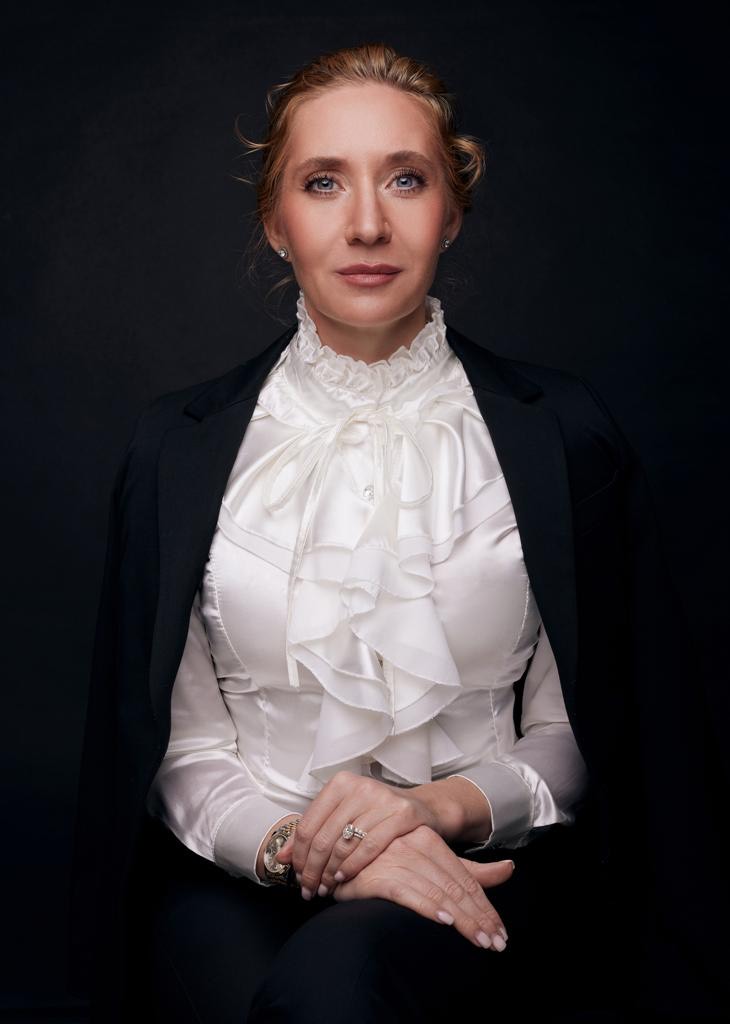
Alexandra Hirzel is an exited serial entrepreneur, MedTech investor, and founder of The Scale Foundry, an advisory firm that helps deep tech and digital health startups scale smarter, faster, and with investor-ready precision. With more than 15 years leading AI, MedTech, and digital innovation across the US, Europe, and the Middle East, she sits on global boards, advises founders from seed to scale, and speaks at leading forums including the UN AI for Good Summit. Alexandra is known for cutting through the hype to deliver strategies that win funding, navigate regulation, and turn ambitious ideas into market-shaping companies.
https://www.thescalefoundry.com
https://www.linkedin.com/in/alexandra-hirzel-35134145
https://www.linkedin.com/company/the-scale-foundry